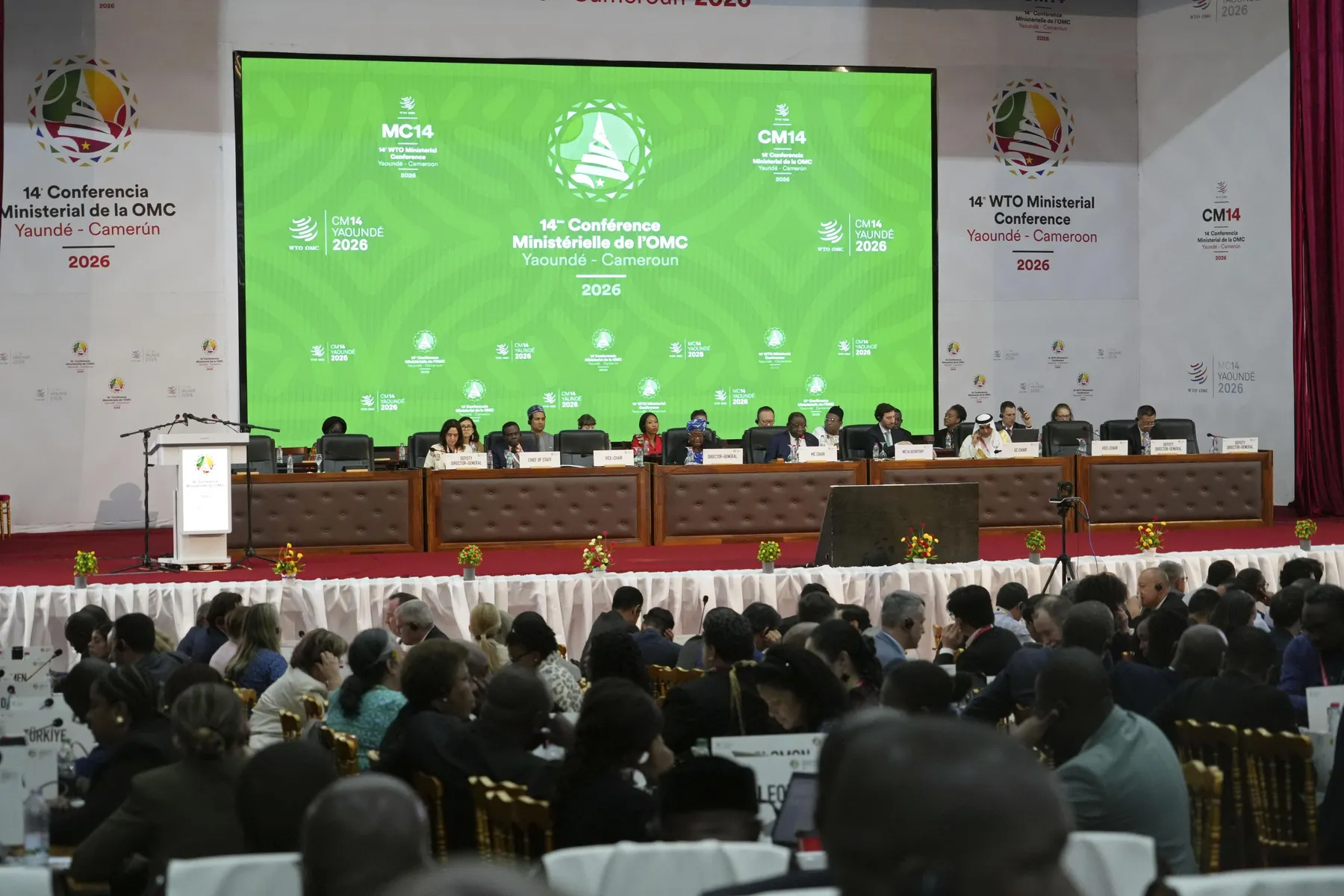
YAOUNDÉ, Mar 30 – The World Trade Organization failed to reach an agreement to extend its long-standing moratorium on e-commerce tariffs, following deadlocked negotiations at its 14th ministerial conference (MC14).
After four days of discussions in Yaoundé, conference chair Luc-Magloire Mbarga Atangana said negotiators “ran out of time” to resolve key issues, including the future of the ban on customs duties for electronic transmissions.
The moratorium, first introduced in 1998, has been consistently renewed every two years and has played a central role in supporting the growth of global digital trade. Today, digital services account for more than half of global services exports.
Without a new agreement, the tariff ban is set to expire at the end of the month, raising concerns about potential disruptions to cross-border digital commerce.
WTO Director-General Ngozi Okonjo-Iweala said discussions could continue at the organization’s headquarters in Geneva, expressing hope that members could still reach a consensus.
Industry leaders have warned that the lack of a deal introduces uncertainty at a critical moment for the global economy. John Denton, Secretary General of the International Chamber of Commerce, said the outcome risks undermining one of the fastest-growing segments of global trade.
He called for urgent efforts to resume negotiations, warning that exposing digital services to tariff barriers could hinder growth in an already fragile economic environment.
The outcome highlights ongoing divisions within the WTO over the future of digital trade governance, as member states weigh national policy priorities against the need for a unified global framework.