
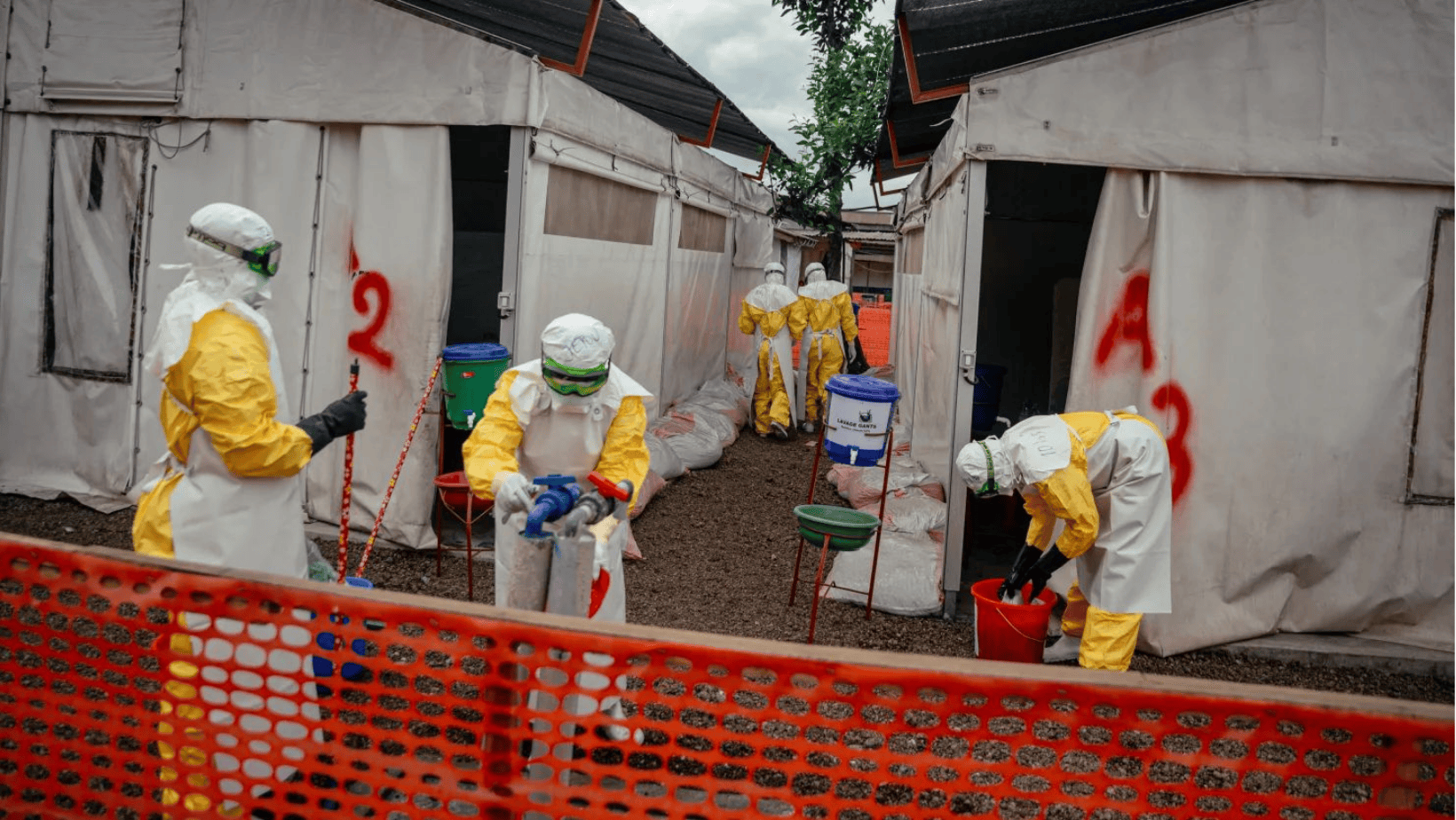
KINSHASA, July 7 – Efforts to contain the Ebola outbreak in the Democratic Republic of the Congo are being hindered by cuts to U.S. and Western foreign aid, with health experts warning that reduced funding has weakened the country’s ability to respond to the virus.
Aid organisations say the response has become more difficult following the closure of the U.S. Agency for International Development (USAID), whose programmes were largely ended last July. The International Rescue Committee warned early in the outbreak that without urgent intervention, the crisis could become the deadliest Ebola outbreak on record.
Health experts say the loss of USAID support has affected disease surveillance, laboratory testing, medical supplies and healthcare staffing. According to virologist Angela Rasmussen, funding cuts have disrupted the delivery of basic protective equipment, slowed contact tracing and delayed confirmation of new cases after cold chain infrastructure used to transport samples was lost.
The outbreak has also unfolded alongside ongoing conflict in eastern DRC, where fighting has made it harder for health workers to reach affected communities. The Council on Foreign Relations estimates that about one million Congolese have fled the country, while 21 million people still need humanitarian assistance.
Infectious disease specialist Jade Le said reduced U.S. health support, including cuts affecting USAID, the CDC and the World Health Organization, has delayed outbreak detection and made containment efforts more challenging than in previous Ebola emergencies.
The latest outbreak, declared in May by authorities in the DRC and Uganda after cases of the Bundibugyo strain were confirmed, is the DRC’s 17th Ebola outbreak. According to the U.S. Centers for Disease Control and Prevention (CDC), more than 1,400 cases have been confirmed, making it the country’s third-largest outbreak on record. The virus has claimed 440 lives so far, while one confirmed case has also been reported in France.
