
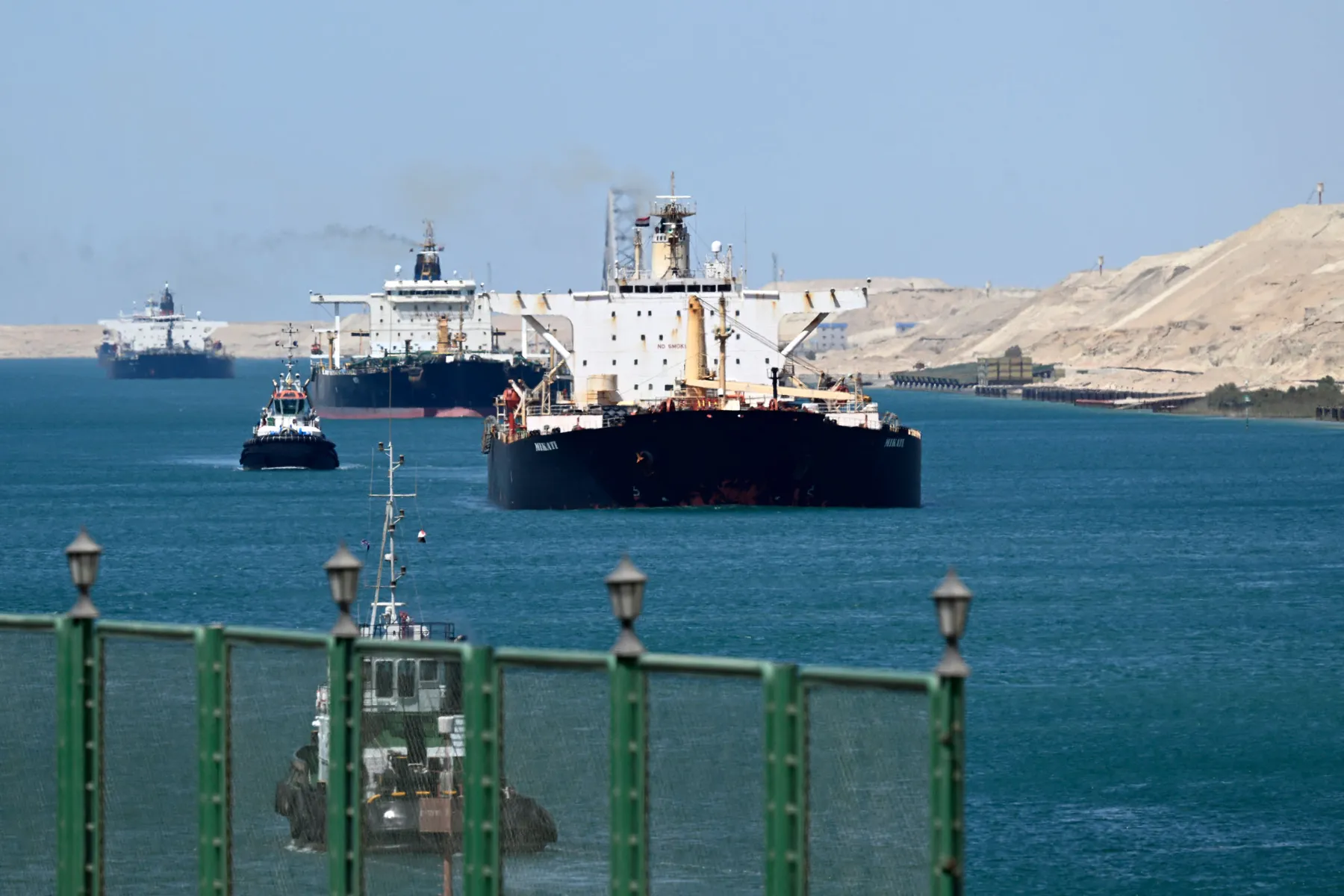
CAIRO, June 10 – The number of oil tankers transiting Egypt’s Suez Canal rose sharply in April 2026, highlighting the growing importance of the waterway as global energy trade routes adjust to disruptions in the Strait of Hormuz.
According to data released by Egypt’s state statistics agency, the Central Agency for Public Mobilization and Statistics (CAPMAS), a total of 529 oil tankers crossed the canal during the month, representing a 28% increase compared with the same period in 2025.
The increase contributed to the strongest canal revenue performance since early 2024, as energy exporters and shipping companies increasingly relied on the Red Sea route to move crude oil and petroleum products.
The rise in tanker traffic followed disruptions to shipping activity in the Strait of Hormuz, one of the world’s most strategically important energy corridors.
The uncertainty surrounding the Gulf shipping route prompted traders to seek alternative pathways for transporting oil, benefiting Egypt’s Suez Canal, which remains a critical link between Europe, Asia and the Middle East.
Overall vessel traffic through the canal also improved during the period.
CAPMAS data showed that 1,182 vessels of all categories transited the canal in April, an increase of 14% compared with April 2025.
The recovery marks a positive development for Egypt, which has faced challenges in recent years due to fluctuations in global shipping patterns and geopolitical disruptions affecting Red Sea navigation.
The Suez Canal remains one of Egypt’s most important sources of foreign currency earnings and plays a central role in global maritime trade.
Changes in energy flows and shipping routes have increasingly influenced canal activity, particularly as geopolitical tensions continue to reshape international logistics networks.
The latest figures suggest that Egypt has benefited from the temporary redirection of energy shipments, reinforcing the canal’s strategic importance in global oil markets.
Analysts note that future traffic levels will largely depend on developments in the Middle East and the extent to which normal shipping patterns return to the Strait of Hormuz.
For now, however, higher tanker volumes are providing a boost to canal revenues and strengthening Egypt’s position as a key transit hub for global energy trade.
