
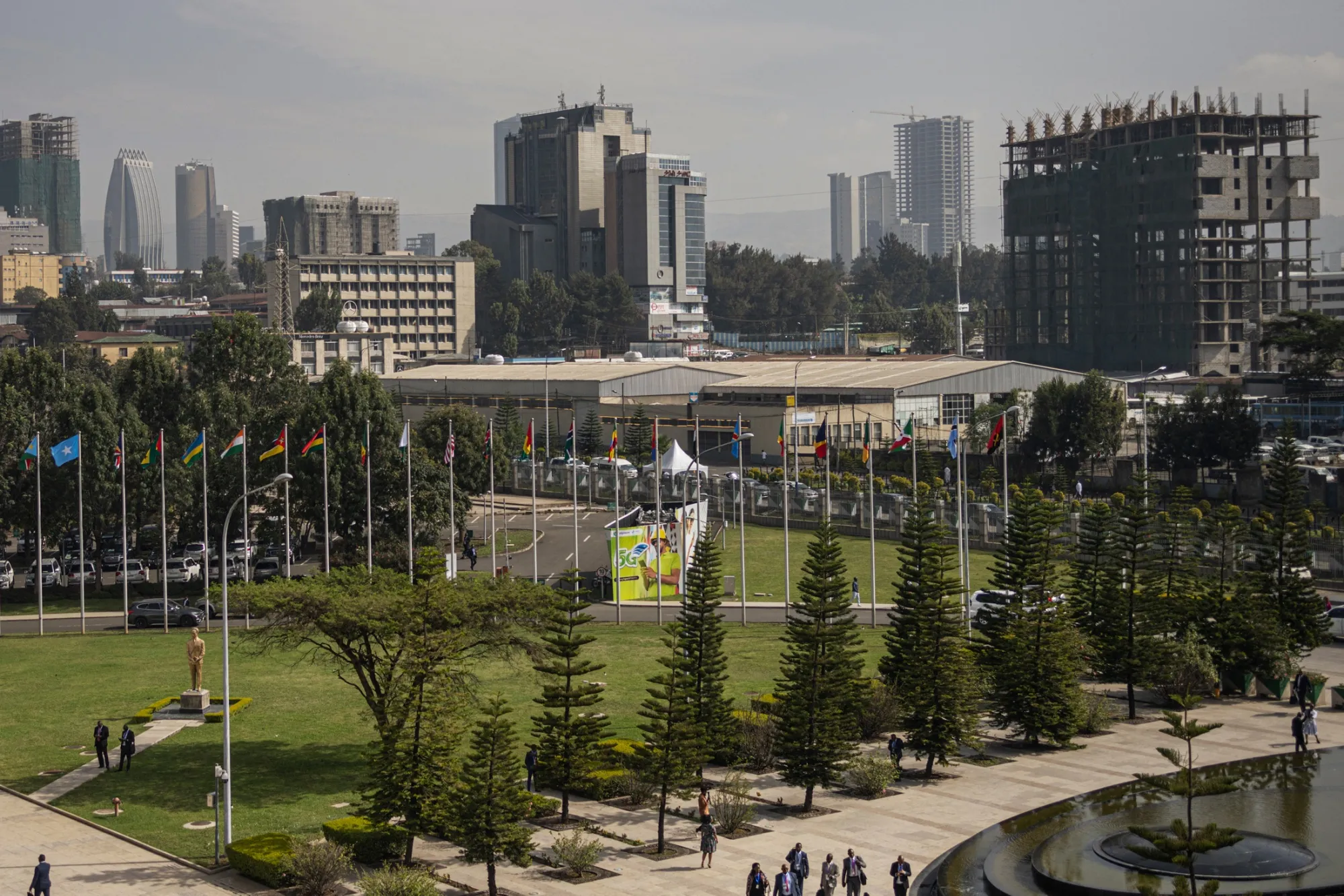
ADDIS ABABA, Mar 20, 2026 – Ethiopia’s economy is shedding the weight of decades-old controls, stepping into a new rhythm after years of state-directed command. In July 2024, the country launched a four-year programme with the International Monetary Fund, setting the stage to untangle long-standing distortions and let market forces flow more freely.
Early signs suggest stability is returning to foreign exchange, inflation, and fiscal management, though the journey remains uneven.
Rising costs continue to weigh on households even as macro figures improve. The government has been phasing out fuel subsidies, long absorbed off-budget, overhauling tax collection, and raising pump prices gradually toward full cost recovery. The latest retail fuel adjustment came a few weeks ago, part of a series of increases designed to align domestic fuel costs with the birr’s exchange rate and global market pressures.
Aster Belete, whose name has been changed, is a mother of two who earns a living washing clothes for households. When transport fares were raised by as much as 25 percent last week, the change caught her off guard.
“I was literally frozen,” she said, recalling the moment a ticket officer asked her to pay more than usual. “It might seem small, but transport already takes a big share of what I earn.”
Belete said the pressure has been building for months, with the cost of basic goods rising steadily. To cope, she has begun cutting back on daily routines once taken for granted, including coffee, a staple of Ethiopian social life traditionally consumed three times a day.
Official figures show that inflation eased to 9.7 percent in February 2026, falling into single digits for the first time on record. Yet for many households, the improvement has yet to ease the pressure on everyday expenses.
Price pressures continue to ripple through the economy as the government implements reforms, including a market-determined exchange rate that has depreciated the birr by more than 50 percent, tighter monetary policy, and stronger fiscal management through the end of direct central bank financing of the government.
Economists note that while these measures correct structural imbalances built over years, they ripple unevenly, pressing on households in ways that raw numbers cannot capture, the fractions of structural transformation still lag behind policy, leaving everyday life to absorb the shocks of an economy in transition.
“The government can’t continue subsidising fuel, but it must be fair also,” said Mered Fikireyohannes, founder and chief executive of Pragma Capital. “Households should not be burdened with taxes, they should be encouraged to work and supported to increase their income.”
He said that before Ethiopia entered the IMF programme, the birr had been adrift, weakened by unchecked money printing and a tide of informal exports. Since the government floated the currency, he added, the situation has been steadied structurally, giving the economy firmer footing.
“The real question is at what cost,” he added. “The savings-to-GDP ratio has fallen, and the cost of living is hitting employees hard. But the cost is worth it for the country.”
He suggested the government consider revising income tax to ease the burden on consumers and create cohesion for employers. He noted that, unlike a neighbouring country such as Kenya, which does not tax income up to 24,000 shilling, Ethiopia applies taxes from as little as 1,000 birr. “This isn’t right,” he said.
The East African country of 135 million people passed a sweeping Income Tax Amendment Proclamation in July 2025, overhauling large parts of its tax system. The reform raised the tax-free threshold from about 600 birr to 2,000 birr per month, expanded coverage to digital and online income streams, and stepped up efforts to bring informal and underreported activities into the tax net.
This directly responds to Ethiopia’s low tax-to-GDP ratio, which has lagged behind peers in sub-Saharan Africa. Recent estimates put the ratio at around 8 percent of GDP, meaning the government collects just 7.5 birr in taxes for every 100 birr generated in the economy.
The figure places Ethiopia well below regional peers. In comparison, Kenya collects about 15.2 percent of GDP in taxes, Rwanda 15.7 percent, and Uganda 13.1 percent, while the sub-Saharan African median stands at roughly 13.2 percent.
The government planned to finance more than 70 percent of its 1.93 trillion birr budget through taxation. Analysts say this approach signals a steadily rising tax burden on citizens. They warn that the government is increasingly stretching the economy’s capacity to absorb higher taxes, raising questions about sustainability and equity.
The reforms have also drawn concern from businesses, with some reporting closures as compliance requirements tighten. Analysts say part of the strain reflects a structural shift, as firms that previously operated informally struggle to adjust to a more regulated and transparent tax environment.
Early signs from the country’s foreign exchange reforms suggest the economy is finding firmer footing. The once-wide gap between official and parallel market rates has narrowed to around 15%. Exports have surged 119.2%, private remittances are up 13%, and the National Bank of Ethiopia’s foreign currency reserves have more than tripled. The current account deficit fell from 6.2 billion US dollars in June 2024 to $289.3 million in June 2025.
But external debt reached 26.9 percent of GDP by the end of June 2025.
Mikiyas Mulugeta (PhD), an independent consultant and director of training and development programs at the Centre for African Leadership Studies, said the reforms are structural, covering the financial sector, state-owned enterprises, and broader market liberalization.
He cautioned, however, that attention must now turn to resolving the country’s debt restructuring challenges. He added that whether the gains from the programme are shared evenly will depend on a range of factors, including geopolitical developments, internal conflict, and the government’s priorities in allocating public spending.
“We function in a very constrained market, and the government still has a lot of work to do,” he added.
Ethiopia has cleared the fourth review of its IMF Extended Credit Facility, unlocking around $261 million from the $3.4 billion programme.
The IMF noted that all quantitative performance targets and most structural benchmarks were met, while urging the government to maintain fiscal discipline amid pressure to boost spending. Phasing out fuel subsidies, the Fund said, remains key to rebuilding fiscal buffers, improving spending efficiency, and protecting social safety nets.
Growth is projected at 9.3 percent, driven by mining, construction, manufacturing, and agriculture — a reflection of early gains from the country’s structural reforms.
Economists like Kebour Ghenna, however, challenge the report. Writing on social media, he argued that the real danger is not stabilization itself, but policies that restore macroeconomic balance while weakening domestic production, social welfare systems, and the state’s ability to pursue autonomous development.
“The challenge for Ethiopia, therefore, is not simply to achieve stabilization but to pursue a path of autonomous development that reorients the economy toward internal needs and long-term structural transformation. Without such a shift, reforms implemented under IMF guidance may stabilize the economy while leaving the underlying patterns of dependency unchanged,” he wrote.
Ethiopia defaulted on its US 1 billion Eurobond in 2023 and is now restructuring roughly 8.4 billion US dollars of external debt under the G20 Common Framework. The government has reached agreements in principle with official creditors, securing debt service relief of about 2.5–3.5 billion US dollars, while negotiations with private bondholders remain ongoing as it seeks to restore debt sustainability and rebuild investor confidence.
Ghenna added that debt relief does not eliminate debt; it spreads it over time. “Which means Ethiopia now faces a simple question: What will it build during that time?”
The IMF flagged some clear risks, including social and political pressures ahead of the June 2026 elections, a shaky security situation, and the economy’s exposure to swings in global commodity prices. The government’s contribution to the Productive Safety Net Programme (PSNP) came in lower than planned, as more focus went to absorbing donor funds.
Moving to a fully market-driven exchange rate has also hit some bumps. Large off-market sales of foreign currency to the Commercial Bank of Ethiopia for fertilizer imports, along with limits on bank allocations at auctions, have slowed the pace.
Ethiopia is, indeed, seeing early signs of economic improvement, attracting $2.3 billion in foreign direct investment during the first half of the current fiscal year. Analysts caution, however, that the country must diversify its export base and strengthen agriculture to boost foreign currency earnings, improve supply chains and industrial ecosystems, and tackle bureaucracy and corruption. They also note that regional conflicts remain the most significant barrier to sustained investment.
