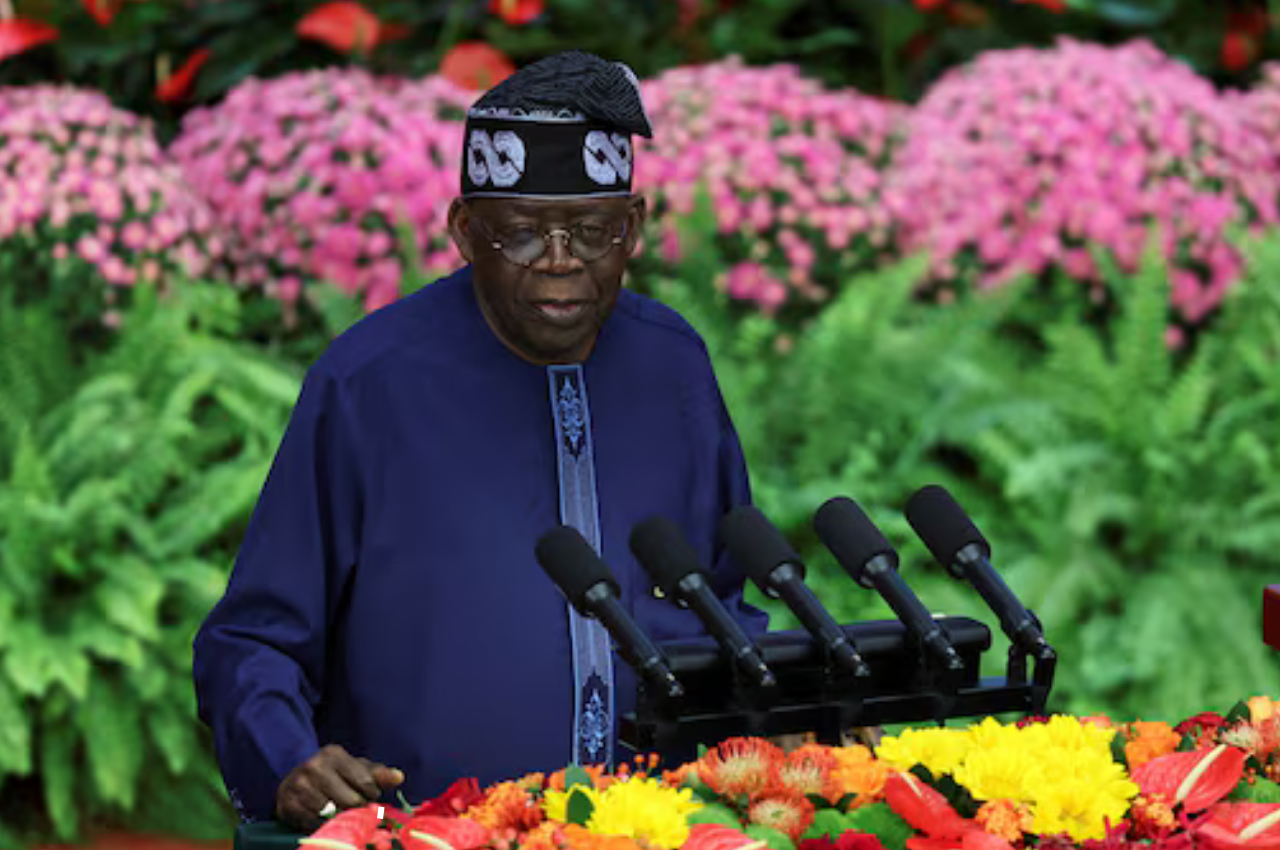
LAGOS, Feb 17 – President Bola Ahmed Tinubu has called for the establishment of a continentally owned credit rating agency, warning that Africa continues to face excessive borrowing costs due to persistent misjudgment of its economic risk by global financial markets.
Writing in an opinion article published by the Financial Times, the Nigerian leader argued that the so-called “Africa premium”, the persistent gap between perceived and actual risk, is driving up financing costs for African economies and limiting access to international capital.
According to Tinubu, global investor perception of Africa remains heavily shaped by the three dominant rating institutions, Fitch Ratings, Moody’s, and S&P Global Ratings. While their assessments influence global capital allocation, he said their evaluations often fail to fully capture local economic realities and reform progress across African countries.
The president noted that only three African nations currently hold investment-grade ratings, despite projections from the International Monetary Fund indicating that Africa is set to become the fastest-growing region globally. This disconnect, he argued, reflects deeper structural weaknesses in how sovereign credit risk on the continent is measured.
He cited findings from the United Nations Development Programme, which estimated that inconsistencies and structural biases in credit ratings cost African economies approximately $75 billion annually in higher borrowing costs and reduced access to financing. Tinubu said this stems partly from limited regional presence and reliance on subjective judgments regarding political stability, institutional strength, and policy credibility.
Such external assessments, he warned, can amplify global market volatility. Commodity-dependent African economies are often downgraded quickly during periods of global uncertainty, even when their underlying fiscal and external fundamentals remain relatively stable. These downgrades increase borrowing costs and weaken public finances, reinforcing negative investor sentiment.
Tinubu pointed to Nigeria’s recent reform programme as evidence that meaningful policy adjustments and improved transparency can strengthen investor confidence. Measures such as expanding economic data coverage, integrating previously undisclosed central bank liabilities into official debt records, rebasing gross domestic product, and improving fiscal disclosure have helped improve economic credibility.
He also highlighted major structural reforms, including fuel subsidy removal and exchange rate liberalisation, which have supported economic diversification and reduced reliance on oil-linked currency dynamics. Despite these steps, he said Nigeria’s sovereign rating has yet to fully reflect improved fundamentals. Strong investor demand for Nigeria’s recent dollar-denominated bond issuance, which was oversubscribed by more than five times, suggests investor confidence may be stronger than formal ratings indicate.
Tinubu emphasized that an African credit rating agency should function alongside, not in place of, existing global institutions. By providing regionally informed analysis and recognizing reform progress more quickly, such an agency could improve market efficiency and ensure fairer access to capital.
He added that delayed rating upgrades impose tangible costs, particularly on smaller African economies that lack global visibility. A continental agency could help bridge this gap by offering more timely and context-specific assessments, strengthening Africa’s financial credibility and supporting long-term economic growth.