
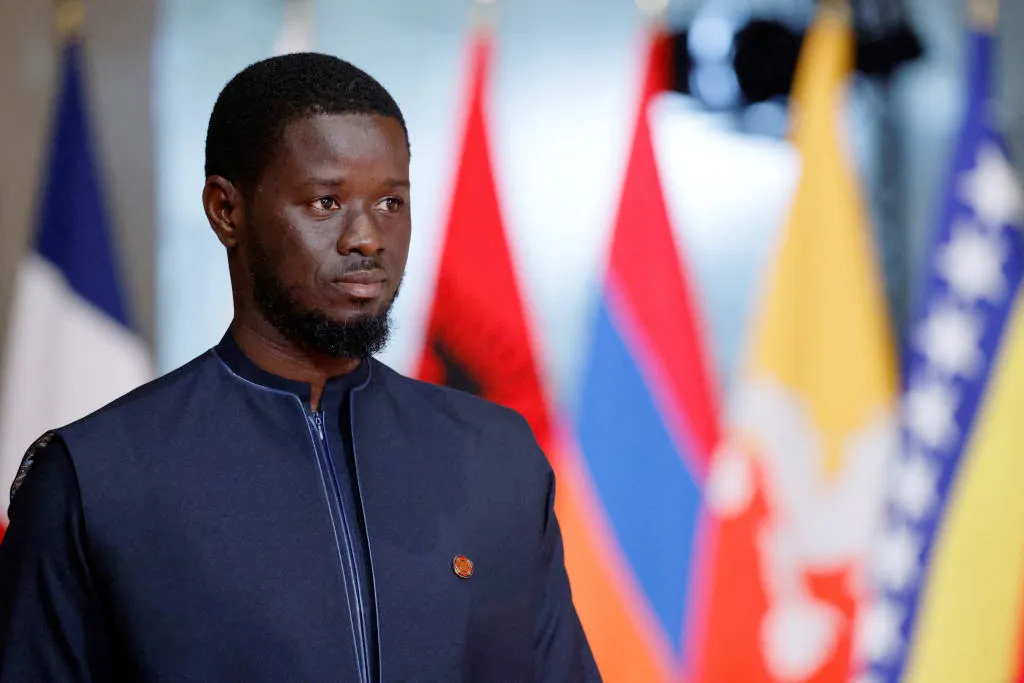
DAKAR, June 2 – Senegal’s political crisis deepened after President Bassirou Diomaye Faye unveiled a new cabinet that excluded several prominent allies of former Prime Minister Ousmane Sonko, further exposing divisions at the top of the country’s leadership.
The cabinet reshuffle comes just days after Faye dismissed Sonko as prime minister and dissolved the previous government, a move that marked a dramatic escalation in tensions between the two leaders who jointly rose to power under the banner of the Pastef movement.
Ahead of the announcement, Sonko declared that Pastef would not participate in the incoming administration, citing unresolved disagreements with the president over the party’s future direction and role in government.
In a public statement, Sonko said discussions with Faye had revealed significant differences regarding political strategy and governance, prompting the party leadership to withdraw from the new administration.
Despite the announcement, the cabinet unveiled by newly appointed Prime Minister Ahmadou Al Aminou Lo included several figures associated with Pastef, creating uncertainty over the extent of the party’s participation in government.
Among the key appointments, Finance Minister Cheikh Diba retained his position and was additionally given responsibility for the economy portfolio, a move officials said would strengthen policy coordination during a challenging economic period.
The political fallout comes at a sensitive moment for Senegal’s economy.
The country has been grappling with the consequences of a debt crisis that emerged after authorities disclosed significant previously unreported liabilities inherited from the former administration.
The revelations prompted the International Monetary Fund to suspend its $1.8 billion support programme, while investor confidence weakened amid concerns about fiscal sustainability.
Senegal’s public debt is estimated to have reached approximately 132% of gross domestic product by the end of 2024, making negotiations with the IMF critical for restoring financial stability and access to external funding.
Government officials have indicated that discussions with the IMF are expected to resume in June as authorities seek a new financing arrangement and a roadmap for addressing the country’s fiscal challenges.
Meanwhile, Sonko has continued to demonstrate strong political influence despite his removal from the premiership.
Last week, lawmakers reinstated him as a member of parliament before electing him Speaker of the National Assembly with overwhelming support.
His elevation to one of the most powerful positions in the legislature gives him significant leverage over the government’s legislative agenda and could complicate efforts by President Faye to advance reforms required by international lenders.
The growing divide between the two leaders has raised concerns among investors and political observers about policy continuity, governance stability and Senegal’s ability to navigate one of the most challenging economic periods in its recent history.
