
– Business, Finance, Markets & Economic News
  • Home
  • Economy
  • Business
  • Markets
  • Finance
  • Credit Ratings
  • Policy
  • Tech
– Business, Finance, Markets & Economic News
  • Home
  • Economy
  • Business
  • Markets
  • Finance
  • Credit Ratings
  • Policy
  • Tech
Top News
AFC Chief Calls for Standardized Infrastructure Financing to Accelerate Investment in Africa
Uganda’s Export Earnings Rise 10.2% to $1.4 Billion in July as Gold Shipments Surge
Dangote Plans $3.5 Billion Southern Africa Pipeline to Expand Fuel Distribution
Morgan Stanley Expects South Africa Rate Hike to 7.25% on Oil Price Risks
AU Chair Mahmoud Ali Youssouf Calls for African Value Creation at Unstoppable Africa 2026
Uganda Plans 6.2% Cut in Public Spending as Oil Production Drives Growth Outlook
US Auto Supplier Veritas Opens First African Manufacturing Facility in Morocco
Senegal Targets Lower Power Costs With Domestic Gas as Fuel Prices Rise
Mozambique Seeks New IMF Programme as Fund Calls for Further Economic Reforms
Fitch Affirms Morocco at BB+ With Stable Outlook, Citing Strong Fiscal Position
Nigeria’s Current Account Surplus Jumps 68% to $7.54 Billion as Oil Exports and Remittances Rise
Ivory Coast to Launch Gold Refinery in 2027 as It Targets Africa’s Top Producer Spot
Nigeria Sets 180-Day Deadline to Launch Digital Free Zones and Retain Tech Investment
TotalEnergies Secures $1.8 Billion Africa Infrastructure Deal With BlackRock’s GIP
Vedanta’s KCM Signs $498 Million Deal for Copper Recovery Plant in Zambia
SUBSCRIBE
– Business, Finance, Markets & Economic News
Subscribe
– Business, Finance, Markets & Economic News
  • Home
  • Economy
  • Business
  • Markets
  • Finance
  • Credit Ratings
  • Policy
  • Tech
Copyright 2026 - All Right Reserved
Home » Finance » AFC Chief Calls for Standardized Infrastructure Financing to Accelerate Investment in Africa
Finance

AFC Chief Calls for Standardized Infrastructure Financing to Accelerate Investment in Africa

by Gift Egbeiyon September 21, 2026
written by Gift Egbeiyon September 21, 2026
AFC
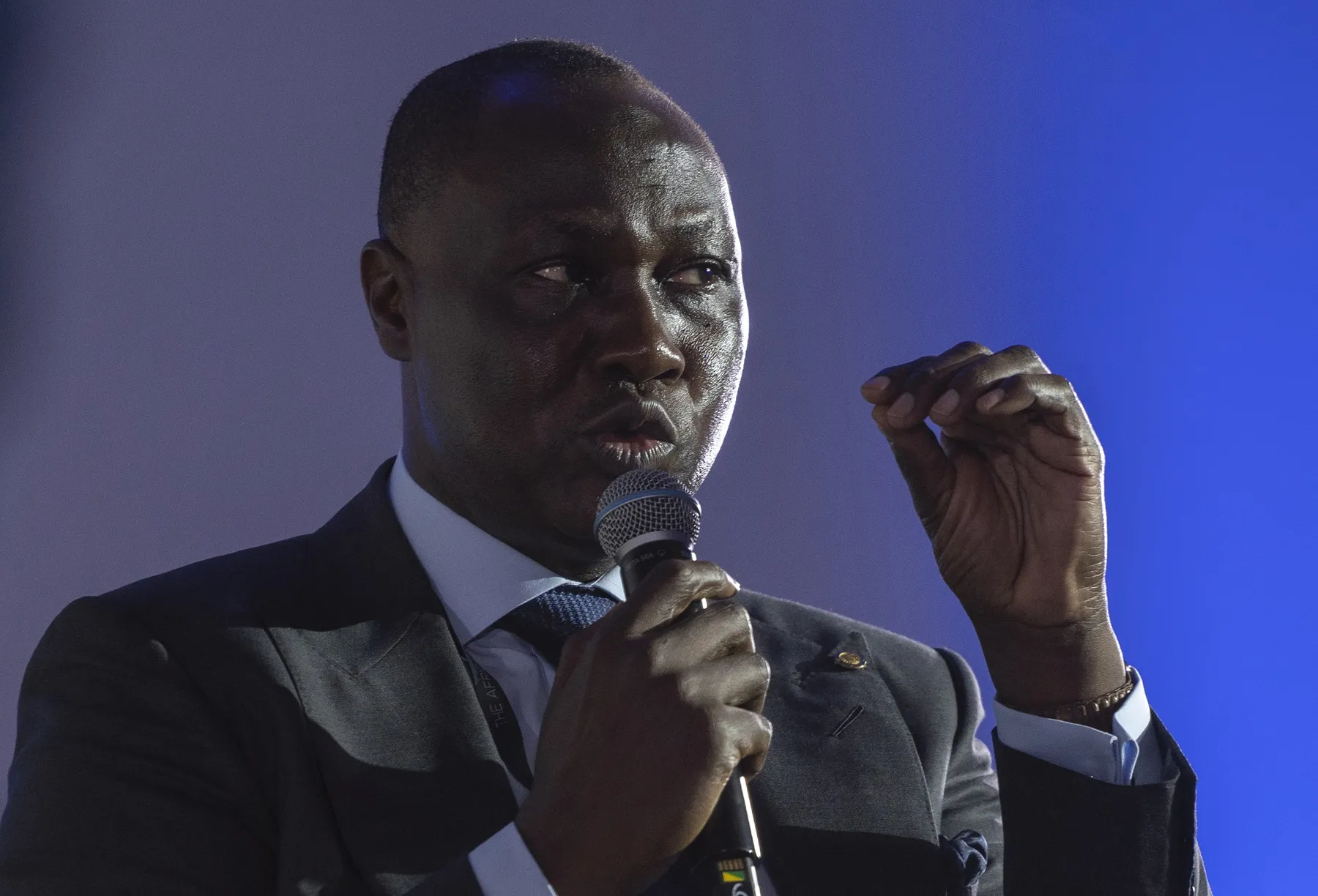
Africa Finance Corp. CEO Samaila ZubairuPhotographer: Aaron Schwartz/Bloomberg
FacebookTwitterLinkedinEmail
1

NEW YORK, Sept 21– Africa needs more standardized approaches to structuring and financing infrastructure projects to reduce transaction delays, lower costs and enable successful projects to be replicated across the continent, according to Africa Finance Corporation (AFC) President and Chief Executive Officer Samaila Zubairu.

Speaking at the Global Africa Business Initiative’s (GABI) high-level Unstoppable Africa 2026 event in New York, Zubairu said African financial institutions should establish common templates, documentation and due diligence frameworks for infrastructure transactions.

He argued that repeatedly designing financing structures from the beginning limits the speed at which capital can be deployed, particularly for projects that share similar risk and contractual characteristics.

“We should standardize the process, standardize documentation, so that we build and we create replicability.”

Moving from individual projects to repeatable structures

Zubairu pointed to power generation as an example of how repeated negotiations can slow infrastructure development.

You Might Be Interested In
  • World Bank Approves $750 Million Financing Package for Kenya to Support Economic Reforms

He said developers can spend years negotiating power purchase agreements (PPAs), even when similar projects have already established workable contractual structures.

“We build several power plants, yet it takes us three years to negotiate a PPA. We should stop that. We should look at the last one we built and use that as a template for all the others.”

The same principle, he said, should apply to project financing, where institutions can repeatedly undertake similar due diligence and documentation instead of adapting frameworks that have already been tested.

A standardized approach could allow financial institutions to move between comparable transactions more efficiently while retaining the necessary risk assessment and controls.

Channeling African savings into infrastructure

The broader objective is to improve the intermediation of Africa’s domestic financial resources into productive assets.

Zubairu said financial institutions need to develop risk-mitigation instruments that allow investors to initially assume institutional risk rather than taking on the full risks associated with individual infrastructure projects.

Such structures could make it easier for investors to participate in infrastructure financing and provide a framework that can be repeatedly applied across different projects.

“We must have a system whereby all of us, the Alliance for Financial Institutions, agree templates, agree due diligence mechanisms, standardize our systems, so that at every point of time we’re rinsing and repeating what we’re doing, not starting from the beginning.”

The approach is intended to address a broader challenge in African infrastructure finance, where substantial domestic savings coexist with significant infrastructure investment needs, but capital does not always flow efficiently into long-term productive assets.

Infrastructure as a foundation for industrialization

For AFC, improving the financing process is closely connected to Africa’s broader industrialization agenda.

Zubairu said infrastructure investment should enable African economies to process more of their own natural resources, create employment and retain a greater share of economic value within the continent.

“Our job is to build the infrastructure that will make Africa process what we have, create jobs on the continent, and capture and retain value here in Africa.”

Standardized financing frameworks could therefore extend beyond reducing the time required to close individual transactions. The objective is to create a more repeatable infrastructure investment system that allows capital providers to build on established structures rather than repeatedly starting from scratch.

For African economies seeking to expand power generation, transport networks, industrial capacity and other productive infrastructure, greater standardization could help connect domestic capital with projects at greater speed and scale.

Read Next

  • IMF Says Angola Debt to Reach Limit, Urges Use of Oil Windfall for Buffers

    May 3, 2026
  • Egypt, TotalEnergies Sign MoU for Natural Gas Exploration in Western Mediterranean

    May 14, 2026
  • Egypt Secures Alternative Energy Supplies After Drone Attack Damages Gas Vessel at Damietta Port

    July 31, 2026
  • Sierra Leone Signs Permit With Shell to Advance Offshore Oil Exploration

    April 22, 2026
  • IMF Approves $91 Million in Funding for Niger After Programme Review

    February 19, 2026

Newsletter

Subscribe to our newsletter for trusted insights on Africa’s economies, markets, and business.

African Economy Inc. Logo

About Us

We are a business and economic intelligence platform delivering in-depth reporting, analysis, and insights on markets, companies and economic developments across Africa.

Our Company

  • AEI Intelligence
  • About
  • Editorial Standard
  • Partnerships
  • Advertise With Us
  • Careers
  • Ownership

News

  • Economy
  • Business
  • Markets
  • Finance
  • Credit Ratings
  • Policy
  • Tech

Useful Links

  • Privacy Policy
  • Terms of Use
  • Closed Captioning Policy
  • Accessibility Statement
  • Personal Information
  • Data Tracking
  • Register New Account

Subscribe Newsletter

Subscribe to our newsletter for trusted insights on Africa’s economies, markets, and business.

©2026 Majons Media Inc. All Rights Reserved.

Facebook Twitter Instagram Linkedin
Manage Consent
To provide the best experiences, we use technologies like cookies to store and/or access device information. Consenting to these technologies will allow us to process data such as browsing behavior or unique IDs on this site. Not consenting or withdrawing consent, may adversely affect certain features and functions.
Functional Always active
The technical storage or access is strictly necessary for the legitimate purpose of enabling the use of a specific service explicitly requested by the subscriber or user, or for the sole purpose of carrying out the transmission of a communication over an electronic communications network.
Preferences
The technical storage or access is necessary for the legitimate purpose of storing preferences that are not requested by the subscriber or user.
Statistics
The technical storage or access that is used exclusively for statistical purposes. The technical storage or access that is used exclusively for anonymous statistical purposes. Without a subpoena, voluntary compliance on the part of your Internet Service Provider, or additional records from a third party, information stored or retrieved for this purpose alone cannot usually be used to identify you.
Marketing
The technical storage or access is required to create user profiles to send advertising, or to track the user on a website or across several websites for similar marketing purposes.
  • Manage options
  • Manage services
  • Manage {vendor_count} vendors
  • Read more about these purposes
View preferences
  • {title}
  • {title}
  • {title}
– Business, Finance, Markets & Economic News
  • Economy
  • Business
  • Markets
  • Banking & Finance
  • Energy
  • Tech
  • Policy