
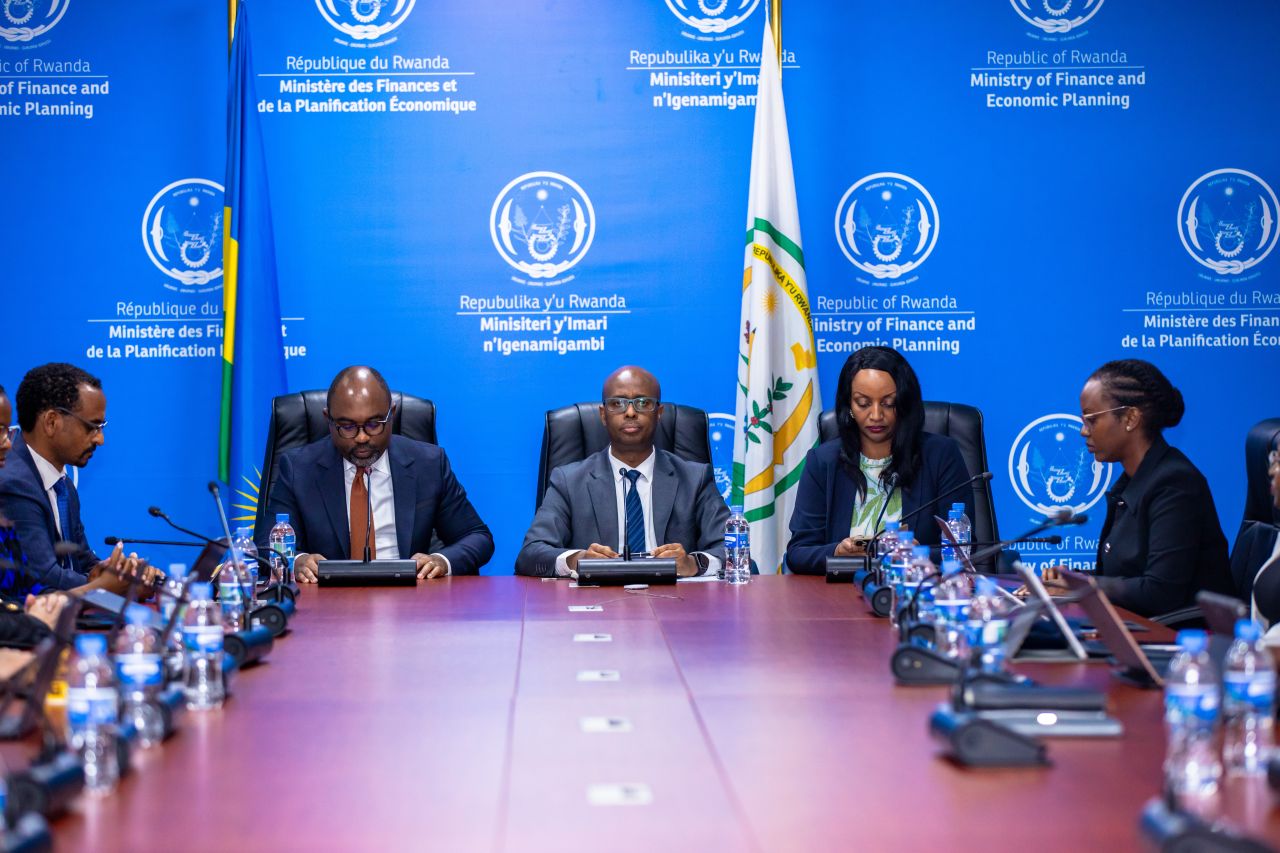
KIGALI, April 2 – Rwanda has reached a staff-level agreement with the International Monetary Fund on a 38-month loan program worth SDR 185 million, approximately $250 million, under the Extended Credit Facility (ECF). The agreement is subject to final approval by the IMF’s management and Executive Board, expected in June 2026.
The program is designed to help Rwanda sustain its reform momentum, maintain macroeconomic stability, and rebuild financial buffers amid growing global uncertainty, particularly from geopolitical tensions in the Middle East.
According to Finance Minister Yusuf Murangwa, the facility will cushion the economy against external shocks while supporting long-term growth and structural transformation.
The ECF program is anchored on three key pillars: strengthening economic policy coordination, managing fiscal and debt risks, and promoting private-sector-led growth with improved governance of state-owned enterprises.
Rwanda’s economy has shown strong resilience, expanding by 9.4% in 2025, significantly above expectations. However, inflation has risen to 9.2% as of February 2026, exceeding the central bank’s target, while global pressures driven by rising oil and fertilizer prices continue to weigh on the outlook.
Albert Touna Mama noted that while Rwanda’s economic performance remains robust, prolonged geopolitical tensions and tighter global financing conditions could strain inflation, external balances, and public debt levels. Growth is projected to moderate to 6.8% in 2026.
Despite these challenges, Rwanda’s external position improved in 2025, supported by strong exports of coffee and minerals, while foreign exchange reserves remain at comfortable levels, covering more than four months of imports. Ongoing tax reforms have also strengthened domestic revenue mobilization.
Under the new program, Rwanda will implement reforms to enhance fiscal discipline, improve debt sustainability, and support private sector development. This includes executing a credible medium-term fiscal framework, tightening control over foreign-funded capital spending, and strengthening risk management systems while safeguarding social and priority expenditures.
Monetary policy is expected to remain tight as the central bank works to bring inflation back toward its medium-term target of 5%. Greater exchange rate flexibility, supported by market-based mechanisms, will also play a role in absorbing external shocks and strengthening reserves.
The agreement reflects Rwanda’s continued commitment to economic reform and resilience, positioning the country to navigate global uncertainties while advancing its long-term development agenda.
