
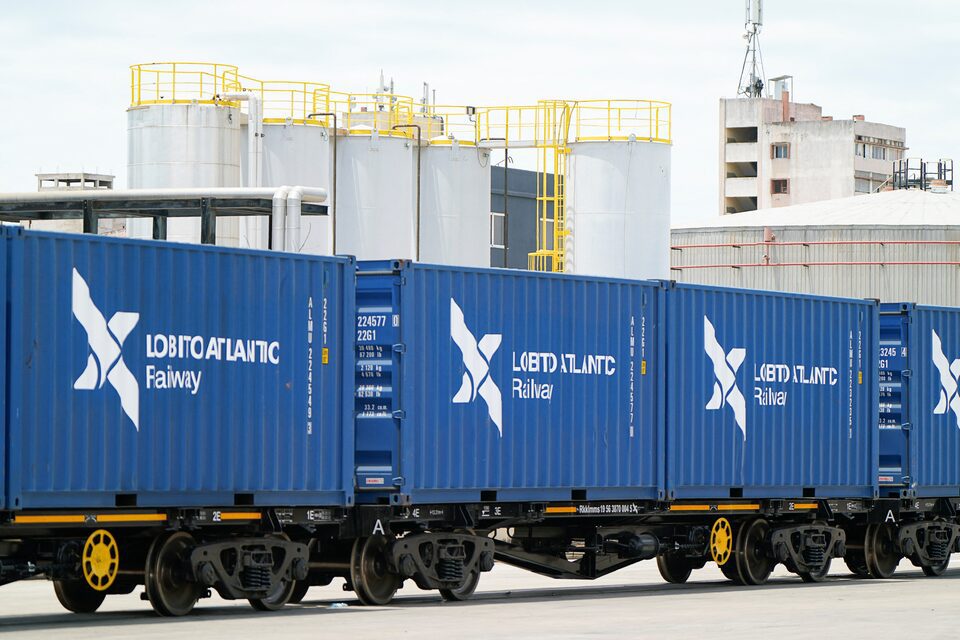
LUANDA, June 15 – Lobito Atlantic Railway has resumed copper shipments from the Democratic Republic of the Congo following the reopening of a flood-damaged section of the Lobito Corridor, restoring a critical export route for the region’s mining sector.
The railway operator announced that its first copper cargo has successfully crossed the repaired section after emergency works restored connectivity between the Atlantic port of Lobito and the city of Huambo in central Angola.
The route had been closed for nearly two months after severe flooding damaged key infrastructure along the corridor, disrupting the movement of minerals from Central Africa to international markets.
According to the company, emergency repair works have now restored full rail operations, allowing copper exports from the Democratic Republic of Congo to resume through one of Africa’s most strategically important transport corridors.
The Lobito Corridor has become increasingly important as mining companies seek alternative export routes to reduce dependence on longer and more congested pathways through southern and eastern Africa.
The rail link connects the mineral-rich copper belt of the Democratic Republic of Congo and Zambia to Angola’s Atlantic coastline, providing a shorter route for shipments destined for Europe, North America and other international markets.
The restoration of operations is expected to ease logistical bottlenecks for copper producers and traders at a time when global demand for critical minerals remains strong, driven by investments in electrification, renewable energy and battery manufacturing.
The reopening also supports broader efforts by regional governments and international investors to strengthen infrastructure along the Lobito Corridor, which has emerged as a strategic trade route for transporting copper, cobalt and other critical minerals from Central Africa to global markets.
With traffic now restored, railway operators expect freight volumes to gradually normalize as mining companies resume exports that had been delayed by the disruption.
