
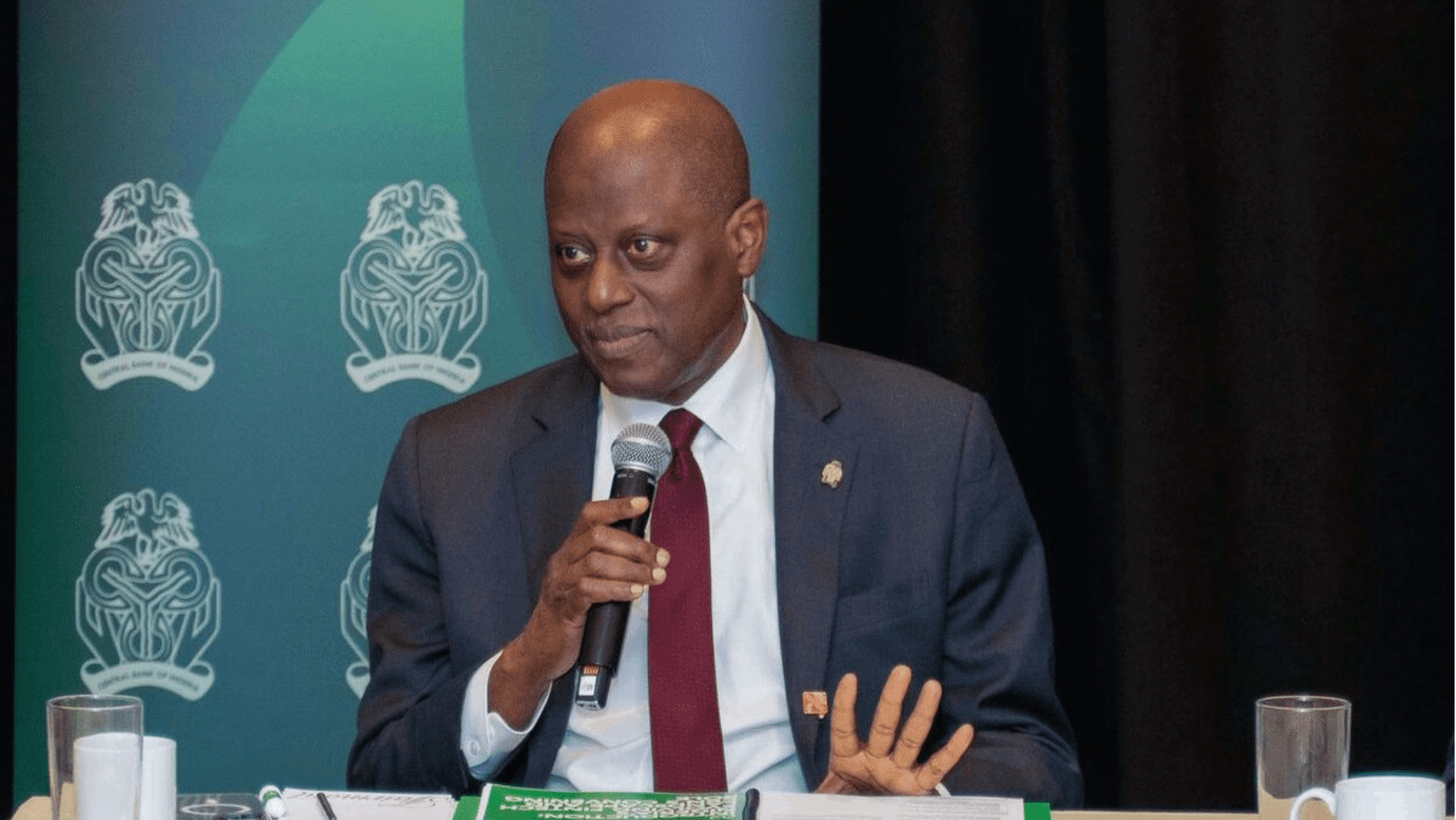
ABUJA, May 21 – The Central Bank of Nigeria Governor Olayemi Cardoso said the country has built sufficient economic buffers to withstand inflationary pressures stemming from the escalating conflict in the Middle East, as policymakers moved to keep interest rates unchanged.
Speaking after the Monetary Policy Committee’s 305th meeting in Abuja, Cardoso said recent inflation increases were largely driven by external shocks, particularly higher global energy prices and geopolitical tensions involving Iran, Israel and the United States.
The MPC retained the benchmark Monetary Policy Rate at 26.5%, while leaving the Cash Reserve Ratio for commercial banks at 45% and merchant banks at 16%. The standing facilities corridor was also maintained at +50/-450 basis points around the benchmark rate.
Cardoso said reforms introduced by the apex bank, including foreign-exchange stabilisation measures and tighter monetary controls, had helped reduce the pass-through effect of global commodity price shocks on the domestic economy.
Nigeria’s headline inflation rose to 15.69% in April from 15.38% in March, while food inflation accelerated to 16.06% due to higher transportation and logistics costs. Core inflation, however, slowed to 15.86% from 16.21%, suggesting underlying price pressures may be easing.
The 12-month average inflation rate declined for a sixth straight month to 19.16% in April, compared with 20.05% in March. Month-on-month inflation also slowed sharply to 2.13% from 4.18%.
Cardoso said the country’s external reserves increased to $49.49 billion as of May 15 from $48.35 billion at the end of March, providing import cover for more than nine months and helping reinforce investor confidence.
Nigeria’s economy expanded by 4% in the fourth quarter of 2025, supported by growth in both the oil and non-oil sectors, according to the central bank.
