
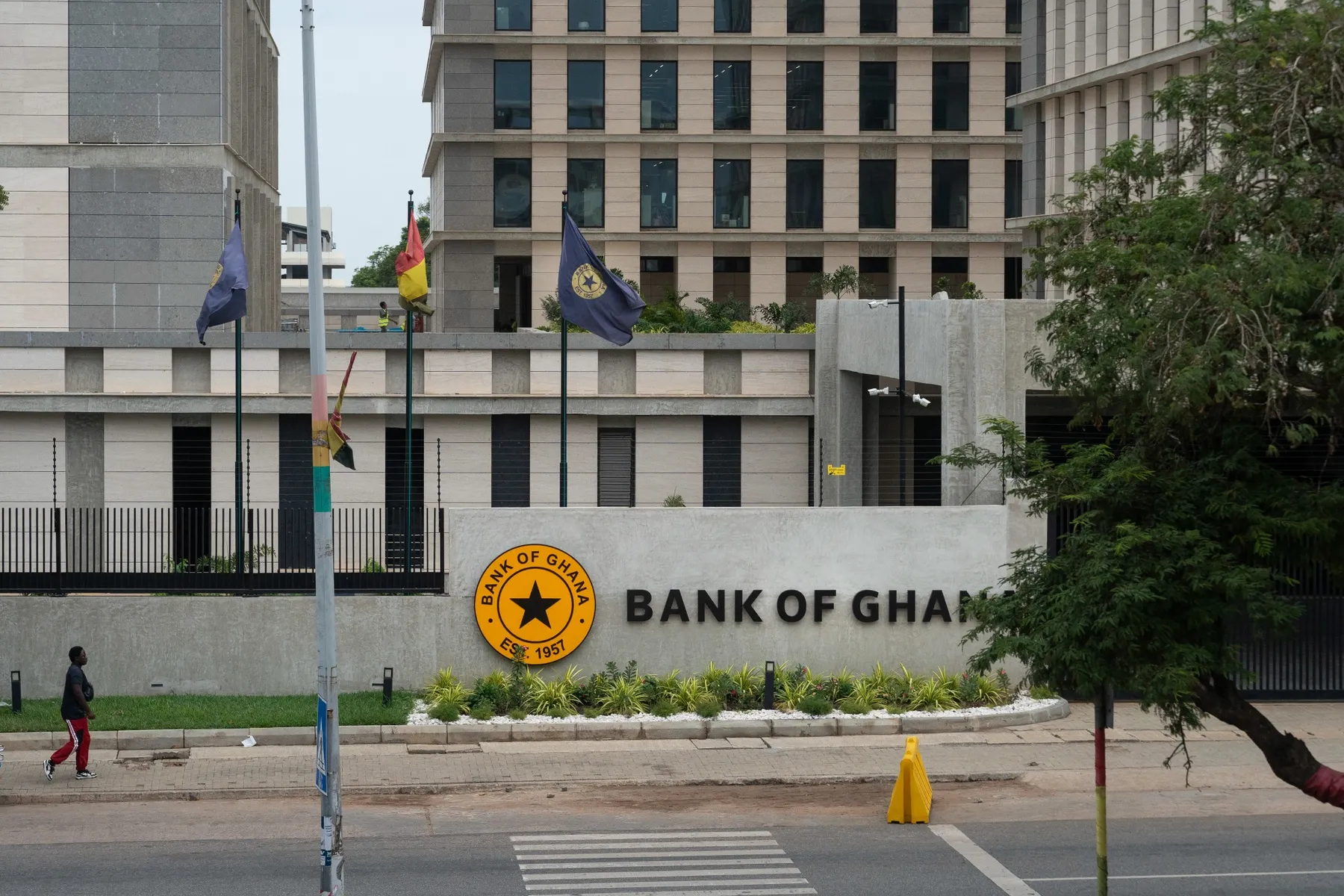
ACCRA, Nov 23 – Ghana has opened a voluntary offer to repurchase up to $2.45 billion in government securities issued under its Domestic Debt Exchange Programme (DDEP), providing eligible bondholders with an opportunity to redeem their investments ahead of the securities’ scheduled maturity in February 2027.
According to a Bank of Ghana notice issued on Monday, the offer will close on November 25, with settlement scheduled for November 26. The exercise forms part of the government’s broader liability management programme as it prepares to meet repayment obligations arising from the domestic debt restructuring.
The transaction will be conducted through a Dutch auction, under which the government will determine the purchase prices accepted based on the bids submitted by participating investors. Participation is voluntary, allowing eligible bondholders to either tender their securities for repurchase or retain them until their scheduled maturity.
Investors will be able to participate through designated financial institutions, including Absa, CalBank, Fidelity Bank, GCB Bank, Standard Chartered Bank, ARB Apex Bank, Société Générale and Stanbic Bank, alongside other participating financial institutions.
Fidelity Bank’s involvement places the Nigerian banking group among the institutions facilitating access to Ghana’s latest domestic debt management exercise.
Buyback targets securities issued under the DDEP
The securities targeted by the offer were issued in February 2023 following Ghana’s Domestic Debt Exchange Programme, which was launched in December 2022 as part of efforts to restructure public debt and address mounting fiscal pressures.
Under the programme, holders of existing government bonds exchanged their securities for new instruments with extended repayment periods and lower interest rates. The restructuring affected several categories of domestic investors, including commercial banks, insurance companies and pension funds.
The bonds covered by the latest repurchase exercise carry an annual coupon of 8.23%. Earlier Finance Ministry documents placed their outstanding principal at approximately $2.46 billion, alongside about $940 million in interest.
The government’s current offer is capped at $2.45 billion. The distinction between the outstanding principal and the buyback amount reflects the scale of the securities targeted and the maximum value of the proposed repurchase.
The exercise follows the government’s issuance calendar published on October 22, 2026, which outlined plans to buy back the restructured securities ahead of their February 2027 maturity.
Sinking fund supports repayment preparations
The Finance Ministry has linked the liability management exercise to the full operationalisation of the sinking fund established to prepare for repayment of the debt exchanged under the DDEP.
A sinking fund provides a mechanism for setting aside resources towards future debt obligations. Its operationalisation is therefore relevant to the government’s preparations for the February 2027 repayment date and its broader domestic debt management strategy.
Ghana has also projected net domestic financing of approximately $1.30 billion between October and December 2026. This represents the expected difference between funds raised domestically and repayments made during the period. It should not be interpreted as a dedicated allocation for the $2.45 billion bond repurchase.
The buyback provides another instrument for managing the government’s outstanding domestic liabilities before maturity. Its execution through a voluntary auction also allows the government to determine the amount of securities it is able to repurchase based on the bids received and the terms accepted.
Government seeks to maintain confidence in domestic debt management
Finance Minister Dr Cassiel Ato Forson encouraged bondholders to participate in the exercise in a social media post the previous week. He also said the government had introduced measures intended to prevent a recurrence of a domestic debt exchange programme.
That commitment is significant given the effects of the 2022 restructuring on Ghana’s domestic financial system. The DDEP required banks, pension funds, insurers and other investors to exchange existing government securities for instruments with different repayment and interest terms.
The latest offer gives eligible investors an opportunity to receive cash before the scheduled maturity, while providing the government with flexibility in managing the repayment profile of its restructured domestic debt.
The auction’s outcome will depend on investor participation, the prices submitted and the amount of securities the government ultimately accepts for repurchase. With the offer closing on November 25 and settlement scheduled for November 26, the exercise has a relatively short execution window.
The transaction is an important stage in Ghana’s preparations for the February 2027 maturity. Its completion will provide a clearer indication of how much of the targeted DDEP debt the government has been able to retire ahead of the scheduled repayment date.
