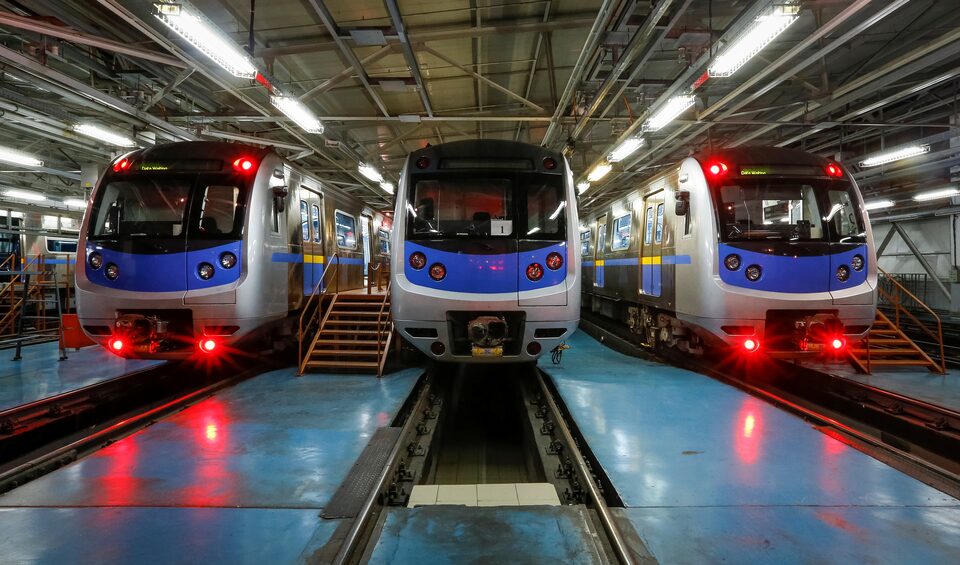
RABAT, Oct 15 – Morocco plans to invest approximately $13.53 billion in railway infrastructure by 2030, extending its high-speed rail network and modernizing conventional lines as the country positions rail transport as a central component of its long-term development strategy.
Transport Minister Abdessamad Kayouh outlined the investment programme at the Forum on Financing Railway Projects in Africa in Rabat, identifying the extension of the high-speed railway from Kenitra to Marrakech as a major component of the expansion.
Rabie Khlie, director general of Morocco’s National Railway Office (ONCF) and president of the International Union of Railways (UIC) Africa Region, highlighted the country’s railway reforms, including Al Boraq, Africa’s first high-speed train.
He said modernization of the conventional railway network had helped Morocco’s rail system serve more than 55 million passengers annually. Khlie also pointed to an investment programme exceeding €10 billion through 2030, underscoring the scale of the country’s railway development ambitions.
Morocco’s Railway Model
Morocco’s railway expansion has attracted attention from African infrastructure policymakers seeking ways to finance large-scale transport projects and improve connectivity.
Asmae Boureddaya, regional coordinator of the African Union Development Agency-NEPAD (AUDA-NEPAD), said Morocco’s experience offered lessons in mobilizing capital around a clearly defined national development strategy.
She highlighted ONCF’s 2022 green bond issuance, which brought together Moroccan investors, the European Bank for Reconstruction and Development, CDG Capital and Tamwilcom.
According to Boureddaya, the financing initiative helped align funding with the long operating life of railway infrastructure. AUDA-NEPAD hopes to share these lessons through South-South cooperation, enabling other African countries to explore similar approaches to infrastructure financing.
Boureddaya also identified Morocco as one of the African countries making progress toward the African Union’s Agenda 2063 development objectives.
Africa’s Railway Financing Gap
Despite Morocco’s progress, financing remains a major obstacle to railway development across the continent.
Khlie said Africa’s expanding population, youthful demographics, rapid urbanization and natural-resource potential strengthen the case for modern transport networks capable of moving people and freight more efficiently.
However, insufficient investment has constrained network expansion, maintenance and the adoption of modern railway technologies.
A report cited by Railway Pro, drawing on analysis from the Africa Finance Corporation, estimates that Africa needs to invest between $65 billion and $105 billion annually to address its railway infrastructure requirements.
The funding gap has contributed to limited progress on railway expansion projects under the African Union’s Programme for Infrastructure Development in Africa (PIDA). Other challenges include inadequate maintenance, underutilized rail services and technological disparities between networks.
These constraints limit the capacity of railways to support regional trade, connect production centres to markets and reduce the cost of transporting commodities across African economies.
Morocco’s investment programme therefore comes against a wider continental challenge: mobilizing long-term capital for infrastructure that requires substantial upfront expenditure but can deliver economic benefits over decades.
The experience highlighted at the Rabat forum suggests that financing structures, including green bonds and partnerships between domestic investors and development finance institutions, could form part of the response. However, scaling railway investment across Africa will require sustained funding, effective project implementation and stronger coordination between national and regional transport systems.