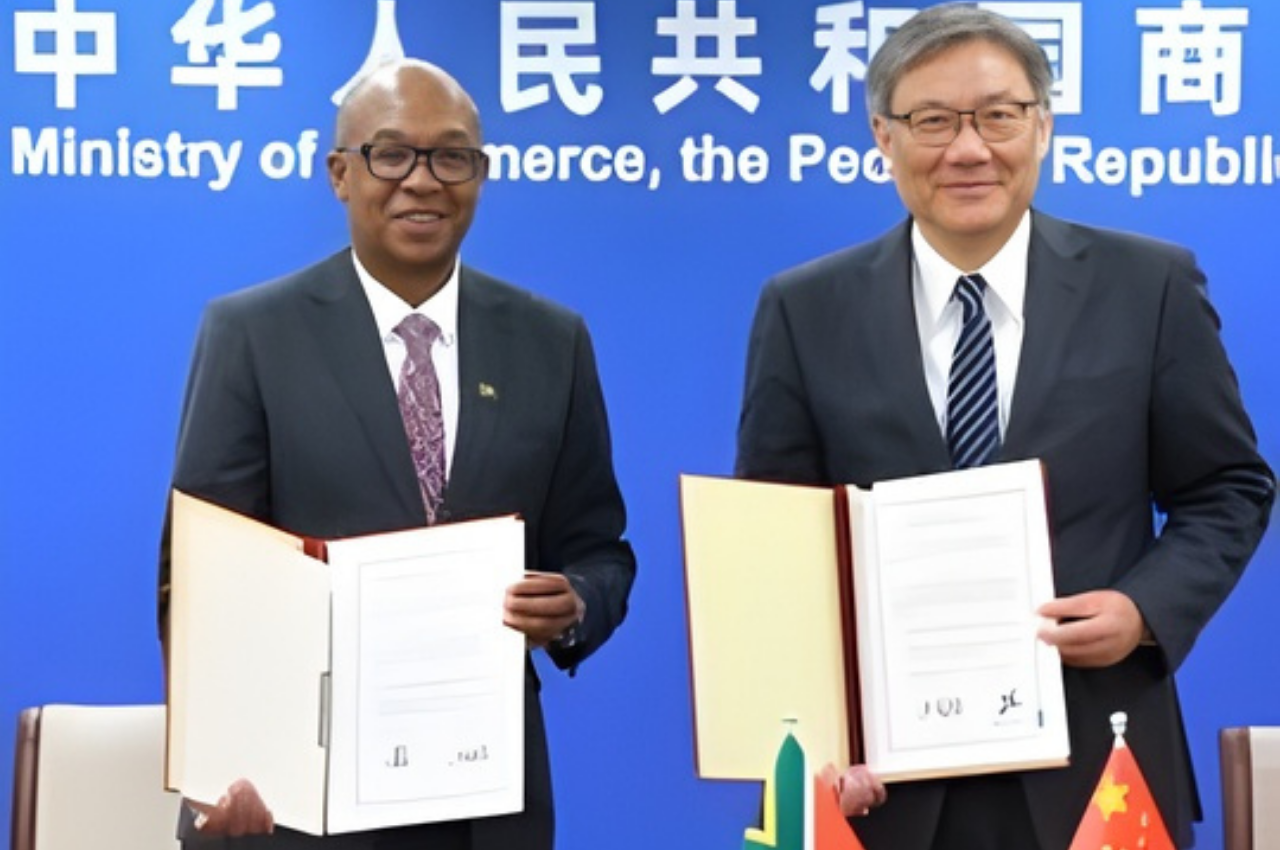
BEIJING, Feb 6 – South Africa has taken a major step toward expanding its trade relationship with China after the country’s trade minister, Parks Tau, signed a new economic partnership framework during an official visit to Beijing.
The agreement, reached with China’s commerce minister Wang Wentao, is designed to move both countries closer to a full trade arrangement that would give South African exports preferential access to the Chinese market.
The framework agreement, formally titled the Framework Agreement on Economic Partnership for Shared Prosperity, sets out the roadmap for deeper economic cooperation. It will be followed by an “Early Harvest Agreement” expected to be concluded by the end of March 2026.
Once finalised, this next phase is expected to grant South African goods duty‑free entry into China, opening up new opportunities for exporters.
South Africa is keen to diversify its trade partners as it navigates rising tariffs from the United States, which recently imposed a 30% duty on South African exports.
China is already the country’s largest bilateral trading partner, and the new deal could help cushion the impact of weaker access to the U.S. market.
China has also been increasing its engagement with African economies, having announced plans to remove tariffs on imports from African countries with which it has diplomatic ties.
Kenya, East Africa’s largest economy, reached a preliminary trade arrangement with China earlier this year, highlighting a broader shift toward stronger Africa–China commercial links.
South Africa’s trade ministry said the deepening relationship with China would benefit key sectors such as mining and agriculture, while also helping local firms expand into one of the world’s largest consumer markets. However, Minister Tau stressed that negotiations would include safeguards to ensure South Africa’s industrial base is protected.
As part of the growing cooperation, China has also invited South Africa to participate in an investment promotion event focused on the steel industry, aimed at encouraging more Chinese capital into the country.