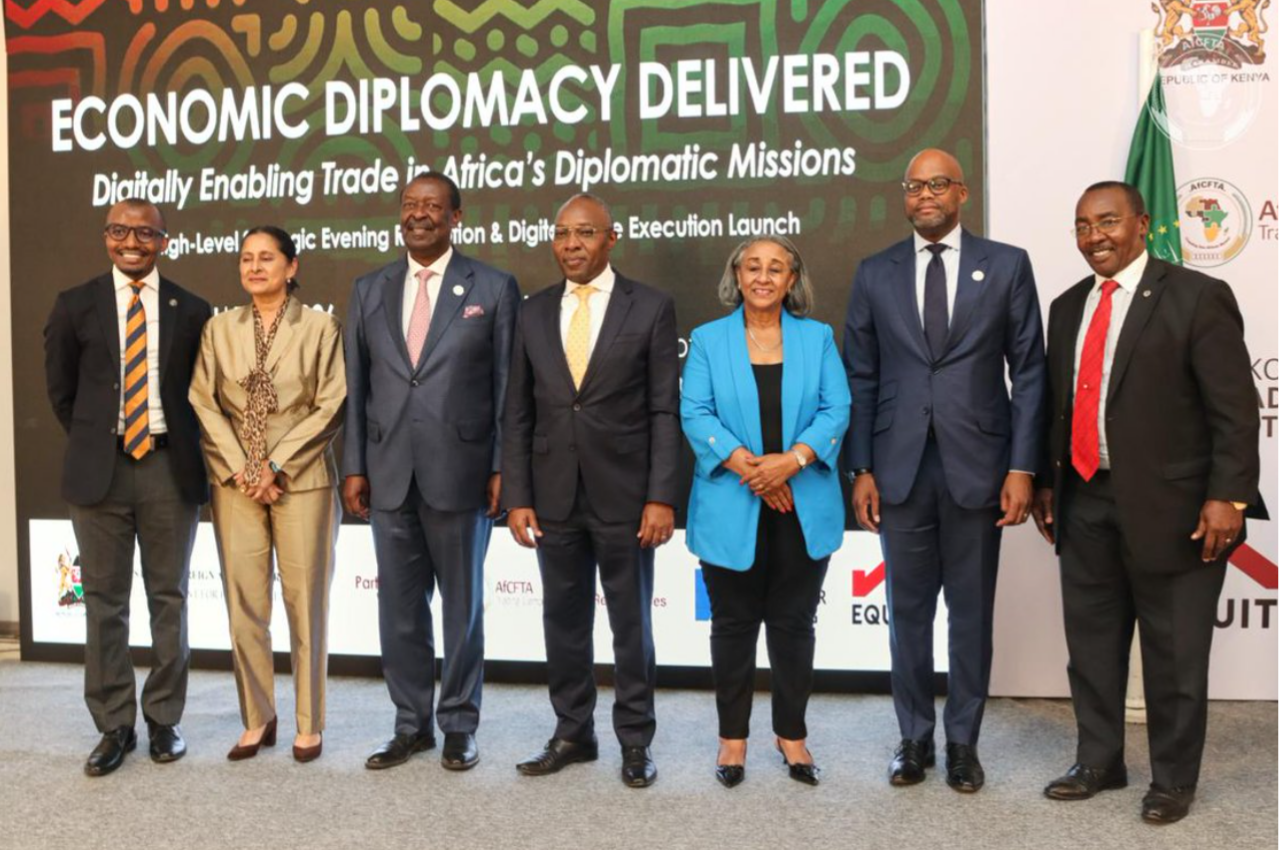
Addis Ababa, Feb 13 – Kenya has unveiled two digital platforms, BiasharaLink and Deal House, designed to strengthen cross‑border trade by turning its diplomatic missions into active hubs for commercial deals.
BiasharaLink allows embassies, exporters, and investors to capture, structure, and track trade and investment opportunities. Deal House acts as the execution layer, validating leads, matching them with credible partners, linking them to financing, and helping transactions progress toward contracts. Together, the platforms aim to bridge the persistent gap between opportunities and completed deals that has long limited regional trade.
The AfCFTA, one of the African Union’s flagship initiatives under Agenda 2063, entered into force in 2019 and began trading in 2021. Its aim is to create a single continental market for goods and services, eliminate tariffs on most products, facilitate the movement of capital and resources, and promote regional value chains.
Despite these objectives, intra‑African trade remains low, constrained by non‑tariff barriers, fragmented regulations across overlapping regional economic communities, infrastructure deficits, and delays in harmonising rules of origin. Such gaps have limited the ability of African businesses to convert trade enquiries into completed deals.
The platforms were unveiled at a reception in Addis Ababa, Ethiopia, on the sidelines of the 39th African Union Summit on Thursday. The event brought together senior Kenyan officials, African Union representatives, ambassadors, multilateral institutions, and private sector leaders, reflecting a focus on practical measures to increase intra-African trade.
Felix Chege, founder and CEO of Real Sources Africa, the institution behind the platforms—said Kenyan missions handle around 3,500 trade enquiries each month but complete fewer than 1 per cent. He added that the goal is to build the infrastructure and ecosystems that can drive trade, investment and financing to move this continent forward.
Kenya’s Prime Cabinet Secretary and Cabinet Secretary for Foreign and Diaspora Affairs, Musalia Mudavadi, described the platforms as “a new model of economic diplomacy. They provide a common system for capturing opportunity and connecting it to execution.” Wamkele Mene, Secretary General of the AfCFTA Secretariat, highlighted the need for African economies to strengthen domestic markets and regional trade amid global disruptions and rising protectionism.
The initiative also prioritises small and medium-sized enterprises and women-led businesses, helping them access regional markets and formalise transactions. James Mwangi, CEO of Equity Group Holdings, described the platforms as practical tools to convert enquiries into structured, bankable deals.
By integrating digital systems with trade facilitation, the platforms aim to address key challenges in AfCFTA implementation, including customs inefficiencies, fragmented regulations, infrastructure bottlenecks, and difficulties in cross‑border payments. The initiative complements ongoing continental efforts such as the AfCFTA Digital Trade Protocol, which seeks to harmonise electronic contracts, digital invoicing, and cross‑border payments.