
– Business, Finance, Markets & Economic News
  • Home
  • Economy
  • Business
  • Markets
  • Finance
  • Credit Ratings
  • Policy
  • Tech
– Business, Finance, Markets & Economic News
  • Home
  • Economy
  • Business
  • Markets
  • Finance
  • Credit Ratings
  • Policy
  • Tech
Top News
TotalEnergies to Invest $10 Billion in Angola as It Targets Sustained Oil Production
Kenya Set for About $400 Million World Bank Emergency Financing Amid Rising Risks
South Africa Swings to 2.6% Current Account Deficit as Higher Oil Costs Hit Imports
Emerging-Market Private Credit Fundraising Surges to $8.7 Billion in H1 2026
TotalEnergies Makes New Angola Oil Discovery, Expands Exploration Footprint
Egypt’s Annual Urban Consumer Price Inflation Eases to 14.5% in August, Stats Agency Says
Senegal to Put 109 Oil and Gas Blocks on Market as Dakar Seeks New Energy Investors
Angola Moves to Open $18.6 Billion Domestic Bond Market to Foreign Investors
India’s Lohum Begins Lithium Mining in Zimbabwe With First Overseas Shipment
Africa’s Deposits Rise 12% to $156.30 billion as Payment Activity Accelerates, Standard Bank says
Morocco and Guinea Sign 25 Agreements to Deepen Strategic Economic Partnership
Africa50 Targets $20 Billion Infrastructure Portfolio as Funding Gap Widens
Senegal Rejects Restructuring, Plans Debt Reprofiling Under $2.2 Billion IMF Deal
Africa’s Private Credit Market Set for Further Growth as Financing Gap Widens
Mauritius Explores Etihad Partnership as Island Seeks to Expand Aviation Network
SUBSCRIBE
– Business, Finance, Markets & Economic News
Subscribe
– Business, Finance, Markets & Economic News
  • Home
  • Economy
  • Business
  • Markets
  • Finance
  • Credit Ratings
  • Policy
  • Tech
Copyright 2026 - All Right Reserved
Home » Insights » Mobilizing Private Capital Requires Making Development Investable, Experts Say
Insights

Mobilizing Private Capital Requires Making Development Investable, Experts Say

by Emmanuel Ebube March 13, 2026
written by Emmanuel Ebube March 13, 2026
FacebookTwitterLinkedinEmail
163

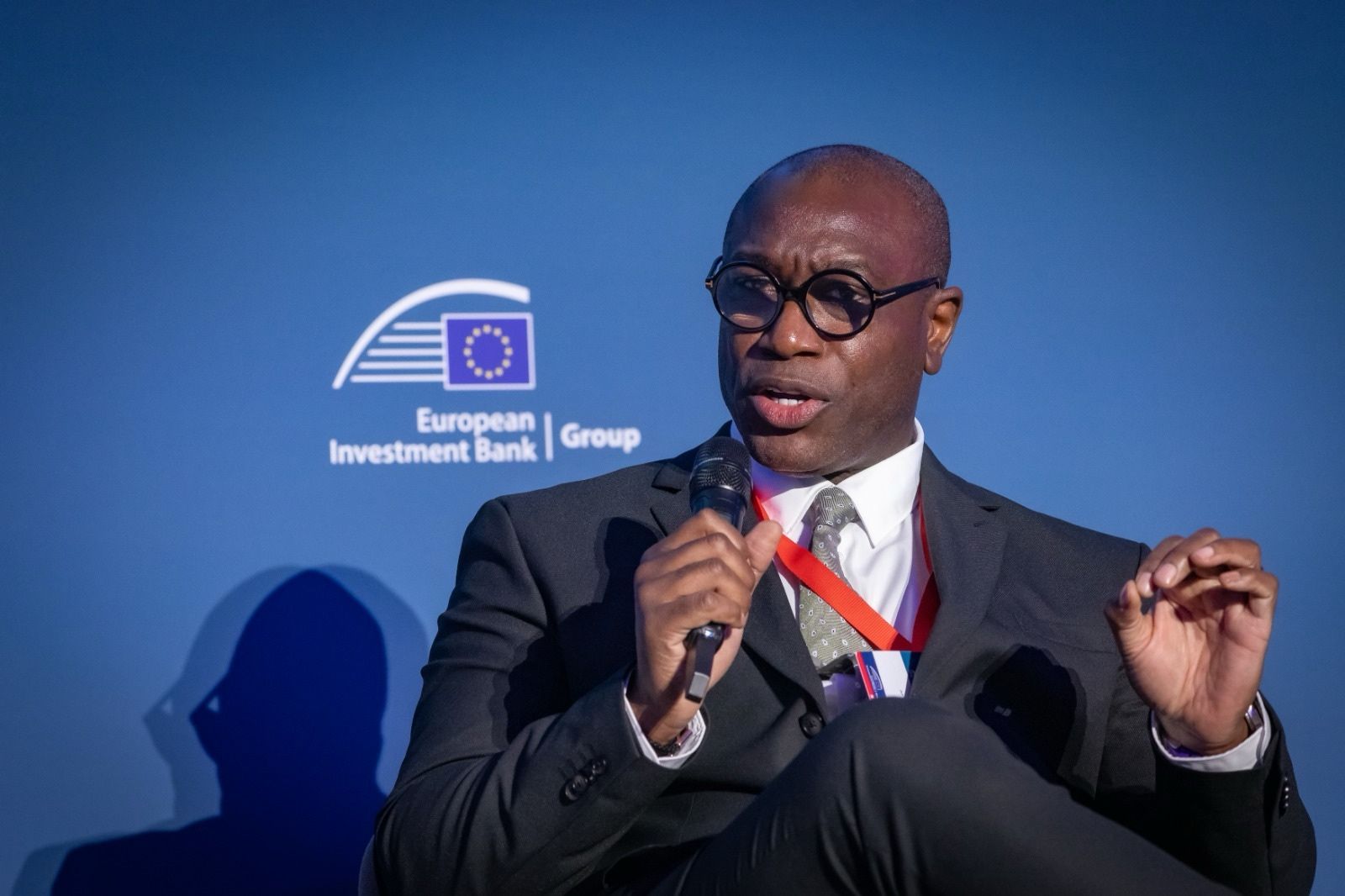
LUXEMBOURG, Mar 13 – Mobilising private capital at scale requires a fundamental shift in how development opportunities are structured, according to experts speaking at the European Investment Bank Global Forum.

The discussion, held in Luxembourg, focused on how the European Union’s €300 billion Global Gateway initiative can mobilise significantly more private investment for industrial development, particularly in Africa.

Participants argued that the central challenge is not a shortage of capital but a shortage of investment structures capable of attracting institutional investors.

Hubert Danso, chairman of Africa Investor, said global capital markets are already flush with liquidity, but development opportunities are rarely designed in ways that match the requirements of institutional portfolios.

You Might Be Interested In
  • Pump in vs Plug in: South Africa’s Fuel Cost Crisis

According to Danso, development finance has traditionally focused on making investments developmental. However, mobilising large-scale private capital requires the opposite approach: making development projects investable.

Global institutional investors collectively manage more than $300 trillion in assets. Yet that capital does not flow based on persuasive presentations or conference discussions. Instead, it allocates according to mandates, benchmarks and asset classes that can absorb investment at scale.

This structural issue was highlighted during the forum, where speakers noted that development finance institutions currently mobilise only about $0.20 to $0.38 of private capital for every development dollar invested in Africa. This is far below the long-standing target of mobilising $10 of private investment for each public dollar.

At the same time, António Costa pointed out that European financial instruments have demonstrated the ability to mobilise as much as €15 of investment for every €1 of public funding.

The disparity suggests that the problem is not the availability of capital but what experts describe as an “investability gap.”

Closing this gap is increasingly seen as a strategic priority for Europe as it seeks to deepen economic ties with African economies, strengthen industrial supply chains and expand energy partnerships.

However, institutional investors require investment opportunities that meet strict standards related to scale, governance, liquidity and transparency.

Historically, large investment ecosystems have developed only after such frameworks were created. For example, venture capital ecosystems were pioneered by the Yale University Endowment, while major infrastructure investment models were driven by pension funds such as CPP Investments. Responsible investment leadership has also been advanced by sovereign wealth funds like Government Pension Fund Global.

In each case, institutional investors played a role not only as providers of capital but as architects of entire asset classes.

Experts at the forum identified two priorities to unlock more capital for development.

The first is improving access to reliable investment risk data for Global Emerging Markets, enabling investors to evaluate opportunities using the transparency standards required by institutional portfolios.

The second is strengthening collaboration between major institutions including the European Investment Bank, the European Commission and the European Bank for Reconstruction and Development to jointly design scalable investment platforms.

The cost of failing to address this structural challenge is already significant. Developing countries collectively pay more than $15.6 billion each year in excess financing costs.

At the same time, institutional investors are estimated to have missed more than $6 trillion in potential returns over the past two decades because many development opportunities were never structured as investable asset classes.

Platforms such as Institutional Investor–Public Partnerships are being explored as potential mechanisms to align public institutions and institutional investors around bankable infrastructure systems capable of absorbing capital at scale.

Ultimately, experts say the challenge of mobilising private capital is not primarily about development finance. It is about investment architecture.

When development opportunities are structured in ways that meet institutional mandates and benchmarks, capital does not require persuasion. It reallocates automatically into asset classes capable of absorbing large-scale investment.

Read Next

  • Bank of Africa, Italy’s SACE Partner to Expand Financing for Strategic Projects Across Africa

    July 27, 2026
  • Ethiopia’s Debt Restructuring Talks Face Fresh Setback as Bondholders Warn of Legal Action

    June 1, 2026
  • Marsa Maroc Signs Deal to Operate Liberia’s Port of Monrovia

    February 12, 2026
  • Uganda Signs €110.5 Million Road Financing Deal With Standard Chartered

    July 1, 2026
  • Senegal Bonds Fall to Record Lows Ahead of Expected IMF Statement on Debt Restructuring

    September 1, 2026

Newsletter

Subscribe to our newsletter for trusted insights on Africa’s economies, markets, and business.

African Economy Inc. Logo

About Us

We are a business and economic intelligence platform delivering in-depth reporting, analysis, and insights on markets, companies and economic developments across Africa.

Our Company

  • AEI Intelligence
  • About
  • Editorial Standard
  • Partnerships
  • Advertise With Us
  • Careers
  • Ownership

News

  • Economy
  • Business
  • Markets
  • Finance
  • Credit Ratings
  • Policy
  • Tech

Useful Links

  • Privacy Policy
  • Terms of Use
  • Closed Captioning Policy
  • Accessibility Statement
  • Personal Information
  • Data Tracking
  • Register New Account

Subscribe Newsletter

Subscribe to our newsletter for trusted insights on Africa’s economies, markets, and business.

©2026 Majons Media Inc. All Rights Reserved.

Facebook Twitter Instagram Linkedin
Manage Consent
To provide the best experiences, we use technologies like cookies to store and/or access device information. Consenting to these technologies will allow us to process data such as browsing behavior or unique IDs on this site. Not consenting or withdrawing consent, may adversely affect certain features and functions.
Functional Always active
The technical storage or access is strictly necessary for the legitimate purpose of enabling the use of a specific service explicitly requested by the subscriber or user, or for the sole purpose of carrying out the transmission of a communication over an electronic communications network.
Preferences
The technical storage or access is necessary for the legitimate purpose of storing preferences that are not requested by the subscriber or user.
Statistics
The technical storage or access that is used exclusively for statistical purposes. The technical storage or access that is used exclusively for anonymous statistical purposes. Without a subpoena, voluntary compliance on the part of your Internet Service Provider, or additional records from a third party, information stored or retrieved for this purpose alone cannot usually be used to identify you.
Marketing
The technical storage or access is required to create user profiles to send advertising, or to track the user on a website or across several websites for similar marketing purposes.
  • Manage options
  • Manage services
  • Manage {vendor_count} vendors
  • Read more about these purposes
View preferences
  • {title}
  • {title}
  • {title}
– Business, Finance, Markets & Economic News
  • Economy
  • Business
  • Markets
  • Banking & Finance
  • Energy
  • Tech
  • Policy