
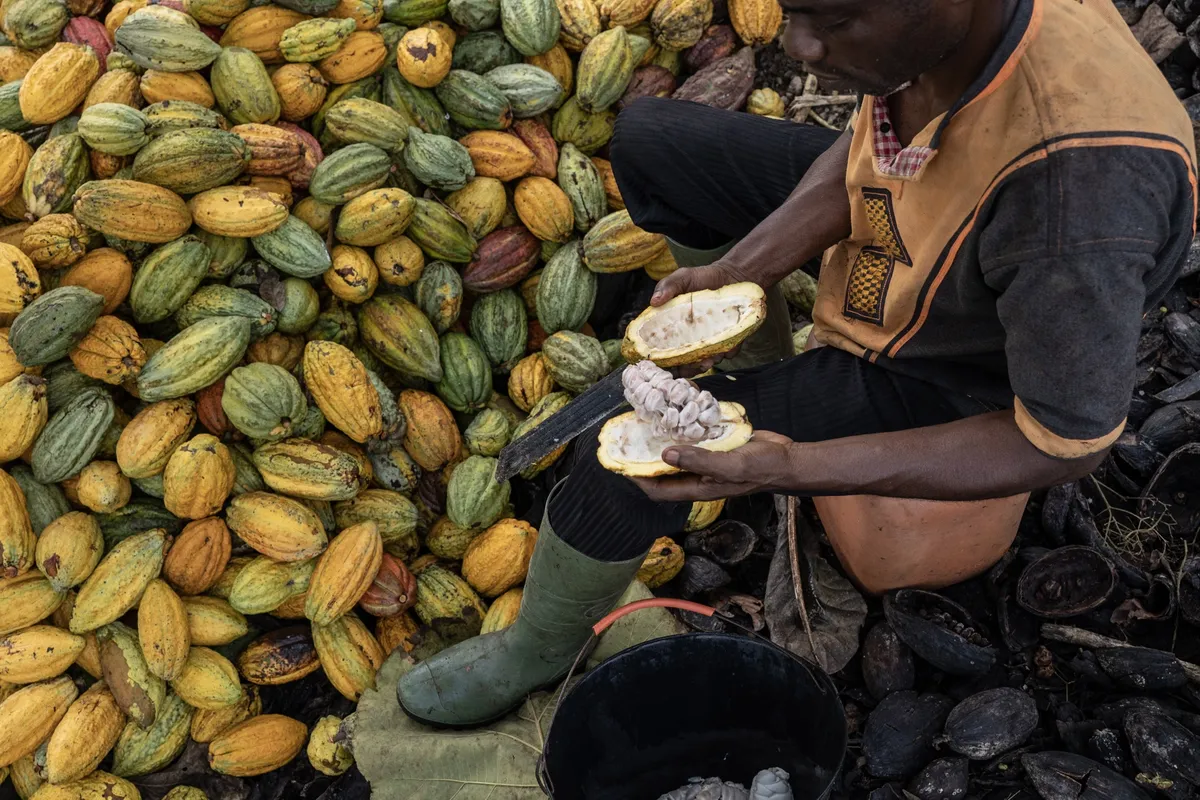
ABIDJAN, May 21 – Ivory Coast expects cocoa production to recover to between 2 million and 2.1 million metric tons during the current 2025/26 season, marking the first increase in output in three years as higher prices support farm investment and crop management improvements.
The projection from the Coffee and Cocoa Council exceeds earlier trader and analyst forecasts, which had estimated production at around 1.8 million tons.
The country is the world’s largest cocoa producer and, alongside Ghana, accounts for roughly 60% of global cocoa supply.
Production had fallen sharply in recent seasons because of adverse weather conditions, aging plantations and the rapid spread of swollen shoot disease across key cocoa-growing areas.
CCC Director-General Yves Brahima Kone said stronger cocoa prices over the past two seasons have enabled farmers to increase fertilizer use and improve farm management practices.
According to Kone, cocoa arrivals at Ivory Coast’s two main ports had already surpassed 1.7 million tons by May 11, reflecting stronger output compared with the previous two seasons.
The rebound follows a period of extreme volatility in global cocoa markets that pushed prices to record highs in late 2024 before declining sharply.
Higher prices encouraged farmers to invest more heavily in production, though parts of the supply chain continue to face disruptions.
A Europe-based cocoa trader told Reuters that large volumes of cocoa remain unsold in Ivory Coast as exporters and farmers delayed sales while waiting for stronger market prices.
The trader said additional selling activity from Ivory Coast could increase visible cocoa inventories in European warehouses over the coming weeks.
Despite the improved outlook for the current season, concerns are emerging about next year’s harvest.
Kone said field survey teams have reported pod survival rates slightly below levels seen during the same period last year, raising concerns about the next main crop season.
Cocoa pods and flowers typically require about 33 weeks to mature, making current weather conditions critical for future production.
Several farmers and crop surveyors also reported lower numbers of flowers and pods in some cocoa-growing regions following drought-related damage.
“We’re keeping a close eye on current weather conditions,” one crop surveyor told Reuters, warning that conditions could affect next season’s output potential.
The outlook underscores how climate risks, disease outbreaks and market volatility continue to shape the global cocoa industry despite the recent recovery in production.
