ADDIS ABABA, Feb 14 – African Union leaders have warned that malaria could surge to more than 400 million cases annually and over one million deaths across the continent if funding gaps are not urgently addressed.
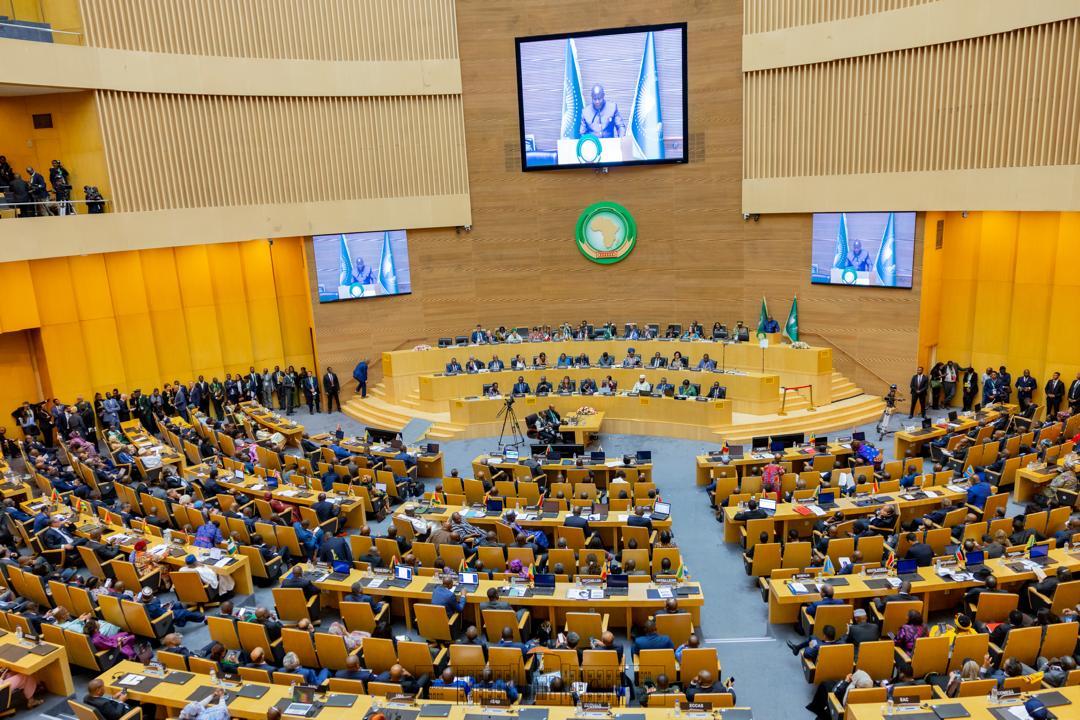
The warning came as the African Union Malaria Progress Report 2025 was presented at the 39th AU Summit in Ethiopia. The report projects that a 30 percent reduction in financing would lead to 146 million additional malaria cases and 397,000 extra deaths by 2030, with children under five accounting for three quarters of the fatalities. Economic losses from such a scenario are estimated at 37 billion US dollars in lost gross domestic product.
Dr. Pakishe Aaron Motsoaledi, South Africa’s Minister of Health speaking on behalf of President Cyril Ramaphosa, pointed to a broader shift in global health partnerships. “In the past five years, official development assistance for health has declined significantly, and multilateral partnerships are increasingly replaced by bilateral agreements,” he said. He highlighted that next-generation technologies, including new vaccines, antimalarial treatments, and diagnostics, offer hope to save millions of lives and keep the continent on track toward malaria elimination.
“But we can only realise this promise if we secure the necessary financing,” he told heads of state.
Despite the looming risk, the report highlights progress in technology deployment. In 2025, 74 percent of insecticide treated nets distributed were dual active ingredient nets, up from 20 percent in 2023, offering 45 percent better protection against resistant mosquitoes. Vaccine rollout has also accelerated: 24 countries distributed 28.3 million WHO-approved malaria vaccine doses to children under five in 2025, compared with 10.5 million in 2024. Two spatial repellent products were prequalified for the first time in decades, and 22 countries planned seasonal malaria chemoprevention campaigns.
The report also stresses the importance of local production to improve supply security. Africa imports 99 percent of its vaccines and 95 percent of medicines. Nigeria has partnered to produce antimalarial treatments and rapid diagnostic tests domestically and is moving to manufacture next-generation nets. The African Medicines Agency, ratified by 31 countries, is harmonising regulatory frameworks to accelerate approval of new health products.
Heads of state stressed that domestic financing must complement international support. Member states pledged to scale up resource mobilisation, strengthen national health financing sustainability plans, and expand innovative funding mechanisms. End Malaria Councils and Funds in 12 countries have mobilised over 200 million US dollars through public-private partnerships.
Leaders also called on global partners to revive the World Bank’s Malaria Booster Programme, which committed more than one billion US dollars between 2005 and 2010. They argued that a renewed programme could close financing gaps, deploy next-generation tools, reinforce community health worker programmes, and build climate-resilient health systems.