
– Business, Finance, Markets & Economic News
  • Home
  • Economy
  • Business
  • Markets
  • Finance
  • Credit Ratings
  • Policy
  • Tech
– Business, Finance, Markets & Economic News
  • Home
  • Economy
  • Business
  • Markets
  • Finance
  • Credit Ratings
  • Policy
  • Tech
Top News
US Auto Supplier Veritas Opens First African Manufacturing Facility in Morocco
Senegal Targets Lower Power Costs With Domestic Gas as Fuel Prices Rise
Mozambique Seeks New IMF Programme as Fund Calls for Further Economic Reforms
Fitch Affirms Morocco at BB+ With Stable Outlook, Citing Strong Fiscal Position
Nigeria’s Current Account Surplus Jumps 68% to $7.54 Billion as Oil Exports and Remittances Rise
Ivory Coast to Launch Gold Refinery in 2027 as It Targets Africa’s Top Producer Spot
Nigeria Sets 180-Day Deadline to Launch Digital Free Zones and Retain Tech Investment
TotalEnergies Secures $1.8 Billion Africa Infrastructure Deal With BlackRock’s GIP
Vedanta’s KCM Signs $498 Million Deal for Copper Recovery Plant in Zambia
World Bank Group Mobilizes Record Private Capital as Africa Financing Surges to $22 Billion
IMF Reaches Staff-Level Agreement With Zimbabwe on Second Programme Review
Fitch Says Naira Devaluation Boosted Foreign Subsidiaries of Nigerian Banks
Petrobras Signs Ivory Coast Deals for Eight Offshore Exploration Blocks
Uganda Raises Banks’ Cash Reserve Requirement to 13.5% as Shilling Weakens
Zimbabwe Railways Seeks $115 Million Afreximbank Facility to Expand Freight Capacity
SUBSCRIBE
– Business, Finance, Markets & Economic News
Subscribe
– Business, Finance, Markets & Economic News
  • Home
  • Economy
  • Business
  • Markets
  • Finance
  • Credit Ratings
  • Policy
  • Tech
Copyright 2026 - All Right Reserved
Home » Industry » South Africa Auto Industry Faces Tariff Deadline Amid Falling Exports and Production Challenges
Industry

South Africa Auto Industry Faces Tariff Deadline Amid Falling Exports and Production Challenges

by Emmanuel Ebube July 21, 2026
written by Emmanuel Ebube July 21, 2026
FacebookTwitterLinkedinEmail
56

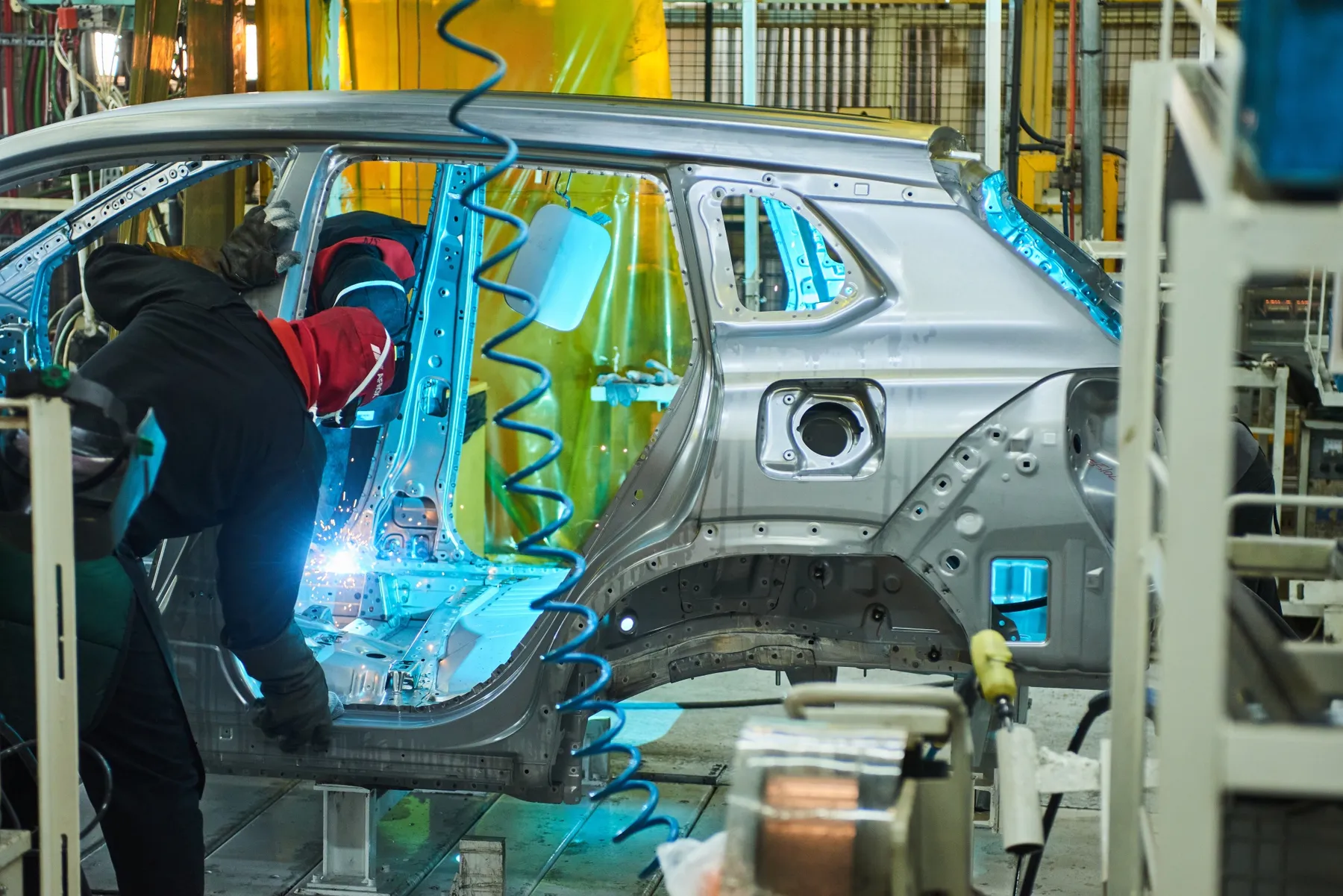
JOHANNESBURG, July 21 – South Africa’s automotive industry is approaching a decisive period as uncertainty grows over the future of US tariffs on vehicle imports, raising fresh concerns for one of the country’s largest manufacturing sectors.

While a US Supreme Court ruling in February overturned the broader 30% reciprocal tariff imposed on South African goods, reducing the general tariff rate to 10%, the separate 25% tariff on vehicle imports under Section 232 of the US Trade Expansion Act remains in place. Reports indicate the temporary status of that sector-specific measure is due to expire this month, placing renewed attention on the industry’s outlook.

The automotive sector contributes approximately 5.3% of South Africa’s gross domestic product (GDP) and supports more than 500,000 jobs across manufacturing and related industries, making any change in US trade policy significant for the country’s industrial economy.

However, industry analysts argue that even a favourable tariff decision would not resolve the structural challenges that have been weighing on the sector for several years.

You Might Be Interested In
  • South Africa Increases Steel Import Tariffs to Protect Local Industry

Vehicle exports to the United States have fallen sharply since the tariffs were introduced. South African manufacturers exported 2,875 vehicles to the US during the first half of last year, compared with 16,112 units during the corresponding period a year earlier, representing an 82% decline.

According to the Automotive Business Council, export volumes fell by 73% during the first quarter, followed by declines of 80% in April and 85% in May as the tariffs took effect.

South Africa’s Minister of Trade, Industry and Competition, Mpho Parks Tau, has also highlighted the broader pressures facing the industry.

According to Tau, the combination of US tariffs, subdued domestic demand and rising import competition has resulted in 12 company closures and the loss of more than 4,000 jobs across the automotive sector over the past two years.

The impact has been particularly severe for export-oriented manufacturers.

Mercedes-Benz suspended production of the C-Class at its East London plant, where nearly 90% of output had been destined for the US market, while BMW’s Rosslyn plant, a key production hub for the X3 model, has faced declining competitiveness following the introduction of the 25% tariff.

Automotive exports to the United States were valued at approximately R28.7 billion, with vehicles accounting for around 64% of South Africa’s exports to the US under the African Growth and Opportunity Act (AGOA) during 2024.

Beyond the tariff dispute, industry performance has continued to lag national industrial targets.

South Africa produced 515,850 vehicles last year, significantly below the 784,509-unit production target outlined under the South African Automotive Masterplan 2035. Localisation levels have also remained at approximately 39%, well below the government’s 60% objective.

At the same time, imported vehicles now account for roughly 64% of domestic vehicle sales, limiting the ability of local demand to offset weaker export performance.

Consumer purchasing patterns have also shifted towards more affordable brands amid slower economic growth. Manufacturers such as Toyota, Suzuki and several Chinese automotive brands have expanded their market share, while premium manufacturers including Mercedes-Benz and BMW have experienced weaker sales.

Toyota reported that the average selling price of new vehicles declined by 2.3% over the past two years to approximately R490,478, despite inflation averaging around 4.5% annually over the same period, reflecting growing price sensitivity among consumers.

South African authorities have continued discussions with US officials in an effort to preserve preferential market access under AGOA.

Minister Tau has argued that South African vehicle exports account for less than 1% of total US vehicle imports, suggesting they pose little competitive threat to American manufacturers.

Business leaders have nevertheless warned that continued tariff uncertainty poses significant risks for manufacturers and component suppliers. Business Unity South Africa (BUSA) Chief Executive Khulekani Mathe described the industry’s exposure to US tariffs as substantial, while economists have cautioned that specialised automotive component manufacturers may struggle to redirect production to alternative markets because they are integrated into highly customised global supply chains.

Industry observers say the current situation highlights broader lessons for South Africa’s industrial strategy. While any easing of tariffs could provide short-term relief, strengthening local production, increasing localisation and diversifying export markets will remain critical to improving the long-term resilience and competitiveness of the country’s automotive industry.

Read Next

  • Nigeria Moves Closer to 90,000km Fibre Network as Project Company Awaits Registration

    August 5, 2026
  • Libya Reroutes Sharara Oil Flows After Fire, Output Maintained

    March 18, 2026
  • South Africa PMI Rises to 50.8 as Growth Returns but Iran War Weighs on Outlook

    April 7, 2026
  • IMF Reaches Staff Agreement with Ivory Coast as Economy Stays Resilient

    May 1, 2026
  • Dangote Refinery to Launch $1.6 Billion IPO in Nigeria’s Biggest Public Share Offering

    September 4, 2026

Newsletter

Subscribe to our newsletter for trusted insights on Africa’s economies, markets, and business.

African Economy Inc. Logo

About Us

We are a business and economic intelligence platform delivering in-depth reporting, analysis, and insights on markets, companies and economic developments across Africa.

Our Company

  • AEI Intelligence
  • About
  • Editorial Standard
  • Partnerships
  • Advertise With Us
  • Careers
  • Ownership

News

  • Economy
  • Business
  • Markets
  • Finance
  • Credit Ratings
  • Policy
  • Tech

Useful Links

  • Privacy Policy
  • Terms of Use
  • Closed Captioning Policy
  • Accessibility Statement
  • Personal Information
  • Data Tracking
  • Register New Account

Subscribe Newsletter

Subscribe to our newsletter for trusted insights on Africa’s economies, markets, and business.

©2026 Majons Media Inc. All Rights Reserved.

Facebook Twitter Instagram Linkedin
Manage Consent
To provide the best experiences, we use technologies like cookies to store and/or access device information. Consenting to these technologies will allow us to process data such as browsing behavior or unique IDs on this site. Not consenting or withdrawing consent, may adversely affect certain features and functions.
Functional Always active
The technical storage or access is strictly necessary for the legitimate purpose of enabling the use of a specific service explicitly requested by the subscriber or user, or for the sole purpose of carrying out the transmission of a communication over an electronic communications network.
Preferences
The technical storage or access is necessary for the legitimate purpose of storing preferences that are not requested by the subscriber or user.
Statistics
The technical storage or access that is used exclusively for statistical purposes. The technical storage or access that is used exclusively for anonymous statistical purposes. Without a subpoena, voluntary compliance on the part of your Internet Service Provider, or additional records from a third party, information stored or retrieved for this purpose alone cannot usually be used to identify you.
Marketing
The technical storage or access is required to create user profiles to send advertising, or to track the user on a website or across several websites for similar marketing purposes.
  • Manage options
  • Manage services
  • Manage {vendor_count} vendors
  • Read more about these purposes
View preferences
  • {title}
  • {title}
  • {title}
– Business, Finance, Markets & Economic News
  • Economy
  • Business
  • Markets
  • Banking & Finance
  • Energy
  • Tech
  • Policy