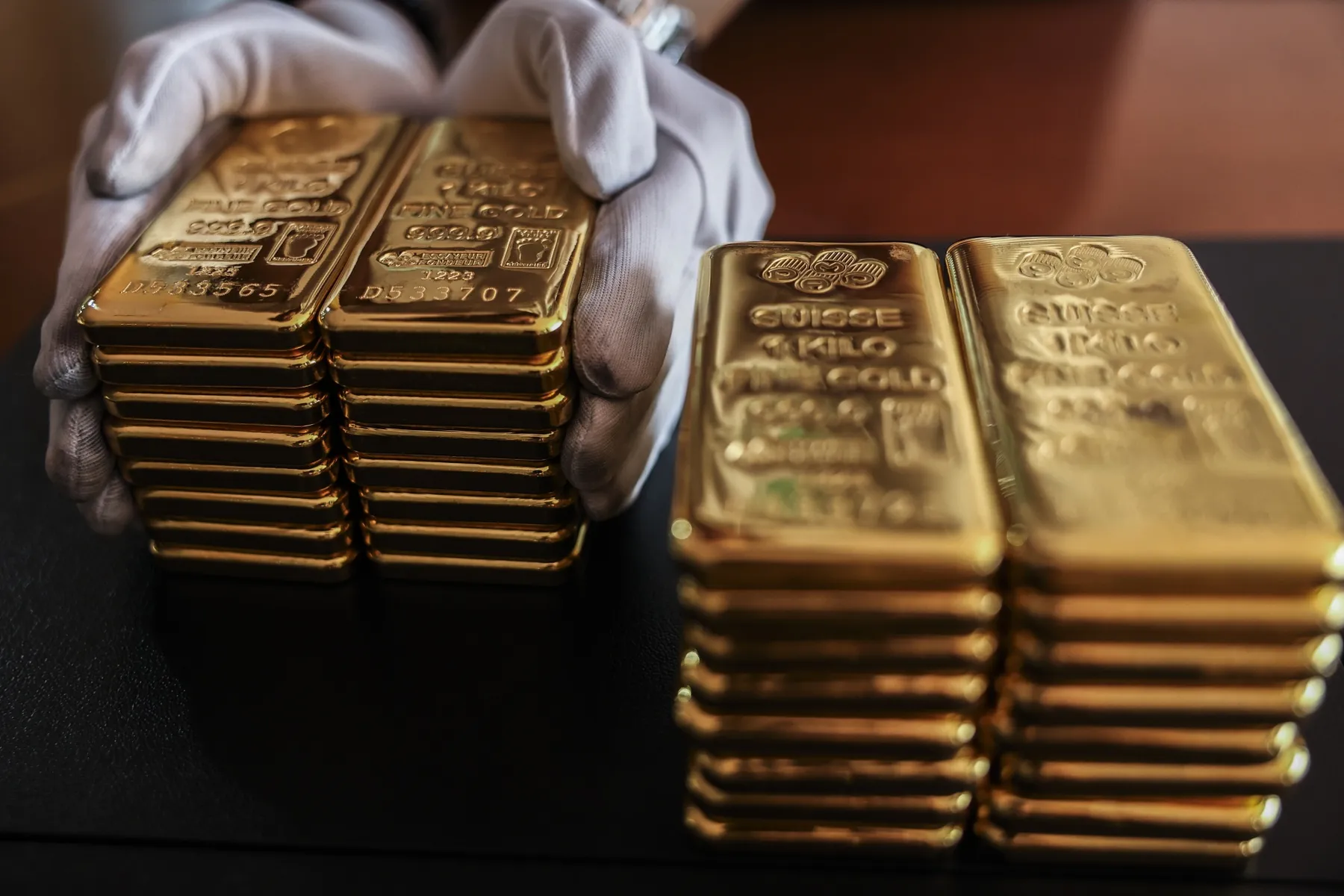
ACCRA, July 17 – Ghana’s Gold Board (GoldBod) has emerged as one of the country’s most influential economic institutions after purchasing between 50 and 54 metric tonnes of gold from artisanal and small-scale miners during the first half of 2026, placing the agency on course to match or exceed last year’s record annual purchases.
While the latest figures highlight another strong year for gold production, the broader significance lies in GoldBod’s growing role in strengthening Ghana’s foreign exchange reserves, supporting the cedi and formalising the country’s gold trade.
According to figures presented to Parliament by Deputy Finance Minister Thomas Nyarko Ampem, and reviewed by African Economy Inc., GoldBod purchased 135.843 metric tonnes of gold between January 2025 and May 2026, spending approximately $16.11 billion.
Of that total, 135.221 tonnes, representing more than 99%, were sourced from artisanal and small-scale miners rather than large multinational mining companies.
In 2025 alone, GoldBod aggregated and exported 104 tonnes of artisanal gold, generating nearly $11 billion in foreign exchange earnings. That exceeded the roughly $9 billion generated by Ghana’s large-scale mining sector during the same period, marking the first time artisanal gold exports surpassed industrial production in the country’s history.
Gold purchases support reserve accumulation
GoldBod was established primarily to reduce gold smuggling by creating a formal market for artisanal miners through competitive pricing, licensed buyers and a government-backed purchasing framework.
According to Ghana’s Ministry of Finance, the country lost an estimated $11.4 billion to gold smuggling between 2019 and 2023, depriving the economy of valuable foreign exchange earnings.
By directing more gold through official export channels, GoldBod has enabled the country to convert previously unrecorded economic activity into official foreign exchange receipts that support reserve accumulation.
The strategy has coincided with a sharp improvement in Ghana’s external position. Foreign exchange reserves increased from approximately $8.98 billion at the end of 2024 to $13.8 billion by the close of 2025, while the cedi appreciated by around 41% during 2025, making it one of Africa’s strongest-performing currencies during the period.
GoldBod has also expanded its purchasing network significantly. As of May 2026, the agency had licensed 1,184 buyers, including 379 Tier One buyers, 736 Tier Two buyers, 67 self-financing aggregators, and two larger aggregation entities to support formal gold trading across the country.
Government extends strategy to large-scale miners
Ghana is now broadening GoldBod’s mandate beyond artisanal mining.
Effective 1 July 2026, the government requires large-scale mining companies, including Newmont, Gold Fields and Zijin Mining, to sell 30% of their locally produced doré gold directly to GoldBod.
The policy represents a significant expansion of state participation in the gold value chain and forms part of Ghana’s broader strategy to increase domestic value addition.
Authorities have also stated their ambition to secure London Bullion Market Association (LBMA) accreditation for at least one domestic refinery by 2030, supporting the government’s objective of ending raw mineral exports and expanding local refining capacity.
Commodity price risks remain
Despite its success, GoldBod’s model remains closely tied to international gold prices.
GoldBod Chief Executive Samuel Gyamfi recently acknowledged that lower global gold prices have reduced the agency’s earnings expectations for 2026 after financial projections were initially based on higher bullion prices.
Although average gold prices remain above 2025 levels, a prolonged decline could reduce export revenues and narrow the margin between domestic purchasing costs and international sales.
The new policy requiring multinational miners to sell part of their production to GoldBod also introduces fresh considerations for investors. The mandatory 30% doré sales requirement alters existing commercial arrangements and could influence future investment decisions by global mining companies operating in Ghana.
Even so, GoldBod has become an increasingly important policy instrument for Ghana, demonstrating how stronger control over mineral exports can improve reserve accumulation, strengthen currency stability and support broader macroeconomic resilience.