
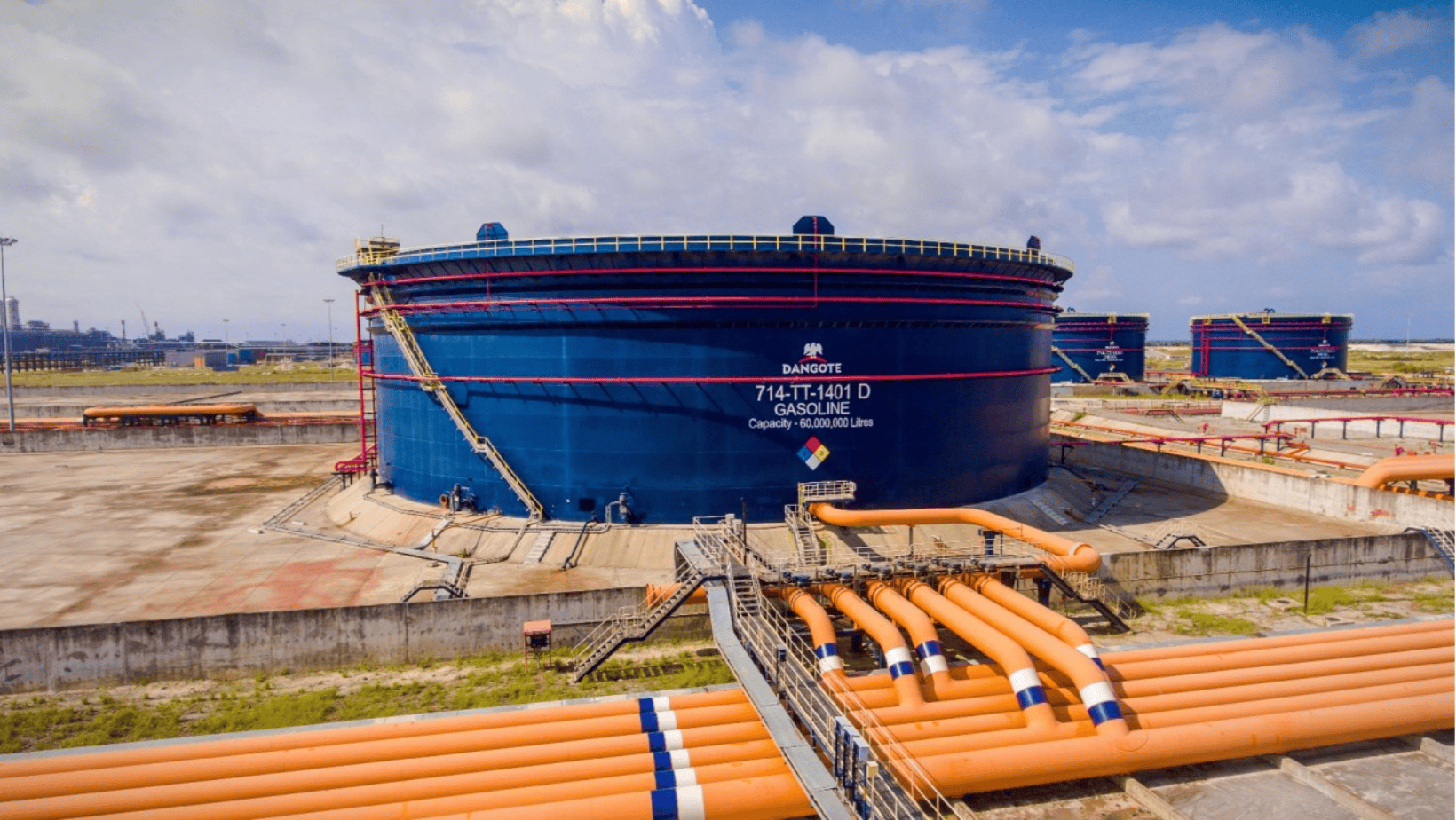
ABUJA, July 16 – Dangote Petroleum Refinery has continued to help keep fuel prices in Nigeria relatively stable despite rising global gasoline prices and higher shipping costs, according to S&P Global Commodity Insights.
In its latest market report, S&P said fuel importers are finding it harder to compete as international gasoline prices and freight costs continue to rise. The report noted that Dangote Refinery’s pricing has kept local petrol prices below international replacement costs, making it difficult for importers to pass the extra costs on to consumers.
Market participants told S&P that petrol prices in Nigeria are effectively being capped by Dangote’s prices. One trader said fuel prices in Lomé are now higher than Dangote’s sales prices, making fuel imports into Nigeria less profitable.
S&P also said the cost of shipping clean petroleum products from Northwest Europe to West Africa increased from $29.70 to $37.12 per metric tonne between the end of June and early July as vessels moved to other markets. At the same time, lower supplies of Russian Black Sea diesel have pushed up diesel prices across West Africa, adding to import costs.
Despite these global pressures, Dangote Refinery has reduced its ex-depot prices since the end of May by more than ₦200 per litre for petrol, ₦300 per litre for diesel and ₦520 per litre for aviation fuel. The company said its pricing reflects the cost of crude purchased under commercial contracts rather than daily changes in global oil prices.
S&P said Nigeria would likely have faced much higher pump prices without the refinery’s local supply. The report also noted that Dangote Refinery is becoming a regional pricing benchmark as importers struggle to match its prices whenever international costs rise.
The refinery recently switched to pricing petroleum products in US dollars, with petrol now selling at $0.779 per litre, meaning naira prices will now move with changes in the foreign exchange market. Industry stakeholders have since renewed calls for government-owned refineries to return to operation to boost competition and expand local refining capacity.
