
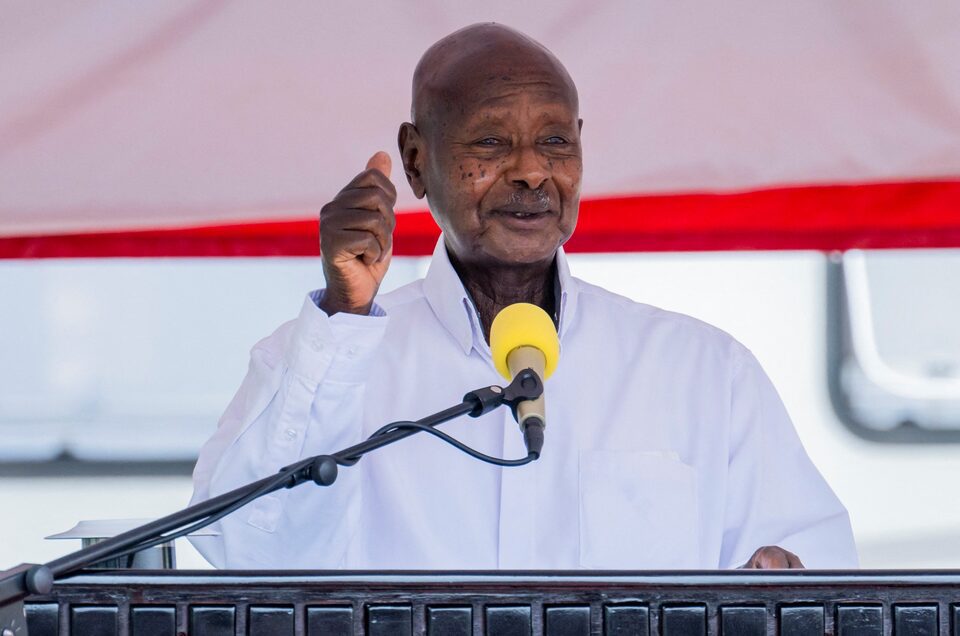
KAMPALA, July 15 – Ugandan President Yoweri Museveni has halted proposed changes to income tax and excise duty rules, returning the bills to Parliament after raising concerns over potential tax avoidance, uneven treatment of businesses and increased costs for manufacturers.
The rejected legislation includes the Income Tax (Amendment) Bill, 2026 and the Excise Duty (Amendment) Bill, 2026, which had been approved by the 11th Parliament before the start of the new financial year in July 2026.
One of Museveni’s main objections relates to a provision on betting and gaming income. The Income Tax (Amendment) Bill sought to introduce withholding tax on betting winnings but excluded winnings from land-based casinos licensed under the Lotteries and Gaming Act, 2016.
The President argued that the exemption could give some operators an advantage over others involved in similar activities and create opportunities for businesses to restructure transactions to reduce their tax obligations.
“The exemption creates opportunities for tax avoidance and revenue leakage,” Museveni said in his communication to Parliament, adding that there was no justification for applying different tax treatment to businesses carrying out substantially similar economic activities.
The President also challenged a proposed increase in excise duty on single-use plastics, warning that the measure could place additional pressure on manufacturers.
Parliament had approved raising the levy from the existing rate of 2.5 percent or 70 US dollars per tonne to 25 percent or 1,500 US dollars per tonne, whichever is higher. Museveni said the scale of the increase could affect production costs, investment decisions and employment in the plastics sector.
He said Uganda’s manufacturing industry was not yet adequately prepared for a rapid shift to alternative packaging materials, as suitable substitutes were not readily available. He recommended further assessment before implementing the higher charge as an environmental measure.
The bills will now return to Parliament for reconsideration, with lawmakers also debating whether the legislation should restart the legislative process after the dissolution of the previous Parliament.
Bbale County MP Charles Tebandeke questioned whether the bills should proceed under the new Parliament, arguing that they had initially been handled by the 11th Parliament.
Deputy Speaker Thomas Tayebwa rejected suggestions that the President had delayed action beyond the constitutional limit. He said the Constitution requires the President to either approve a bill or return it to Parliament within 30 days after receiving it.
Parliament will now review the President’s objections before deciding on the next steps for the proposed tax changes.
