
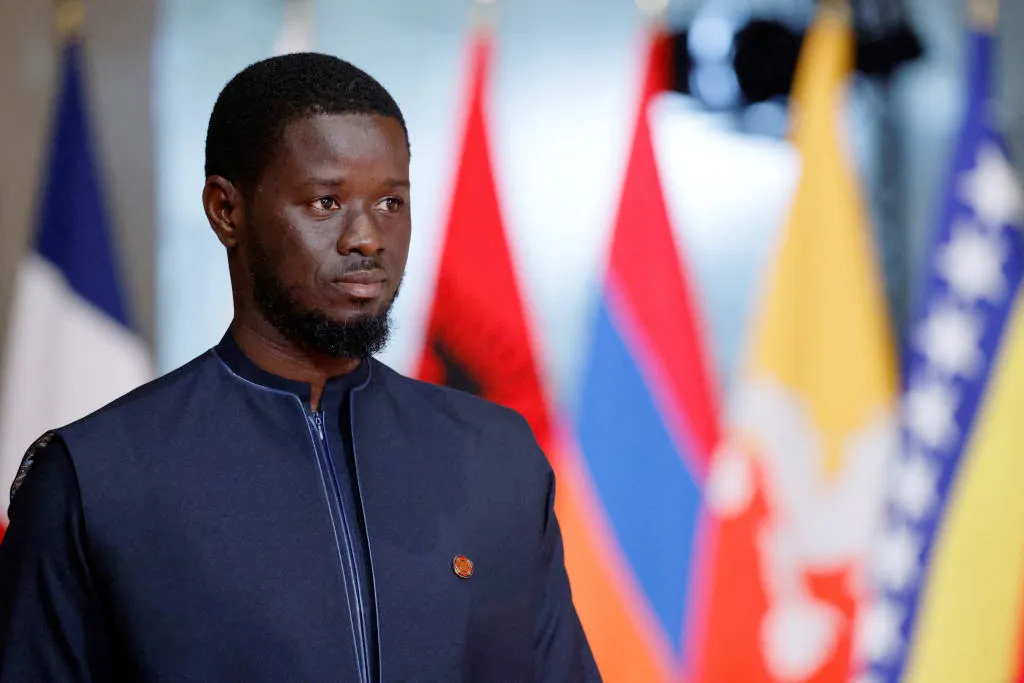
DAKAR, May 23 – Senegal has entered a fresh period of political uncertainty after President Bassirou Diomaye Faye dismissed Prime Minister Ousmane Sonko and dissolved the government, a move that could complicate efforts to stabilize the economy and secure a new agreement with the International Monetary Fund.
A statement carried by state media said all ministers had been dismissed, while the outgoing administration would remain in place to oversee routine government operations during the transition period.
The political split comes at a sensitive moment for Senegal’s economy, which is already facing mounting debt pressures and prolonged negotiations with international lenders.
The IMF previously froze its $1.8 billion support programme after the discovery of misreported debt figures, which pushed Senegal’s end-2024 debt burden to approximately 132% of gross domestic product.
The dismissal raises the possibility of additional delays in reaching a new financing arrangement with the IMF, an agreement widely viewed by investors and policymakers as critical to restoring confidence and supporting economic recovery.
Earlier on Friday, before Sonko’s removal, Finance Minister Cheikh Diba told parliament that Senegal expected to resume discussions with the IMF during the week of June 8 and hoped to reach agreement on key issues by the end of June.
Diba also warned that Senegal’s fuel subsidy costs could rise significantly if oil prices continue climbing.
According to the finance ministry, the country’s fuel subsidy bill could exceed its 2026 budget allocation by as much as 1.15 trillion CFA francs, equivalent to around $2 billion, if crude prices rise to $115 per barrel.
The political divide between Faye and Sonko had increasingly become visible in recent months, particularly around approaches to economic management and debt strategy.
Sonko had reportedly opposed debt restructuring proposals linked to IMF discussions, while also pursuing broader reforms tied to Senegal’s natural resource sector.
Among his major initiatives were reviews of mining agreements and energy contracts, including scrutiny of the Greater Tortue Ahmeyim gas project.
Earlier this year, Sonko described elements of the gas agreement as unfavorable and moved to revoke dozens of mining licenses as part of broader efforts to increase state participation and strengthen public finances.
Political analysts may now closely watch the response of Sonko’s Pastef party, which maintains a dominant position in Senegal’s National Assembly and could influence the pace of legislation and economic reforms.
The developments add another layer of uncertainty for an economy already balancing debt challenges, fuel subsidy pressures and efforts to restore access to international financing.
