
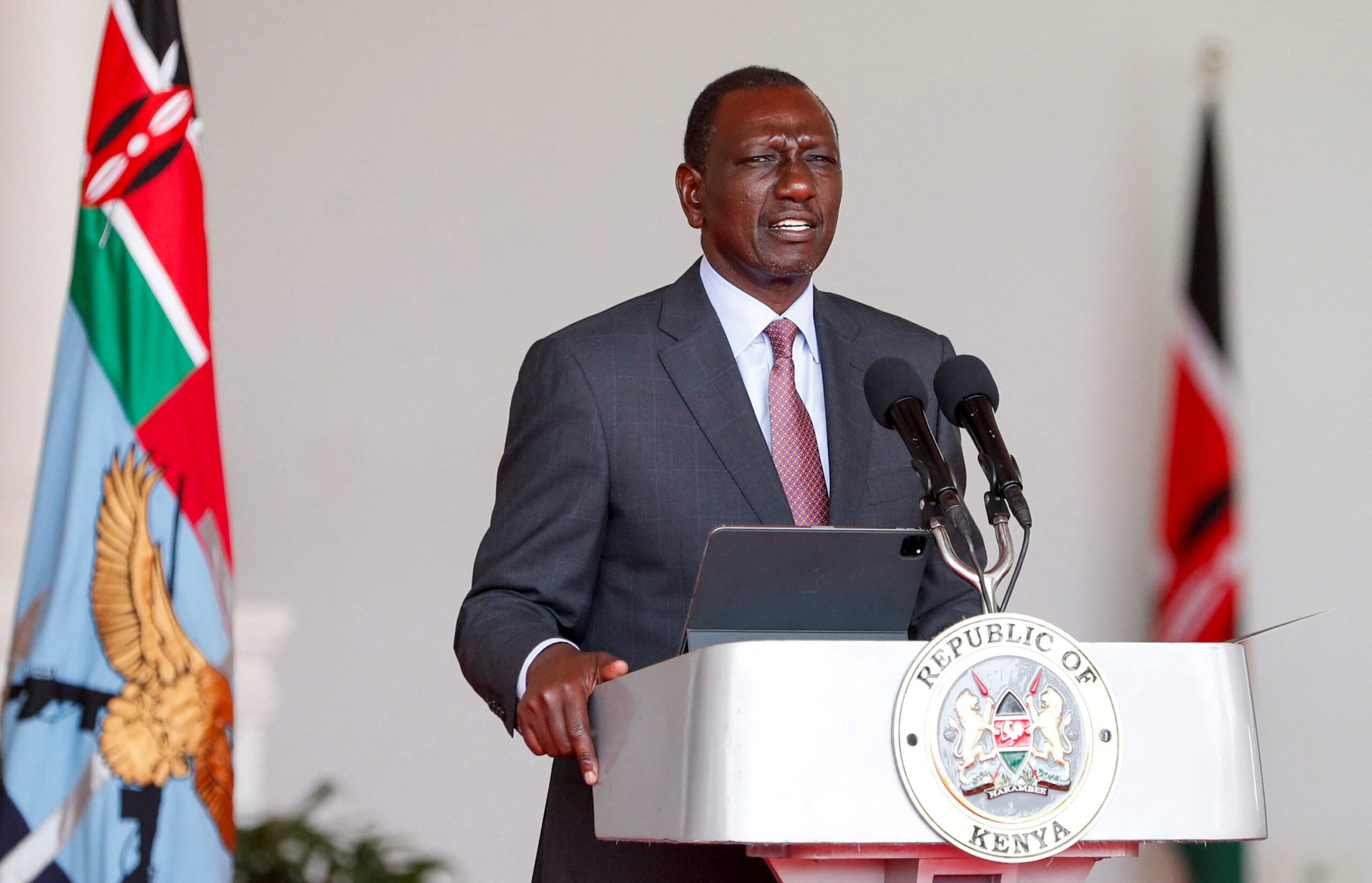
MOMBASA, May 22 – Kenyan President William Ruto ruled out further reductions in fuel taxes after deadly protests over diesel prices disrupted transport and economic activity across the country this week.
Speaking in the port city of Mombasa, Ruto said the government had already spent 28.2 billion shillings ($217 million) on fuel subsidies and tax relief measures since the outbreak of conflict involving the United States, Israel and Iran.
The government will nevertheless lower diesel prices by 10 shillings per liter next month as part of efforts to ease pressure on households and transport operators.
“There are those asking government to remove all taxes and levies on fuel immediately, but we must ask ourselves honestly, if we stop collecting these revenues entirely, what public services shall we stop funding?” Ruto said.
“The reality is that no country can completely escape the global oil shock of this magnitude,” he added.
The comments followed a two-day strike by public transport operators protesting surging diesel costs that triggered unrest in which at least four people were killed.
Fuel prices in Kenya have climbed sharply since the escalation of conflict in the Middle East disrupted shipping through the Strait of Hormuz, a major route for global oil exports.
Diesel prices have risen about 40% while gasoline prices are up roughly 20% since late February, intensifying inflationary pressures in the import-dependent East African economy.
The protests mirror similar unrest in Comoros, where transport strikes over fuel prices recently disrupted economic activity and forced temporary government intervention.
The rising cost of fuel has added pressure on Kenya’s economy at a time when the International Monetary Fund already considers the country at high risk of debt distress.
Ruto said Kenya’s fuel import system reforms have helped stabilize supply and reduce pressure on foreign exchange demand.
He also reiterated plans to accelerate domestic energy production, including the development of oil deposits in northern Kenya and regional refinery projects with neighboring countries.
The government is simultaneously pushing investment in renewable energy, electric mobility and public transport infrastructure to reduce long-term exposure to global oil price volatility.
Ruto announced that Kenya will allow duty-free imports for the first 100,000 electric vehicles brought into the country.
The government has also ordered 3,000 electric vehicles for use by security agencies as part of broader electrification efforts.
The strike by transport operators has since been suspended following meetings with government officials, according to the Federation of Public Transport Sector.
Ruto additionally urged commercial banks to consider temporary loan relief measures for transport operators affected by rising fuel costs.
