
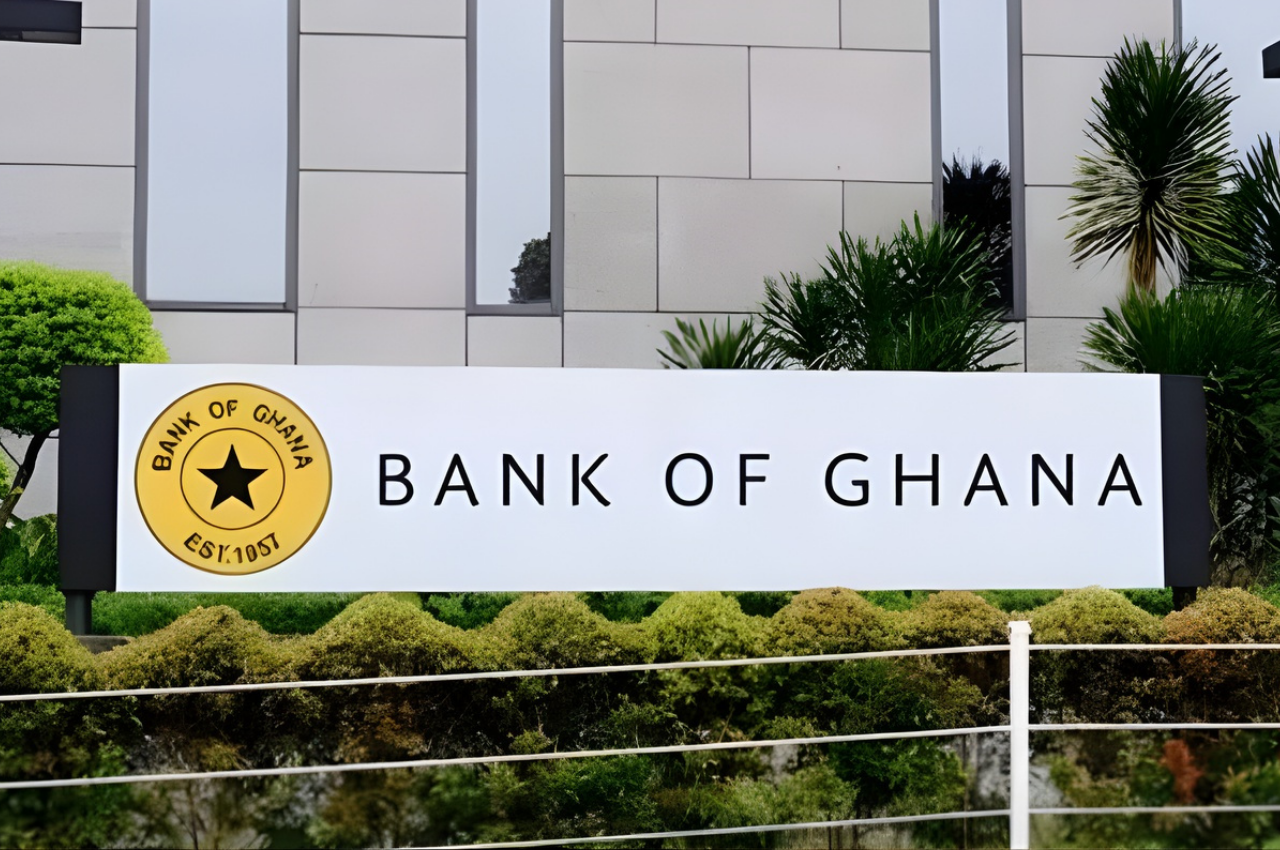
ACCRA, Jan 28 – Ghana’s central bank has cut its benchmark policy rate by 250 basis points to 15.5%, delivering a larger move than most economists had anticipated and extending one of Africa’s most aggressive easing cycles.
The decision, announced by Bank of Ghana Governor Johnson Asiama following a Monetary Policy Committee meeting, exceeded market expectations of a 200 basis point cut. It follows earlier reductions of 300 basis points in July and consecutive 350 basis point cuts in September and November.
Governor Asiama said the decision reflected improving macroeconomic conditions and a sustained moderation in inflationary pressures. He added that the committee remains focused on ensuring that recent stability gains translate into durable economic growth.
“Based on the foregoing considerations, the MPC, by a majority decision, voted to lower the monetary policy rate by 250 basis points to 15.5%,” Asiama said at a press briefing.
The move signals growing confidence within the central bank that disinflation is taking hold, even as authorities remain cautious about global financial conditions, currency risks, and domestic fiscal dynamics.
Ghana has been emerging from a prolonged period of economic stress marked by high inflation, currency depreciation, and debt restructuring under an IMF-supported programme. The scale of the rate cut suggests policymakers see room to support credit growth and domestic demand without jeopardising price stability.
However, the central bank stressed that policy remains data dependent. Officials said they will continue to monitor inflation trends, exchange rate dynamics, and external risks closely, adjusting policy as needed to preserve stability.
The decision places Ghana among a growing group of African economies shifting decisively toward monetary easing as inflation pressures cool, though the pace and durability of the cycle will depend on fiscal discipline and external conditions.
