
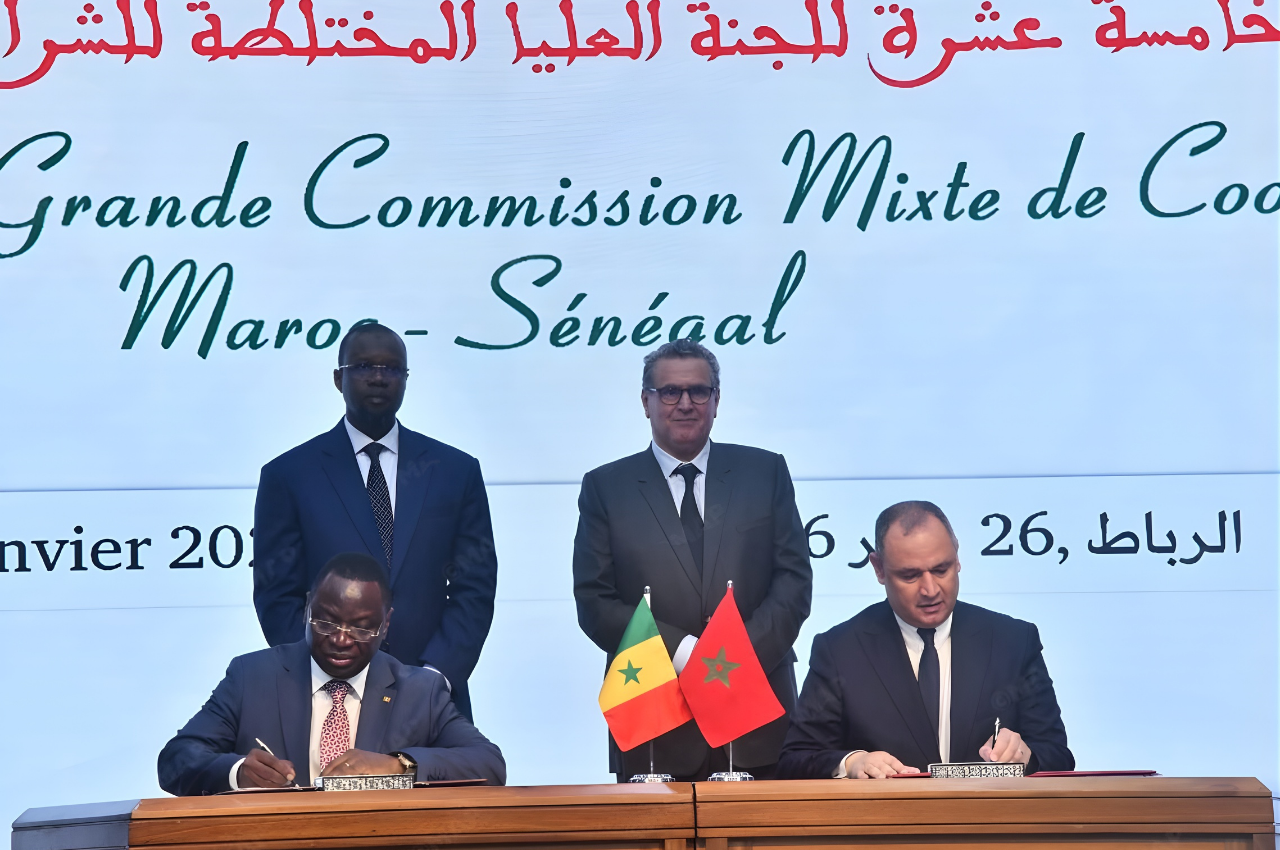
RABAT, Jan 27 – Morocco and Senegal have taken a significant step in deepening bilateral relations, signing 17 agreements and memorandums across multiple sectors during the 15th Joint High Commission of Cooperation held in Rabat.
The session was co chaired by Morocco’s Head of Government Aziz Akhannouch and Senegalese Prime Minister Ousmane Sonko, underscoring a shared commitment to strengthening diplomatic, economic, and technical cooperation between the two countries.
Proceedings opened with the formal adoption of a joint statement by Morocco’s Foreign Affairs Minister Nasser Bourita and Senegal’s Foreign Affairs Minister Cheikh Niang, outlining the outcomes and priorities of the meeting.
The two sides also approved a framework for regular consular consultations and signed a memorandum focused on youth cooperation, reflecting an emphasis on long term people to people engagement.
Agreements in transport and infrastructure focused on facilitating international road transport of passengers and goods, improving road safety standards, and enhancing technical cooperation in highway management. Officials said these measures are expected to support trade flows, mobility, and regional integration.
In the digital economy, both governments committed to closer collaboration on digital initiatives and skills development. Additional agreements covered infrastructure development, professional training, and programmes for scholarships, internships, and structured knowledge exchange, highlighting the role of human capital in future growth.
Higher education cooperation featured prominently. Morocco’s Minister of Higher Education Azzedine El Midaoui and Senegal’s Minister Daouda Ngom signed a cooperation programme covering the 2026 to 2028 period. The agreement aims to strengthen academic exchanges, joint research, and scientific collaboration between universities in both countries.
Industry and trade were another core focus. Morocco’s Industry Minister Ryad Mezzour and Senegal’s Minister Serigne Gueye Diop signed agreements on small and medium enterprise development, industrial infrastructure cooperation, and standardization. Officials described these measures as critical to improving competitiveness and fostering entrepreneurship.
Agriculture and food security cooperation expanded through agreements on livestock management, animal health, and food safety. The two countries also signed a framework for joint monitoring of fisheries and aquaculture products, aimed at promoting sustainable production and ensuring quality standards.
Maritime cooperation was reinforced through a partnership between Morocco’s National Ports Agency and the Dakar Autonomous Port, designed to strengthen operational coordination and facilitate the exchange of technical expertise in port management and logistics.
The session concluded with Akhannouch and Sonko signing the official minutes of the Joint High Commission. Both governments said the agreements reflect a shared vision for long term strategic partnership, with ambitions to deepen trade, strengthen education and skills, expand infrastructure links, and build stronger institutional and social ties.
