
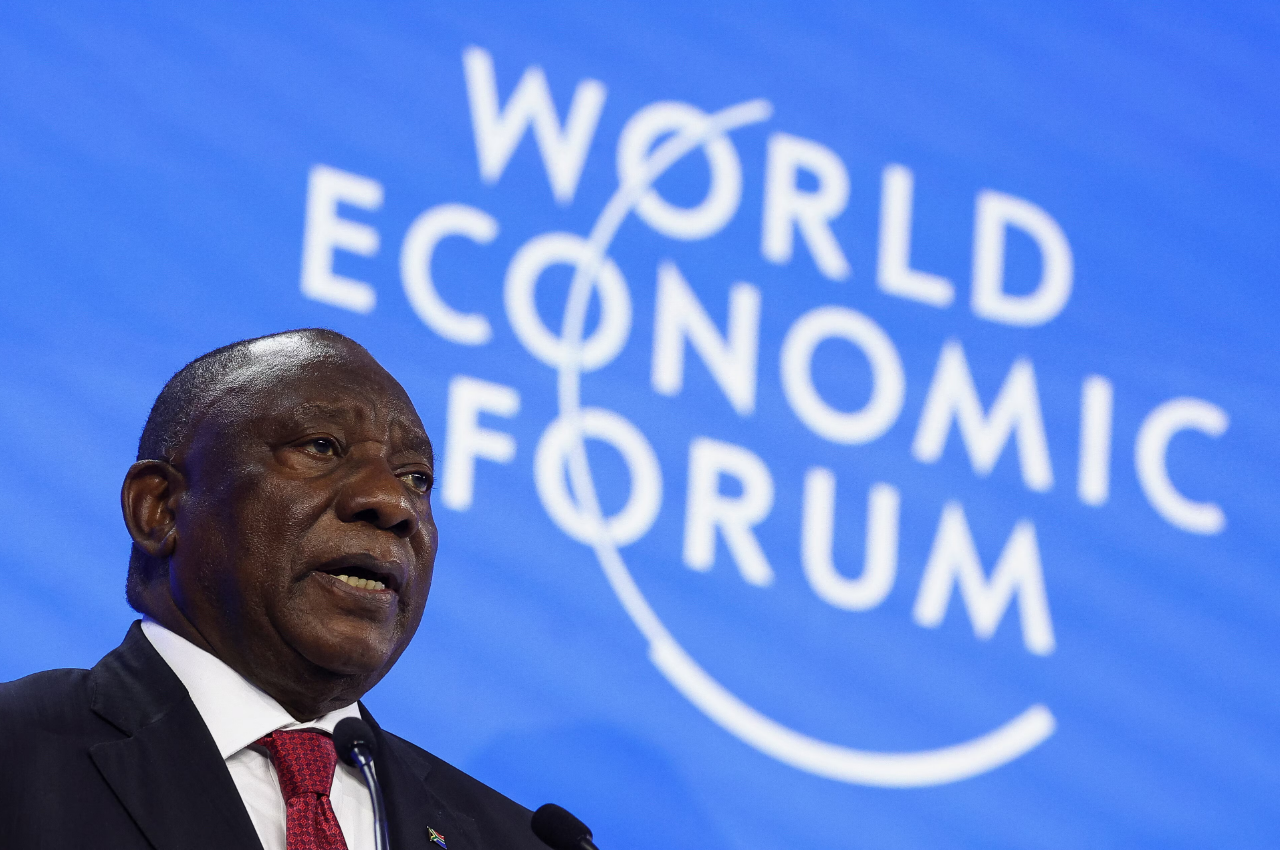
JOHANNESBURG, Jan 27 – The World Economic Forum (WEF) says it will resume hosting its Africa summit in South Africa in April 2027 after a seven-year absence caused by the Covid-19 pandemic when most global events were cancelled.
The decision follows South Africa’s hosting of the G20 Summit, reinforcing a pattern that is difficult to ignore. Africa’s most industrialised economy is increasingly being entrusted with convening power at a time when global governance is under strain, donor fatigue is rising, and capital is searching for credible growth narratives beyond traditional markets.
Yet hosting prestige forums is not the same as wielding influence. The real test will be whether South Africa can convert visibility into leverage, and symbolism into substance.
From a diplomatic standpoint, the WEF’s move underscores confidence in South Africa’s institutional capacity, infrastructure readiness, and ability to manage complex multilateral engagements. In a fragmented global order, the ability to host neutral, high-level dialogue has become a form of soft power. South Africa is quietly reclaiming this role, positioning itself as a bridge between developed markets, the Global South, and a rapidly reordering multipolar system.
For investors, the implications run deeper. Davos-style meetings are not merely talk shops. They are spaces where capital narratives are shaped, risks are reframed, and long-term allocation decisions begin to take form. Hosting the Special Davos Meeting gives South Africa a rare opportunity to influence how Africa is discussed in rooms that shape sovereign wealth funds, pension capital, multinational boards, and development finance institutions.
The question is whether this opportunity will reset perceptions or simply reinforce existing ones.
Africa’s challenge is not a lack of forums, but a credibility gap between promise and execution. If the 2027 meeting centres on familiar rhetoric without confronting structural constraints such as energy insecurity, logistics bottlenecks, policy uncertainty, and uneven reform momentum, the moment will fade quickly. Global capital may be patient, but it is not sentimental.
South Africa’s opportunity lies in anchoring the conversation around bankable reforms rather than aspirational themes. This means using the Davos platform to highlight regulatory clarity, infrastructure pipelines, blended finance structures, and credible public private partnerships. It also means presenting Africa not as a single story, but as a set of differentiated markets with distinct risk and return profiles.
While the short-term boost to tourism, hospitality, and services will be welcome, it is the least significant outcome. The more enduring prize is reputational. A successful meeting would reinforce South Africa’s standing as Africa’s diplomatic and commercial gateway at a time when competition for that role is intensifying.
There is also a continental dimension. Although hosted in South Africa, the meeting’s legitimacy will depend on whether it advances broader African priorities rather than national branding alone. If the agenda meaningfully addresses industrialisation, employment, trade integration, and sustainable financing, the event could mark a pivot in how Africa engages with global economic governance.
Ultimately, the WEF Special Davos Meeting is not a reward for past performance. It is a test of future relevance. South Africa has been given the spotlight. Whether it can translate global attention into influence, and influence into investment, will determine whether this moment becomes a turning point or just another footnote in Africa’s long engagement with the world economy.
