
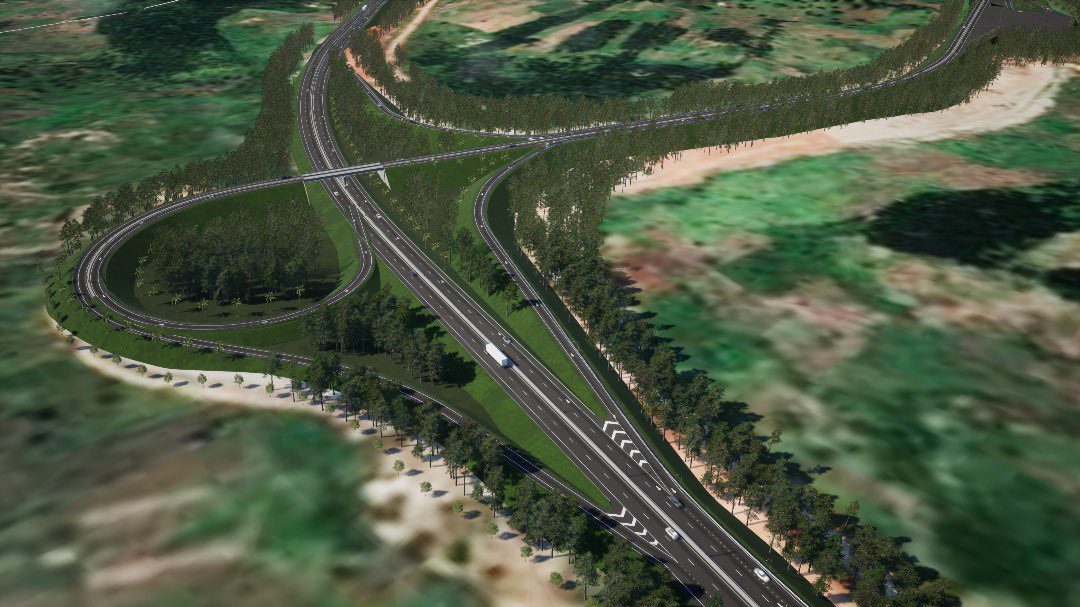
KAMPALA, Mar 25 – Ugandan lawmakers have launched a probe into the Busega–Mpigi Expressway after its cost surged to more than Shs1.2 trillion, ($324 million), nearly twice the original Shs547.5 billion, or roughly $148 million, raising fresh questions over cost control in one of Uganda’s key road projects.
The scrutiny surfaced on Tuesday as officials from the Ministry of Works and Transport, led by Gen. Edward Katumba Wamala, appeared before Parliament’s Committee on Physical Infrastructure to defend spending plans tied to the 2026/2027 financial year. What began as a routine policy review shifted quickly to the numbers behind a highway that has become steadily more expensive.
Government officials pointed to design revisions and an expanded scope. Changes to road alignment, alongside the addition of interchanges and feeder connections, were cited as drivers of the higher price tag. Engineer-in-Chief Stephen Kitonsa said a technical reassessment had produced the updated cost.
Lawmakers were unconvinced. Committee chair Dan Kimosho questioned how adjustments of that nature could stretch a budget to nearly double its size, signalling concern that the increase may not be purely technical. He called for those responsible for the apparent cost escalation to be identified.
The financial drift comes as negotiations with the contractor remain unresolved, despite Parliament having approved additional funding to push the project forward. The contractor had initially submitted claims worth Shs578 billion, about 156 million US dollars, citing delays and idle equipment. Those claims were later pared down to Shs78 billion, or around 21 million US dollars, after negotiations.
Members of Parliament voiced frustration at the pace of those talks, warning that prolonged negotiations could leave the project exposed to further financial pressure. Concerns also emerged over the handling of contracts, with some lawmakers arguing that weak negotiation practices risk passing avoidable costs onto taxpayers.
The 23.7 kilometre expressway, intended to ease traffic along the Kampala–Masaka Highway, has already faced interruptions linked to financing gaps before securing additional backing from the African Development Bank. Construction has resumed, but the figures continue to draw attention in Parliament.
Lawmakers have now instructed the Ministry of Works and Transport to submit the original contract for review, a step that signals the inquiry is moving beyond questions of design and into the foundations of how the project was priced and managed.
