
JOHANNESBERG, Mar 16 – Africa has become a central supplier of the minerals used in electric vehicles, renewable power systems and battery storage technologies. Yet most of the economic value linked to those resources is generated outside the continent.
Critical minerals such as cobalt, lithium, manganese and graphite are essential inputs for lithium‑ion batteries, wind turbines and solar infrastructure. Demand for these materials is rising as governments and companies accelerate the shift toward low‑carbon energy systems.
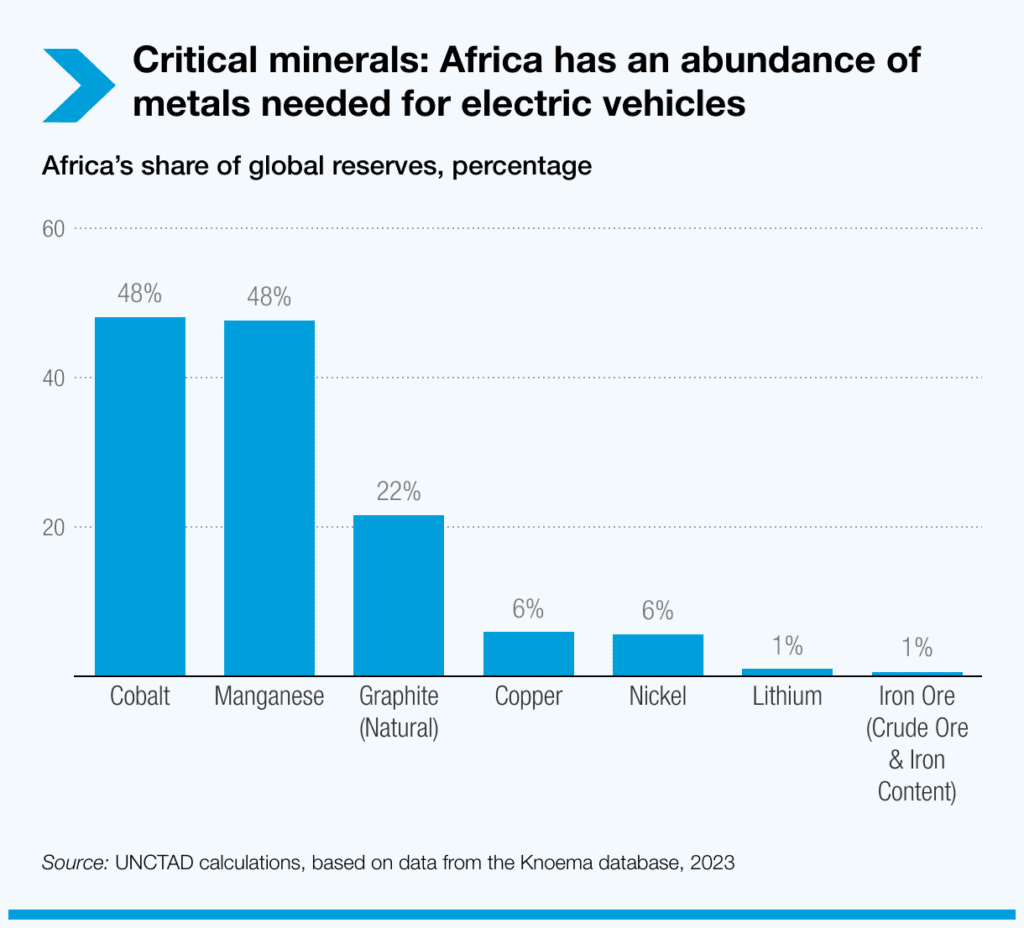
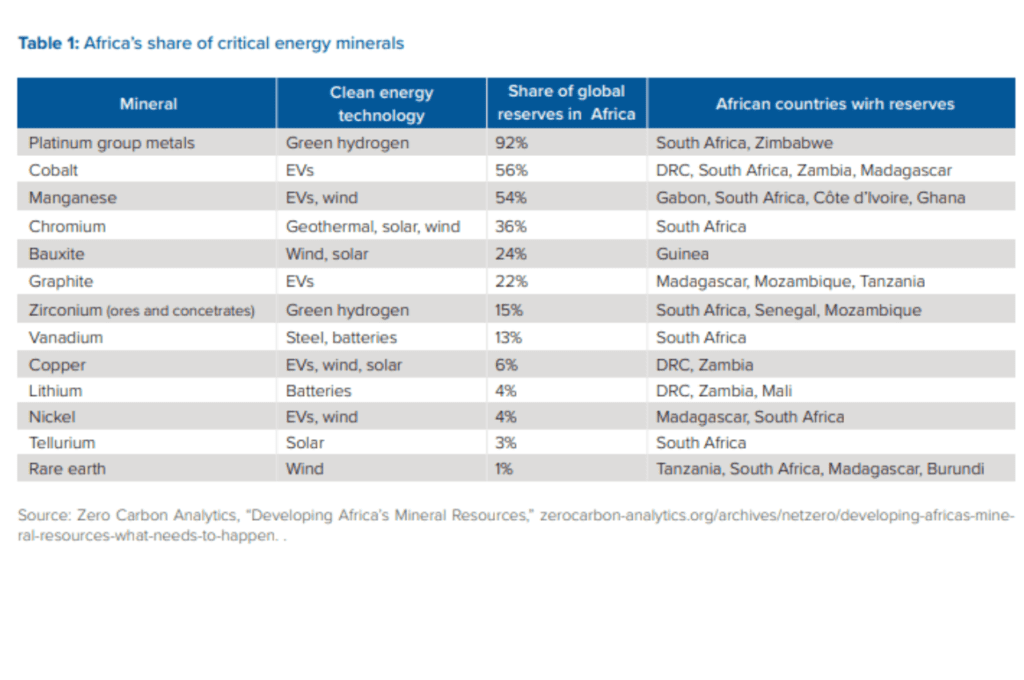
According to the United Nations Conference on Trade and Development, Africa holds a large share of these resources. The continent accounts for about 47% of global cobalt reserves and nearly half of the world’s manganese reserves. These minerals play a key role in battery production and energy storage technologies that support renewable electricity networks.
However, most of the value associated with the industry is created outside the region.
The imbalance is evident in the Democratic Republic of Congo, which produces more than 70% of global cobalt supply. Much of the metal mined in the country is exported in raw or semi‑processed form to refineries and battery manufacturers in Asia, Europe and North America.
Processing, battery cell production and electric vehicle manufacturing remain concentrated in those regions. As a result, African producers capture only a limited share of the broader industrial value chain.
The gap reflects the structure of global mineral supply networks, where extraction often occurs in resource‑rich countries while higher value manufacturing is located in major industrial economies.
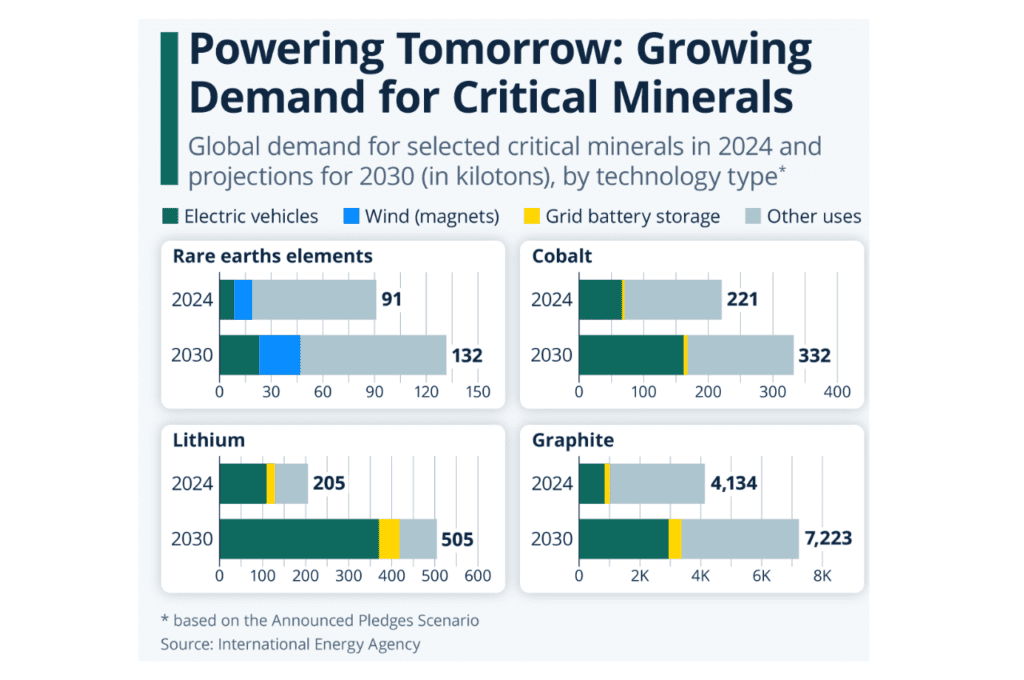
Demand for these materials is expected to increase sharply in the coming decades. Analysis from the International Energy Agency shows that the global energy transition could significantly increase demand for battery metals by 2040 as electric vehicle adoption and renewable energy deployment expand.
The imbalance is visible in the Democratic Republic of Congo, the world’s largest cobalt producer. The country supplies more than 70% of global cobalt output, according to data cited by S&P Global. Most of that production is exported as raw or semi processed material before it is refined and used in battery manufacturing abroad.
Analysts estimate that African countries capture only around 10 percent of the total value generated across the critical minerals supply chain, according to research cited by DevelopmentAid. Higher value activities such as refining, battery production and advanced materials manufacturing remain concentrated in other regions.
Demand for these resources is expected to increase as governments and companies accelerate the shift toward low carbon energy systems. Projections cited by researchers drawing on analysis from the International Energy Agency suggest demand for lithium could increase fivefold between 2025 and 2040, while demand for minerals such as graphite and nickel could double.
The rising demand has intensified geopolitical competition for access to mineral supplies. Governments in the United States, China and the European Union have increased engagement with African producers as they seek to secure supply chains for battery metals and other strategic resources.
However, processing capacity remains heavily concentrated outside Africa. In several battery metal markets, Chinese companies control a large share of global refining infrastructure even when the raw materials originate in African mines.
Some African governments have begun introducing policies aimed at retaining more value locally. The government of Zimbabwe has restricted exports of unprocessed lithium ore in an effort to encourage investment in domestic processing facilities.
Analysts say capturing more value from critical minerals will require investment in energy infrastructure, industrial capacity and skills development across the continent.
For Africa, the growing global demand for battery metals presents both an opportunity to expand exports and a longer term challenge of building the industries that transform those resources into higher value products.
