
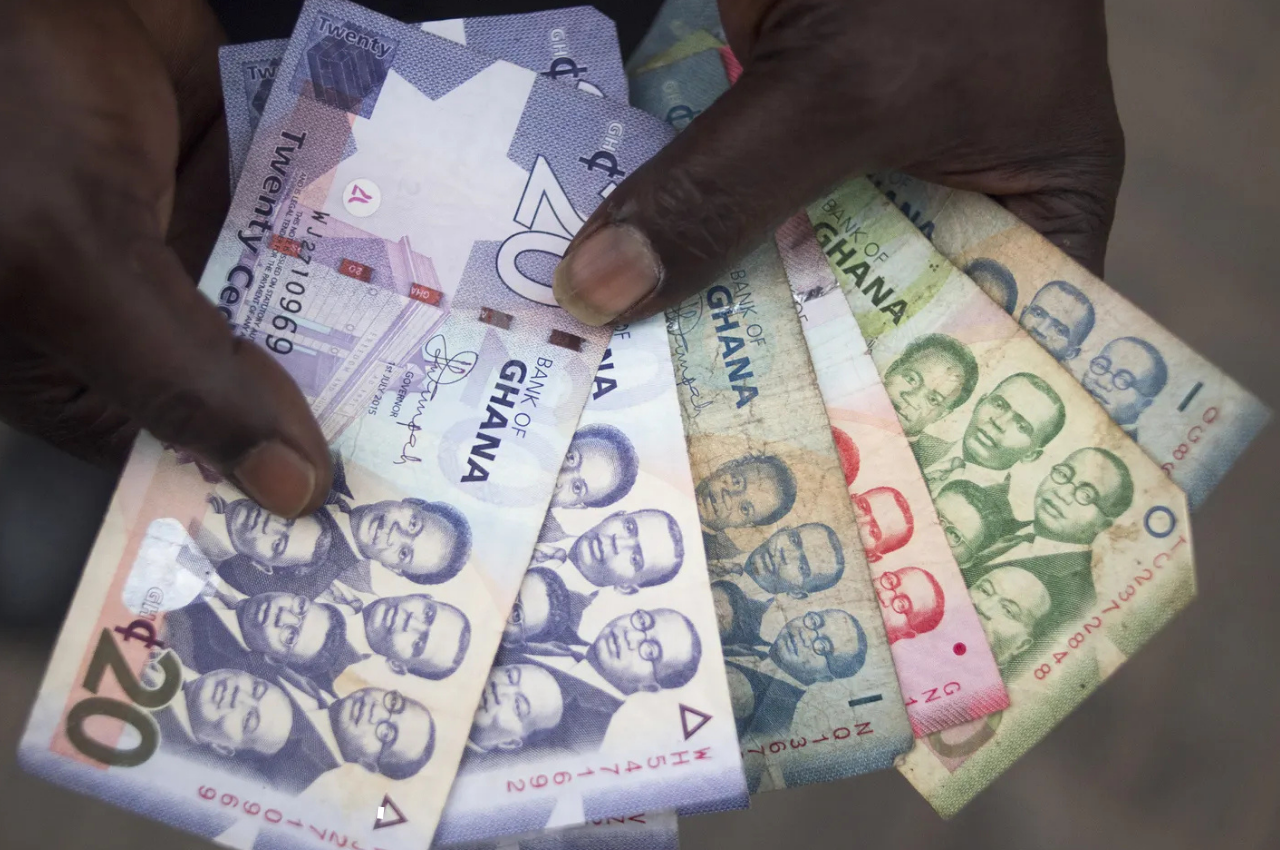
Accra, Dec 31 – Ghana’s currency has posted its first annual gain against the U.S. dollar since at least 1994, buoyed by record gold prices and broad dollar weakness, according to Bloomberg data.
The cedi has appreciated about 41% against the dollar this year, making it the strongest-performing currency among 144 tracked globally, excluding the Russian ruble. The rally marks a sharp reversal for a currency that has struggled with persistent depreciation over the past decade amid fiscal pressures and balance-of-payments challenges.
Ghana, Africa’s largest gold producer, has benefited directly from the historic surge in bullion prices, which has boosted export earnings, strengthened foreign exchange inflows and improved investor sentiment. Gold has become an increasingly important stabilising force for the economy as authorities seek to rebuild reserves and restore macroeconomic stability following a period of severe financial stress.
The cedi’s strength has also been aided by a weaker U.S. dollar, with the Bloomberg Dollar Index on track for its steepest annual decline since 2017. The softer dollar has eased pressure on emerging and frontier market currencies, particularly commodity-linked ones.
The currency’s performance underscores the impact of higher commodity prices and tighter domestic policy measures in restoring confidence in Ghana’s economy. It also reflects ongoing efforts by authorities to manage inflation, rein in deficits and stabilize the financial system after recent debt restructuring.
