
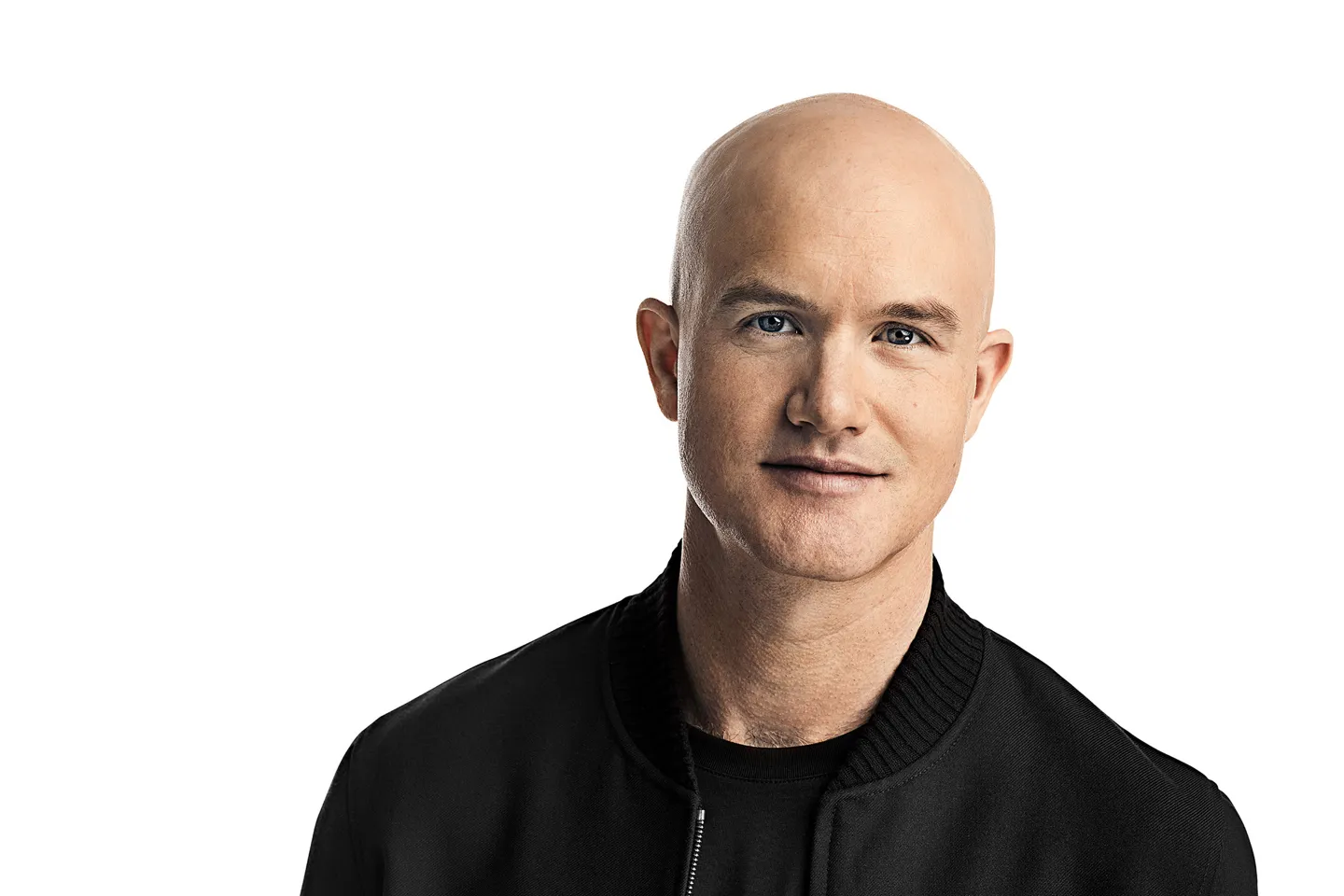
LONDON, Mar 18 – Brian Armstrong, co-founder and chief executive of Coinbase, America’s largest cryptocurrency exchange has delivered one of his most expansive public assessments of the digital asset industry’s future, speaking with Nicolai Tangen, chief executive of Norges Bank Investment Management (NBIM), on the fund’s In Good Company podcast
The conversation traversed stablecoins, artificial intelligence, quantum computing, regulatory warfare, personal finance philosophy, and the science of ageing offering an unusually candid portrait of a CEO who has transformed a niche crypto startup into an S&P 500 constituent
Armstrong opened by tracing the personal experiences that first drew him to crypto. His time as an early engineer at Airbnb exposed him to the deep dysfunction of cross-border payments.
Moving money to hosts in countries like Uruguay, he noted, could cost seven to ten percent in fees and take three to five business days to settle. Living in Buenos Aires, Argentina compounded that view he witnessed first-hand how hyperinflation hollowed out household wealth and stifled economic progress
“High inflation can really hurt the poorest people in society,” Armstrong said. “There were a few pieces like that that helped me see the potential of crypto.”
He first encountered the Bitcoin white paper in December 2010 “I remember having this thought like this might be one of the most important things I’ve read in a long time” and spent weeks re-reading it and attempting to implement the protocol himself before he fully grasped its significance.
The paper’s central insight, he explained, was the concept of provable digital scarcity: the mathematical guarantee that a digital item could be made unique and non-replicable, which had not previously been possible
The most consequential section of the interview centred on stablecoins, which Armstrong described as “still underappreciated”
His case rested on a simple framework. Every existing payment rail fails on at least one of three dimensions cost, speed, and global reach. Credit cards carry fees of two to three percent per transaction. SWIFT is expensive and takes two to three business days
Stablecoins, Armstrong argued, are the only instrument that simultaneously checks all three boxes settling anywhere in the world in under one second for less than a tenth of a US cent
Armstrong introduced what he called “agentic commerce” an emerging area in which AI agents are beginning to transact using stablecoin wallets without human involvement
The logic is structurally significant. AI agents cannot open bank accounts, which require government-issued identification. But they can hold stablecoin wallets.
Coinbase has built infrastructure including a protocol called X402 that allows AI agents to attach stablecoin payments to web requests. Armstrong said the protocol, launched roughly five months ago, has already processed 100 million transactions and continues to grow rapidly
Armstrong offered an unusually candid account of how he drove AI adoption internally. More than 50 percent of Coinbase’s code is now written by AI, and around 60 percent of customer support queries are handled by AI systems
He described growing impatient as engineer adoption of tools such as Cursor stalled in the 70 percent range. He sent a note requiring all engineers to sign up and try the tools by end of the week adding that anyone who had not done so without a valid reason would be expected at a Saturday meeting with the CEO to explain themselves. Approximately one engineer was dismissed for refusing to comply and failing to attend
“I think only one person got fired,” Armstrong said, “but it did create a very clear tone from the top that we need to stay on top of these things to be relevant as a company.”
