
NAIROBI, Mar 27 – Africa attracted more than $20 billion in capital commitments in March 2026, signaling renewed investor appetite for frontier markets despite ongoing global uncertainty.
The surge was led by Ethiopia and Kenya, with additional financing activity across South Africa, Nigeria and Morocco reinforcing a broad-based recovery in cross-border investment flows.
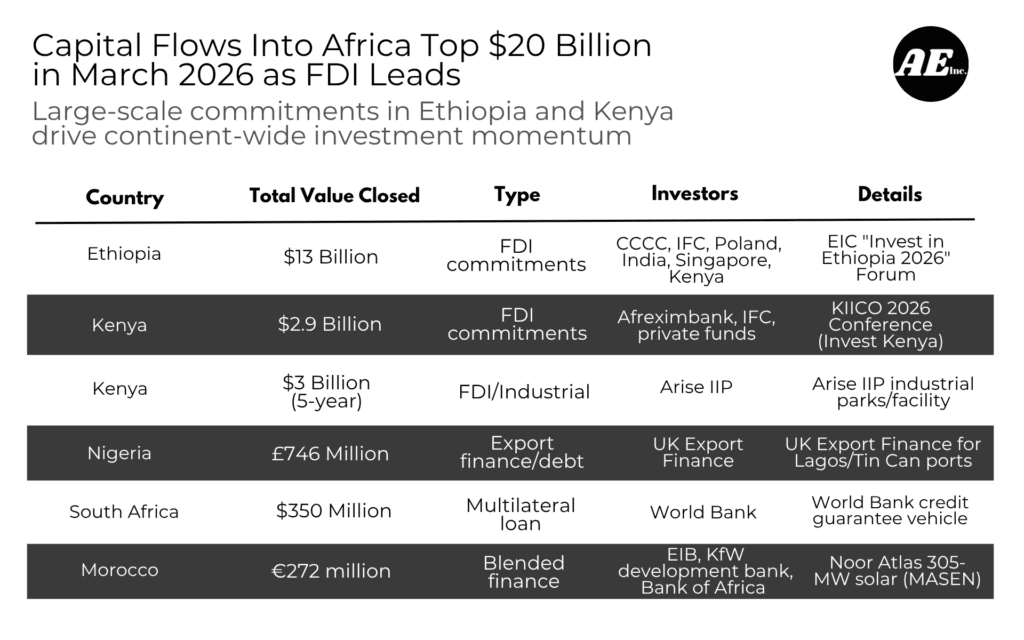
Ethiopia accounted for the largest share, securing $13 billion in commitments during its “Invest in Ethiopia 2026” forum held in Addis Ababa. The deals were coordinated by the Ethiopian Investment Commission and attracted global investors including China Communications Construction Company and international delegations
Energy projects dominated allocations, drawing more than $7 billion, followed by mining with over $4 billion targeting potash, gold and lithium assets. Manufacturing and real estate accounted for smaller portions of the investment pipeline.
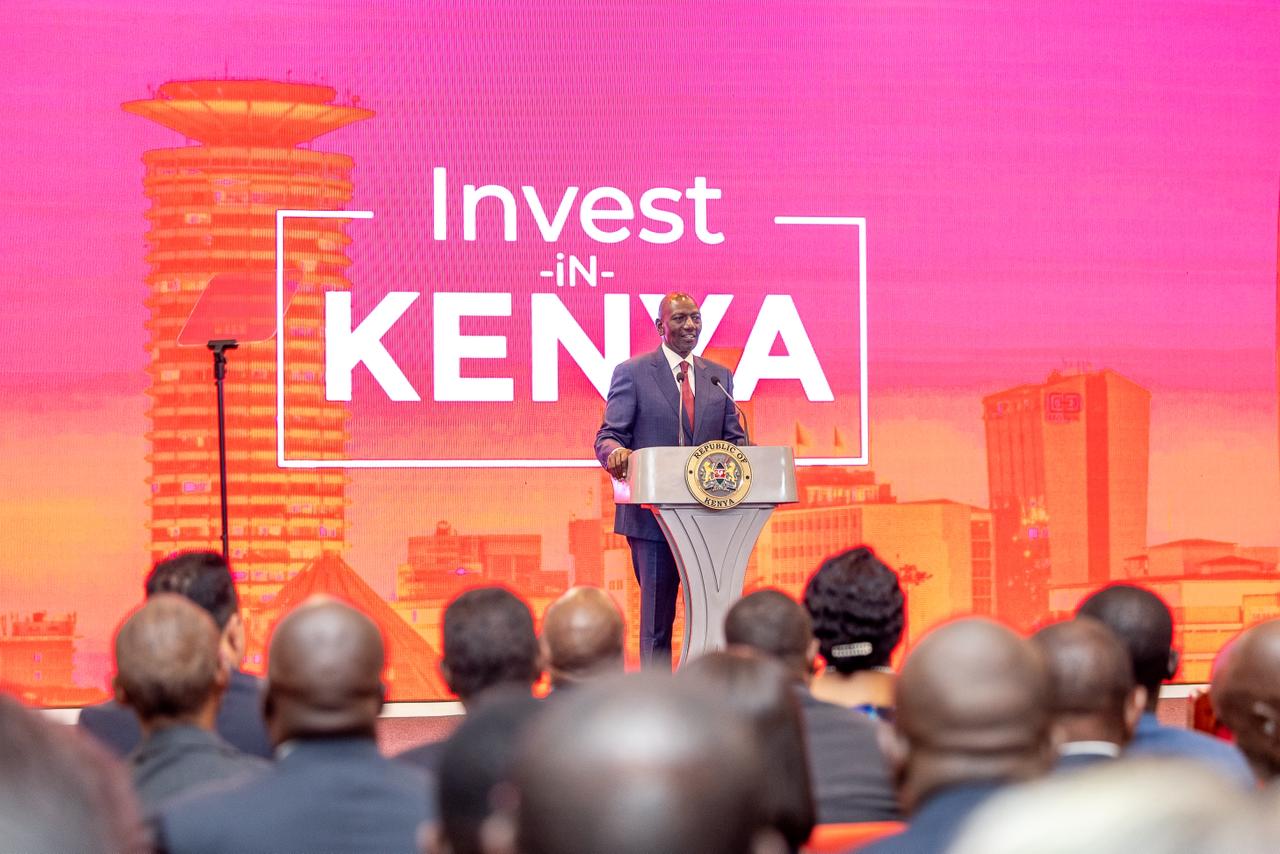
In parallel, Kenya recorded approximately $9 billion in investment activity. The Kenya Investment Authority secured $2.9 billion in sectoral deals across agriculture, energy, manufacturing and technology.
Additional momentum came from Arise Integrated Industrial Platforms, which committed $3 billion toward export-oriented industrial zones, alongside an $800 million financing facility backed by international partners.
Beyond foreign direct investment, structured financing also contributed to the surge. South Africa secured $350 million from the World Bank through a credit guarantee mechanism aimed at unlocking private infrastructure investment.
Nigeria raised £746 million in export finance from UK Export Finance to upgrade port infrastructure in Lagos, while Morocco reached financial close on a €272 million renewable energy package backed by the European Investment Bank and Germany’s KfW Development Bank under the Noor Atlas solar program.
Despite the scale of commitments, analysts caution that execution remains the key challenge. Historically, only 60% to 70% of announced investment pledges across Africa are fully realized, often delayed by regulatory hurdles, infrastructure gaps and geopolitical risks.
Still, the surge reflects a broader shift in global capital flows, as investors increasingly reposition toward emerging and frontier markets in search of growth and higher returns.
The scale of March’s commitments underscores growing confidence in Africa’s long-term economic trajectory. However, the extent to which these pledges translate into deployed capital will ultimately determine whether the current momentum drives sustained economic expansion.
