
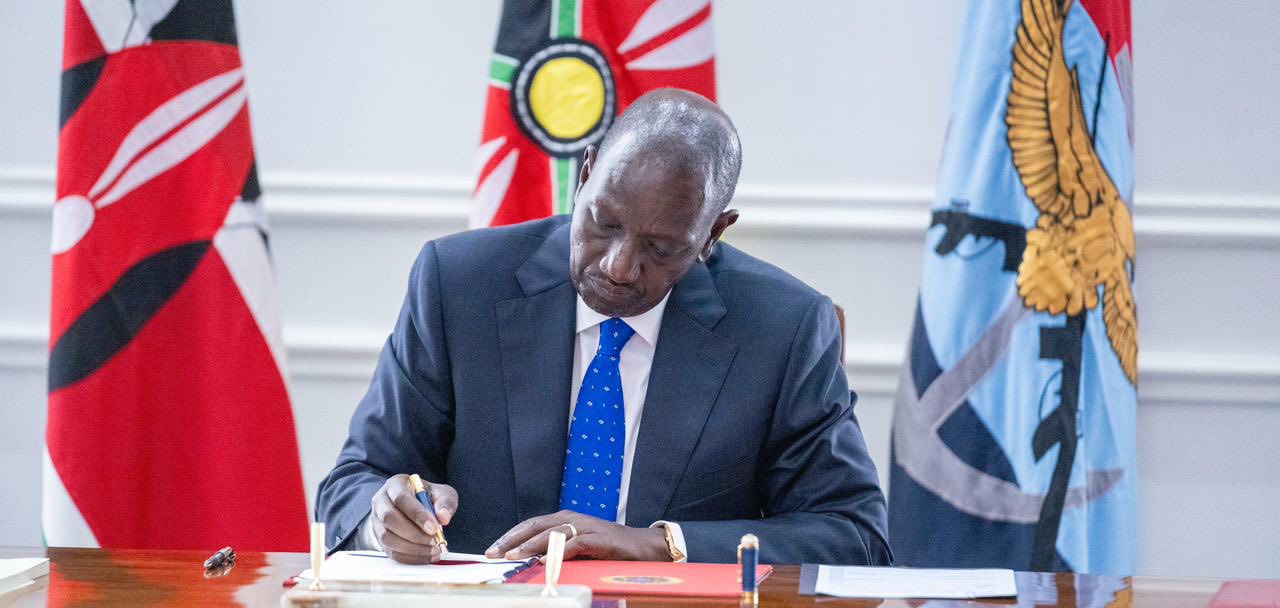
Nairobi, Mar 9 – President William Ruto on Monday assented to the National Infrastructure Fund Bill, 2026 at State House, Nairobi, formalizing a KSh5 trillion ($38.5 billion) vehicle to finance Kenya’s largest infrastructure projects over the next decade.
The assent follows the bill’s passage by the National Assembly on March 5, after a third reading. The law establishes the National Infrastructure Fund (NIF), aimed at shifting infrastructure financing from debt-driven models to investment-led approaches, attracting both public and private capital for highways, railways, ports, energy networks, water systems, irrigation projects, and digital connectivity.
Treasury Cabinet Secretary John Mbadi outlined the fund’s governance structure, noting it will be overseen by a seven-member Board of Directors chaired by an independent director, with the Treasury CS also on the board. The board will report to the Treasury four times a year, while the CS will report to cabinet at least twice annually, and to the National Assembly at least once a year. “We have two levels of management for this fund,” Mbadi said.
Ruto announced that the government will raise KSh106 billion through the partial privatisation of the Kenya Pipeline Company, providing seed capital for the fund. He said key state agencies, including Kenya Airports Authority, Kenya Ports Authority, Kenya Railways, and the National Cereals and Produce Board, will operate under the NIF and access capital markets over time. “The proceeds will be used to build more infrastructure for the future,” Ruto stated.
A Governing Council, including the governor of the Central Bank of Kenya and the Attorney General, will provide strategic oversight, leaving day-to-day management to the independent board.
