
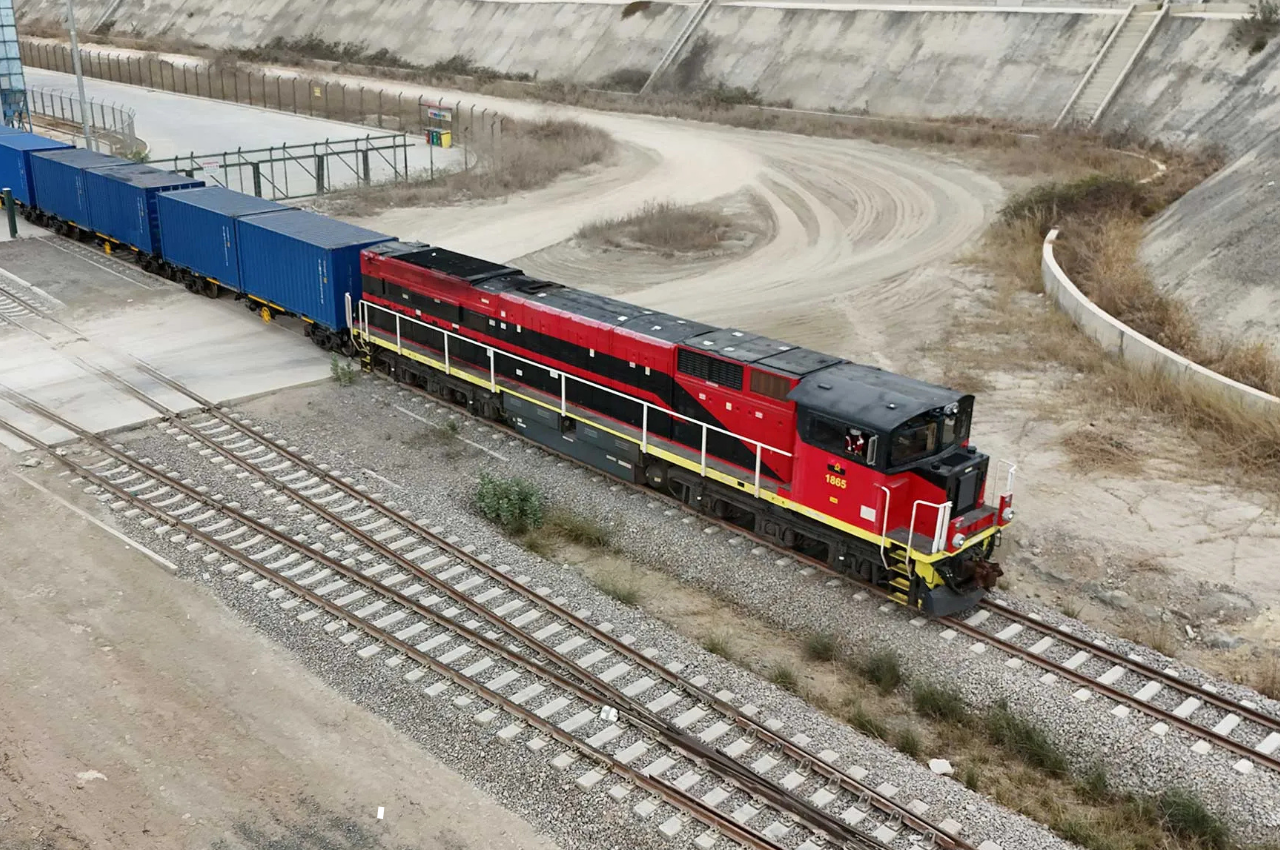
LUANDA Dec 18 – Lobito Atlantic Railway has secured $753 million in financing from the U.S. International Development Finance Corporation and the Development Bank of Southern Africa to support the rehabilitation of Angola’s 1,300 kilometre Lobito railway corridor.
The funding will be used to upgrade the railway line linking the mineral terminal at the Port of Lobito to Luau on Angola’s eastern border with the Democratic Republic of Congo. The corridor provides the shortest and most direct rail route connecting the DRC’s Copperbelt mining region to international markets.
LAR said the upgrades will significantly enhance the railway’s capacity, efficiency and reliability, strengthening its role as a strategic import and export route for metals and minerals, including copper and other critical resources.
The Lobito Corridor has gained growing strategic importance in recent years as governments and mining companies seek alternative, efficient and secure routes to export critical minerals from Central Africa amid shifting global supply chains.
Nicholas Fournier, Chief Executive Officer of Lobito Atlantic Railway, said the financing represents a major milestone for the project.
“This financing from the DFC and DBSA marks a major milestone in our vision to establish the Lobito Corridor as Africa’s premier trade route,” Fournier said. “The funding will enable us to significantly expand capacity, improve efficiency and strengthen economic connectivity across Angola and the wider region.”
The Lobito railway serves a wide range of users, including mining companies, regional traders and logistics operators, offering access to global markets through the deepwater Port of Lobito on Angola’s Atlantic coast.
Beyond mineral exports, the railway also functions as a key import gateway, facilitating the movement of goods into inland markets across Angola and neighbouring countries.
LAR said the investment is expected to support domestic and regional economic growth, reinforcing the Lobito Corridor’s role as a catalyst for trade, industrial development and economic integration across sub Saharan Africa.
