LAGOS, Nov 16 – Private climate investment in Africa more than tripled between 2019/20 and 2023/24, reaching $26.5 billion annually, as domestic banks, businesses and households increasingly finance the continent’s transition towards a lower-carbon economy.
The findings are contained in the third edition of the Landscape of Climate Finance in Africa, published by Climate Policy Initiative (CPI), FSD Africa, the government of Norway and the UK government. The report found that more than three-quarters of private climate investment, equivalent to 76%, came from domestic sources.
Commercial financial institutions accounted for almost half of the increase in private climate finance between 2021/22 and 2023/24, while corporate investment also expanded substantially.
The report attributes the growth to stronger climate engagement among African banks, increasing regulatory attention to climate-related risks and declining global costs of solar, wind and battery storage technologies.
Household investment also more than doubled to $5.1 billion annually, representing 19% of private climate finance and accounting for more than a fifth of the increase in private flows.
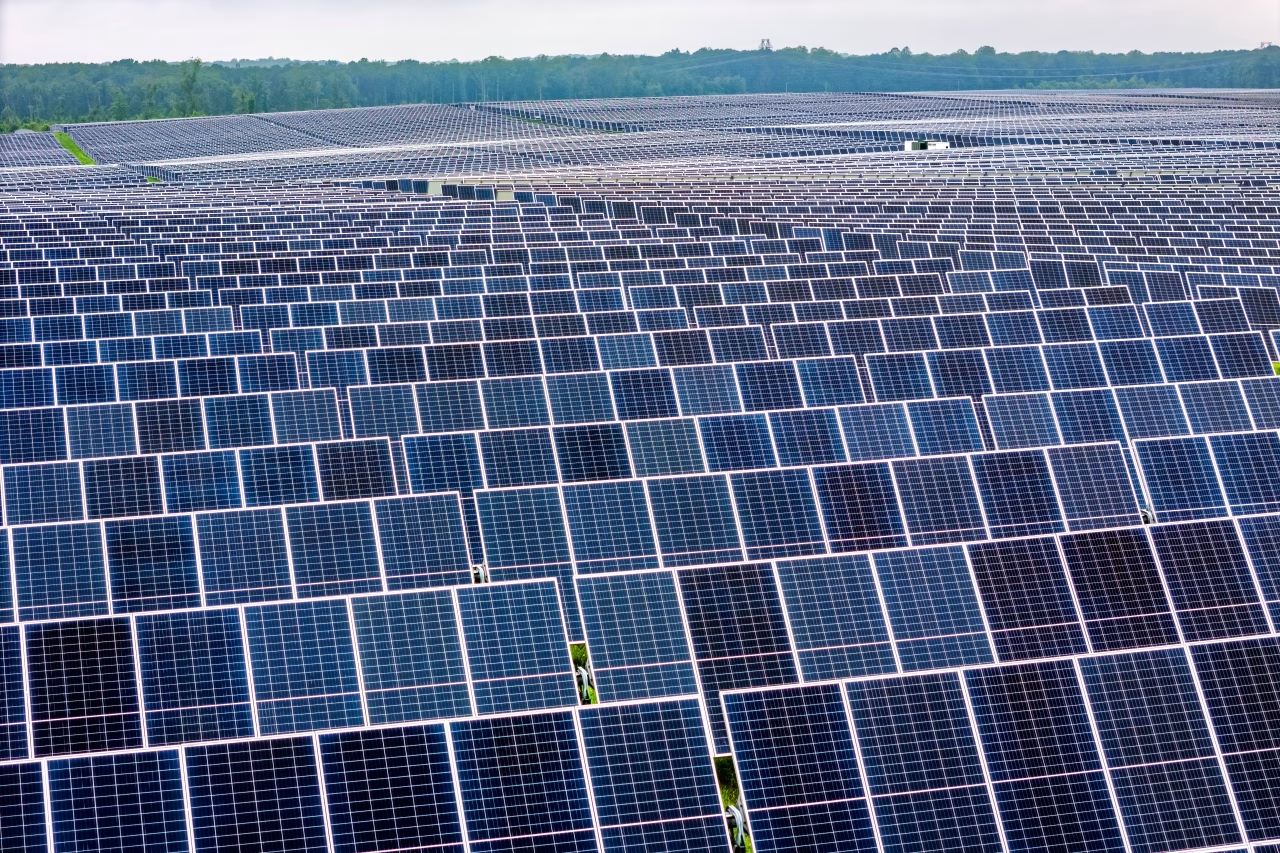
Small-scale solar accounted for more than 90% of the growth in household climate investment. Annual household spending on solar photovoltaic systems rose nearly fivefold to $3.3 billion, highlighting the expanding role of consumers alongside businesses and financial institutions in financing Africa’s clean energy transition.
Domestic investment grows, but public finance remains central
The increase in private investment signals a shift in Africa’s climate finance landscape, which has traditionally relied heavily on international public funding.
Despite the growth, private finance accounted for only 36% of total climate finance flows to Africa, the lowest proportion of any region globally. International public finance continued to provide almost two-thirds of the continent’s climate funding.
Development finance institutions are also playing a growing role in mobilising private capital. Private investment mobilised through multilateral and bilateral development finance more than doubled from 2021/22 to reach $8.2 billion annually in 2023/24.
However, the distribution of international public climate finance remains uneven. Funding to low-income African countries declined by 11%, while financing to middle-income countries increased by 33%.
Barbara Buchner, Chief Executive Officer of Climate Policy Initiative, said the growth in private investment reflected increasing domestic participation but highlighted the challenge of directing institutional capital towards projects that remain small and fragmented.
“Africa’s climate finance has grown significantly, driven in large part by homegrown private investment. But the challenge is not only volume. African banks, insurers and pension funds manage around USD 3.2 trillion in assets, yet many projects are too small and fragmented for these investors to reach. Clear, predictable policy frameworks and investment vehicles can help bridge this gap, as parts of the renewable energy sector have shown,” Buchner said.
Mark Napier, Chief Executive Officer of FSD Africa, said stronger financial markets could help extend private investment beyond clean energy into other areas of the green economy.
“The trends in the report are consistent with the global picture: climate finance in Africa is increasingly being driven by the private sector. It shows that if we build well-functioning, sustainable financial markets we can unlock investment not just in clean energy but in other sectors of the green economy such as agriculture, housing and transport, creating vibrant markets that deliver jobs and basic services as well as climate benefits,” Napier said.
Energy dominates climate investment as adaptation funding falls
Total climate finance in Africa more than doubled to $74 billion annually in 2023/24. However, the amount remains significantly below the estimated $300 billion to $572 billion required each year for mitigation alone.
Investment is also concentrated in a limited number of countries and sectors. Energy attracted $32.3 billion annually, compared with just $6.5 billion for agriculture, forestry and other land use.
Middle-income countries received more than 80% of energy finance, while low-income countries experienced slower growth in funding.
Climate adaptation remains particularly underfunded. It accounted for 21% of total climate finance in 2023/24, down from 28% in 2021/22, despite increasing exposure to climate-related risks across the continent.
Building financial systems to unlock investment
The report argues that closing Africa’s climate finance gap will require more than increasing the overall volume of capital. It calls for financial systems capable of originating, preparing and financing projects at scale, with investment structures adapted to individual countries and markets.
Key priorities include strengthening the capacity of African financial institutions to identify and finance climate-related investments, while maintaining affordable consumer financing channels such as pay-as-you-go models and local bank lending.
The report also highlights the importance of local-currency financing, predictable policy frameworks and risk-sharing mechanisms. Structures that have supported renewable energy investment could provide models for mobilising capital in other sectors.
Unlocking investment from African banks, insurers and pension funds will be important to expanding domestic financing, particularly in underserved countries and sectors. The report nevertheless emphasises that international public finance remains essential to supporting projects and markets that private investors may not yet be willing or able to finance.