
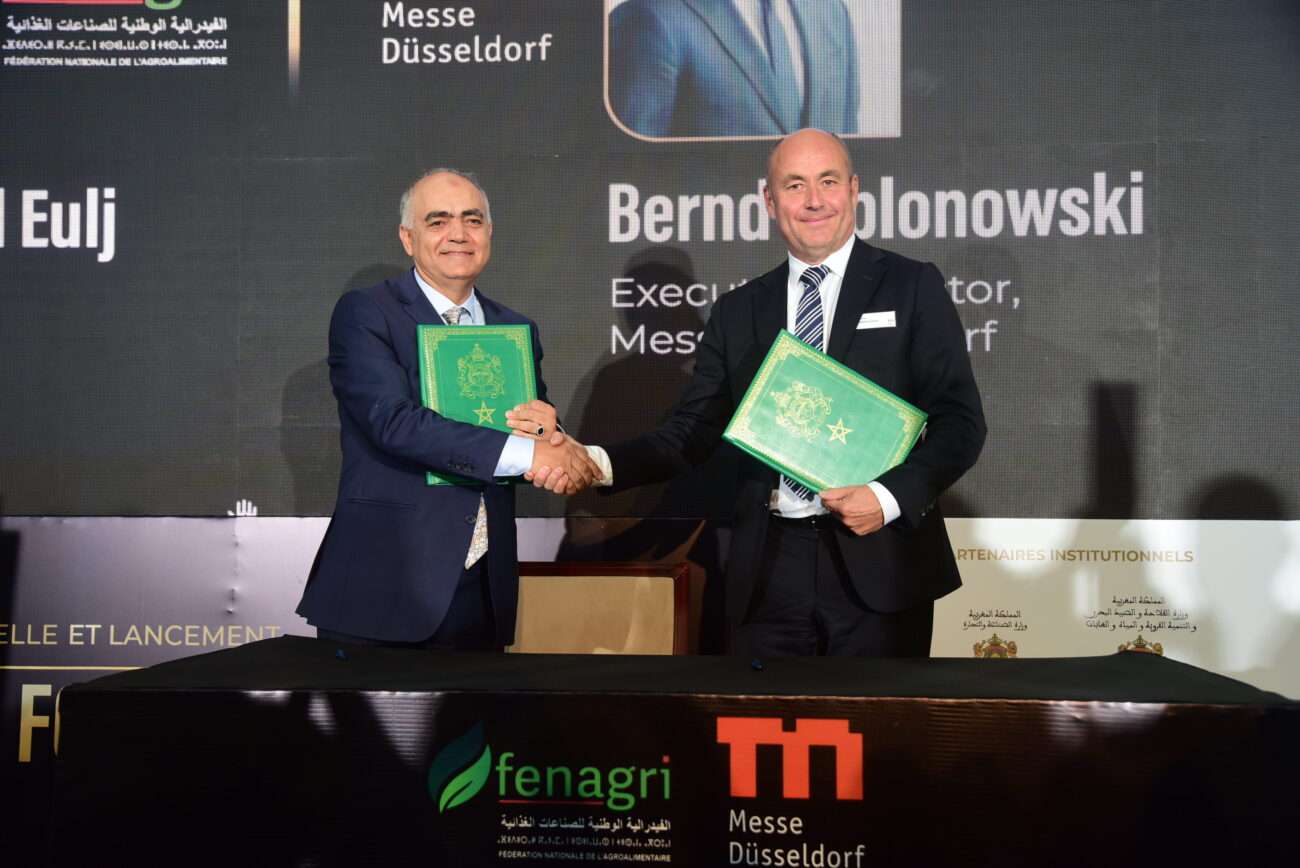
September 4, 2026 German trade-fair organiser Messe Düsseldorf is preparing to launch its first-ever trade show in Morocco in 2027, expanding its international exhibition network into one of North Africa’s important industrial, manufacturing and trade markets.
The planned exhibition will focus on the food and packaging industries and will be organised in partnership with Morocco’s National Federation of the Food Industry (FENAGRI).
The new trade show is expected to create a platform for international companies seeking access to Morocco and neighbouring African markets while strengthening Messe Düsseldorf’s presence across the Middle East and North Africa (MENA) region.
The partnership also expands Messe Düsseldorf’s existing activities across the global food value chain, combining the organiser’s experience in international packaging and food-industry exhibitions with Morocco’s growing food-processing and manufacturing sector.
Messe Düsseldorf Expands Into Morocco
The planned 2027 event will mark the first Messe Düsseldorf trade-show venture in Morocco.
The move forms part of the German organiser’s wider international expansion strategy and its efforts to strengthen its exhibition network across the MENA region.
Messe Düsseldorf already operates trade shows focused on food and packaging in other regional markets, including Cairo.
The launch of a Moroccan exhibition would extend that network toward North Africa’s Atlantic coast and provide another platform connecting international suppliers with African businesses.
Wolfram N. Diener, President and Chief Executive Officer of Messe Düsseldorf, described the partnership with FENAGRI as a natural extension of the company’s regional strategy.
“With our entry into the Moroccan market, our network in the MENA region will extend from the Atlantic coast to the Arabian Peninsula,” Diener said.
New Morocco Trade Show Will Focus on Food and Packaging
The planned exhibition will centre on two closely connected sectors: food production and packaging.
Morocco has a sizeable food-processing industry and is an important producer and exporter of agricultural and food products.
As food production becomes more industrialised, manufacturers require equipment and technologies covering areas such as processing, packaging, storage, logistics and production efficiency.
This creates opportunities for international companies that supply food-processing machinery, packaging technologies and related industrial solutions.
The 2027 exhibition is expected to bring these suppliers together with Moroccan businesses and companies from surrounding markets.
The event could therefore serve as a meeting point between equipment manufacturers, food processors, packaging companies, distributors, investors and other participants in the food value chain.
Morocco Positioned as Gateway Between Europe and Africa
Messe Düsseldorf sees Morocco’s geographic position as one of the country’s major advantages.
Located close to Europe and connected to markets across Africa, Morocco has developed extensive commercial relationships with European and African economies.
The country also has established trade relationships with markets beyond Europe, creating opportunities for companies seeking a regional base for international business.
For Messe Düsseldorf, Morocco provides a different strategic position from its existing food and packaging exhibition activities in Cairo.
Diener said the organiser’s events in Cairo serve as a bridge between African and Middle Eastern markets, while Morocco offers access to West African markets and benefits from its proximity to Europe.
“While our food and packaging trade shows in Cairo serve as a bridge between Africa and the Middle East, Morocco will provide access to West African markets and offer a compelling advantage because of its proximity to Europe,” Diener said.
Morocco’s Growing Role as a Trade and Logistics Hub
The new trade show comes as Morocco continues to strengthen its position as an industrial and logistics hub linking European and African markets.
The country’s infrastructure investment, manufacturing development and international trade relationships have contributed to its growing role in regional supply chains.
Messe Düsseldorf expects Morocco’s economy to record annual growth of approximately 4.5% to 5% through 2028, supported by investment in infrastructure, manufacturing and energy.
The country’s network of free-trade agreements also contributes to its attractiveness as a potential base for companies seeking access to international markets.
For international manufacturers, the combination of geographic proximity, trade relationships and industrial development makes Morocco an increasingly relevant market for investment and business expansion.
Morocco’s Food Industry Creates Demand for Processing Equipment
Food and agriculture are important components of Morocco’s economy and international trade.
This combination of food production, processing, imports and exports creates demand for modern equipment throughout the food value chain.
Food manufacturers need technologies that can improve production efficiency, product quality, shelf life and packaging.
The planned Messe Düsseldorf exhibition is expected to target this market by connecting Moroccan food-industry companies with international suppliers.
European Union Remains Morocco’s Major Food Trade Partner
The European Union is a major trading partner for Morocco’s food industry.
According to Messe Düsseldorf, more than 60% of Morocco’s food imports and exports are conducted with the European Union.
The country’s proximity to Europe also provides logistical advantages for companies that want to establish commercial relationships between European suppliers and African markets.
Food Processing Expansion Could Increase Packaging Demand
The growth of Morocco’s food-processing industry could create additional demand for modern packaging solutions.
Food manufacturers require packaging systems for a wide range of products, from fresh produce and seafood to processed foods and beverages.
This provides a potential commercial opportunity for international packaging manufacturers and technology providers participating in the new trade show.
FENAGRI Brings Moroccan Food Industry Network
The partnership with FENAGRI gives Messe Düsseldorf access to a significant network within Morocco’s food industry.
FENAGRI operates under the mandate of Morocco’s Ministry of Industry and Trade and represents 15 industry associations and more than 2,600 companies, according to information provided for the initiative.
The federation estimates that its members account for approximately 40% to 50% of Morocco’s food-industry market.
Its involvement could therefore help connect the new international exhibition with a broad network of domestic food manufacturers and industry stakeholders.
For international exhibitors, this local network could provide access to potential customers, partners and business contacts within Morocco’s food sector.
Partnership Combines Local Knowledge With International Trade-Fair Expertise
The partnership between Messe Düsseldorf and FENAGRI combines two different strengths.
Morocco Could Become a Strategic Market for International Suppliers
The new exhibition could be particularly relevant for companies that want to enter the Moroccan market or expand their presence across North and West Africa.
International suppliers of food-processing and packaging equipment could use the event to meet Moroccan manufacturers and explore regional opportunities.
The event’s regional positioning could also attract businesses looking beyond Morocco toward neighbouring African markets.
Messe Düsseldorf Strengthens Its MENA Exhibition Network
The Moroccan expansion forms part of Messe Düsseldorf’s broader strategy in the MENA region.
The organiser already has exhibition activities in Cairo, giving it an established presence in the regional food and packaging sectors.
Adding Morocco would create a broader geographic network spanning different parts of the region.
Diener said the growth of Messe Düsseldorf’s regional events demonstrates the potential of MENA markets and the opportunities available to customers through partnerships in the region.
“The growth of our events in the region demonstrates the enormous potential of the MENA markets, which we are unlocking for our customers together with our partners,” he said.
Morocco’s Free-Trade Agreements Add to Its Investment Appeal
Morocco’s network of trade agreements is another factor highlighted in connection with the country’s role as an international business hub.
Trade agreements can provide companies operating in Morocco with access to external markets and can support the development of cross-border supply chains.
For manufacturers, this can make the country attractive not only as a domestic market but also as a potential production, distribution and export base.
The combination of trade access, infrastructure investment and geographic proximity to Europe and Africa is therefore relevant to the positioning of the 2027 trade show.
